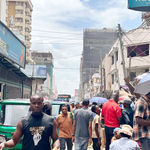
In our last article, we argued strongly that the Prime Minister’s Office, Regional Administration and Local Government (PMO-RALG), needs to revive the Local Government Reform Agenda, and root for robust and effective local, and especially, urban, governance and management. You walk around, in our urban areas, and encounter problems, such as clogged drains, and end up wondering whether these sub-national governments have any management at all.
In this installation, we highlight why the Vice President’s Office (VPO), need, too, to outline and implement an urban agenda. As a country, we are urbanizing fast but the environment in which this urbanization is taking place, needs immediate intervention.
One of the cardinal duties of the VPO is environmental management, which entails coordinating national policies on climate change, pollution control, clean cooking energy, and carbon trading systems. The VPO oversees the National Environment Management Council (NEMC) to ensure environmental sustainability in urban and rural areas.
Urban areas are prone to a problematic environment, which include air pollution, noise, vibrations, unmanaged solid and liquid waste and so on. The VPO has issued various guidelines over the years, addressing, among other: Noise and Vibrations Environmental Pollution; solid and liquid management and Sustainable Management of Wetlands.
It is not clear whether these guidelines are followed within the individual urban areas to which they are relevant, but, given the sheer population numbers, the large number of emission generating vehicles and industrial establishments, the unplanned nature of urban development, the lack of, and/or poorly maintained, infrastructure, such as roads and drains, the urban environment needs serious intervention to attain sustainable living city-space for urban residents.
Besides addressing matters of urban pollution, the VOP needs to have a broad-based agenda to “green” urban areas. As was recently observed by the Assistant Director-General and Director, Forestry Division, FAO, Mr Zhimin Wu:
“Together we can turn commitments into action, city by city and partnership by partnership, towards a future in which, every city is GREEN”.
We need an urban greening policy which hinges on a number of approaches. Urban areas are major culprits of clearing the natural environment within their areas, and at the periphery but also by encouraging forestry clearance countrywide, for supplying energy, especially charcoal, to these voracious areas which need land and energy.
As urban areas grow, much of the natural earth cover is cleared and replaced with concrete. Urban wetlands are filled-up, rivers are stressed leading to soil erosion.
Dar es Salaam, the commercial and largest city in Tanzania, used to have lakes, and hundreds of ponds ("bwawas") in its environs. Many of the historic ones have long since been filled and built upon, and the process continues, though it needs to be stopped.
Many urban forests, where they existed, have been cleared, or greatly reduced, or degraded.
The VPO needs to be at the fore front, in collaboration with local authorities, to propagate and implement an urban greening agenda, which is defined as:
“Creating a mutually beneficial relationship between people who reside in the city and the environment, through public landscaping and urban forestry”
As our cities grow, they make an impact on nature. What was once grassland, forest, or wetlands, is now concrete in the form of buildings, highways, flyovers, and paved site works
Urban greening is more than parks and tree-lined streets. It now includes approaches like living walls and green roofs getting featured in more businesses, public buildings and residential areas (green buildings); and becoming important in urban planning.
Cities all around the world are using urban greening to protect and improve their skylines and their health and this has been highlighted in the African Urban Forum, Nairobi (April), and the ongoing 13th World Urban Forum in Baku, Azerbaijan (17-22 May 2026)
Climate change has encouraged city authorities world-wide to include greening action in their projects. Green infrastructure should now feature in every development project showing ideas that include green spaces, green buildings as well as urban and peri-urban forests; and features to help combat climate change.
Official steps should be taken to protect existing open spaces, and to create more spaces whenever an opportunity arises eg in upgrading, or redevelopment projects, and in privately planned areas
Every city resident must be tasked to plant and protect trees, on private, as well as public places, such as schools, markets and play grounds. All major roads eg BRT should be tree lined. Dodoma has some of its roads, tree-lined (with the evergreen Midodoma trees), a legacy of the defunct Capital Development Authority.
There should be a limit to the proportion of cementing/paving that can be taken on private and public pieces of land to leave land for water absorption and greening.
Inventory should be taken of urban rivers, rivulets, wetlands and "bwawas", and legal action taken to define their boundaries as provided for under the Land Act, and other legislation; and line them up all with trees. A good number show that they have some forest cover which can be used as a starting point.
Thus, the VPO has a tall agenda to harness all stakeholders to realise an urban greening agenda in the country.
Register to begin your journey to our premium contentSubscribe for full access to premium content