Earlier this week, I came across a BBC article reporting that Spain received more than 9.1 million international visitors in April 2026.
The article further reported that Spain is expecting to draw 100 million visitors for the first time this year.
Think about that: 9.1 million in one month. That is, Spain has captured in four weeks about four times the total number of visitors that Tanzania attracts in an entire calendar year.
That’s a staggering $13.46 billion in monetary yield.
That made me think about Tanzania. Development here often feels like a mystery. We wonder why things do not work out and why we are always short of our potential.
Often these discussions carry an air of mystery, as though prosperity is some secret formula that humanity has yet to discover.
But Spain is not a mystery. Neither are Singapore, Dubai, Poland, Vietnam, or South Korea.
Things are working for others. Not perfectly, but they are working. And through many such nations we learn what attracts visitors, investment, jobs, and growth. It is a crystal clear blueprint. So, why aren’t we following it?
Let’s discuss tourism today. In one sense, Tanzania has done well in tourism lately. Visitor numbers have been growing lately, reaching more than 2.3 million visitors annually and generating about $4 billion in tourism earnings.
The sector contributes roughly 17 percent of GDP and supports around 1.6 million jobs directly and indirectly.
Those are impressive figures, right? Only if we pretend that the rest of the world doesn’t exist.
The fact that a nation such as Spain receives more tourists in a single month than Tanzania receives in an entire year should shock us out of our complacency. Yes, Spain has beaches, history, architecture, and culture, but so do we.
We actually have the world-famous Mount Kilimanjaro, Ngorongoro, Serengeti, Selous, and Zanzibar.
So, why the big gap? The answer is simple: tourists do not come simply because attractions exist. They come because attractions have been packaged into memorable experiences.
So, people don’t pay solely to see Mount Kilimanjaro. They pay for the journey. They pay for airports that function smoothly.
Roads that are pleasant to travel on. Cities that are clean and attractive. Hotels, restaurants, museums, festivals, entertainment, convenience, and so on.
It is the whole ecosystem. And that is where we go wrong. We think having attractions entitles us to visitors. They do not.
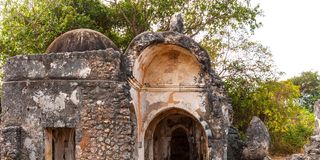
Kilwa is a perfect example. I am fascinated by Kilwa nowadays. Across the world, students learn about the Swahili Coast, Indian Ocean trade, and the travels of Ibn Battuta.
There you find Kilwa occupying a prominent place in our history. This was once among the most influential cities on the eastern coast of Africa.
But what have we done with that inheritance? Can a visitor spend three unforgettable days in Kilwa?
Can one walk through a beautifully restored historic district, attend cultural performances and explore world-class museums?
Can one enjoy waterfront cafés and stay in charming hotels that tell the story of the Swahili civilisation? Or are we merely expecting history itself to do the work?
Kilwa illustrates the difference between possessing an asset and developing a product. Spain didn’t get to where it is automatically. We might think that centuries of development and colonial legacy gave Madrid a head start we cannot match, but that is a profound misreading of history.
Well into the mid-20th century, Spain was an impoverished state emerging from civil war. Its tourism miracle has been engineered from a position of economic desperation. World-class infrastructure, planned cities, institutional transparency, and rigorous execution. History doesn’t give you that.
And that is the problem for us, because our Kilwa doesn’t compete with Bagamoyo and Pangani but with Barcelona, Marrakech, Athens, Cape Town, and others. Tourists have limited time and limited money. And they compare value for money.
That should compel us to think differently about tourism, for it is not just a sector but a report card on our national performance. Tourists do not read our plans or listen to our speeches; they experience the country as it is. Poor roads, unplanned cities, weak service, political repression—everything shows up. That is why discussions about tourism are ultimately discussions about how the nation is performing in general.
Imagine that Tanzania somehow attracted 20 million visitors annually. Could we handle them? Do we have enough hotel rooms? Enough urban experiences, transport infrastructure, trained personnel, clean and attractive public spaces? Certainly not.
And that is precisely the point. We don’t have 20 million visitors not because the world has overlooked us but because our country isn’t designed to welcome them. Tourism rewards preparation. The same is true of investment. And economic growth. And development itself.
Considering how easy some things are to others, perhaps we should stop asking questions such as when will Tanzania become Spain and start asking: how did Spain become Spain?
I think the answers are not hidden. They are visible in the roads, airports, beautiful cities, institutions, public spaces, Real Madrid and Barcelona, and other experiences that millions encounter all the time.
Prosperity isn’t a mystery.
Charles Makakala is a Technology and Management Consultant based in Dar es Salaam
Register to begin your journey to our premium contentSubscribe for full access to premium content