Beyond the golf course: Rotary drive targets Tanzania’s neonatal care crisis

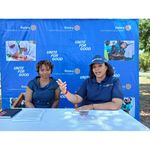
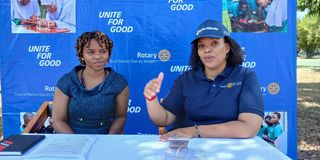
Rotary Club of Bahari Service Project Director Gladness Mkumbo (left) and Club President Irene Bizere address the media on the upcoming golf tournament at the Dar es Salaam Gymkhana Club on 15 August 2026, aimed at raising funds to support the club's community projects. PHOTO | COURTESY
Dar es Salaam. The Rotary Club of Bahari Dar es Salaam is seeking to mobilise more than Sh80 million from leaders and institutions in the public and private sectors to support community projects, with neonatal care among its key priorities.

Through its Neonatal Global Grant Project, the club said in a statement on Wednesday, August 12, 2026, that it is working with SolidarMed to equip neonatal wards and strengthen healthcare workers’ skills, as it seeks to help address preventable newborn deaths in Tanzania.

The fundraising drive will also support other community interventions, including the renovation of primary school toilets, construction of an incinerator at Mtakuja Secondary School and provision of 450 desks for about 3,030 pupils at Toangoma Primary School, including 34 visually impaired pupils.

The neonatal project comes as the country continues to face a significant burden of newborn deaths.

The 2022 Tanzania Demographic and Health Survey put the neonatal mortality rate at 24 deaths per 1,000 live births, while recent World Health Organisation (WHO) estimates put the rate at about 20–21 deaths per 1,000 live births.

The figures indicate progress, but also show that thousands of babies continue to die during their first 28 days of life, a period when premature birth, complications during delivery, infections and other conditions can quickly become fatal without appropriate care.

Globally, WHO says about three-quarters of neonatal deaths occur during the first week of life, making timely intervention, skilled personnel and adequate equipment critical to improving survival.

For the Rotary Club of Bahari, the challenge is therefore not simply about increasing the number of health facilities, but ensuring that existing facilities have the capacity to care for premature and sick newborns.

“The results of our blood donation drive demonstrate the power of collective action. Through partnerships such as those we build around the golf tournament, we can mobilise more people and resources to create an even greater impact,” said the club’s service project director, Ms Gladness Mkumbo.

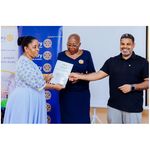
The club’s July blood donation campaign, conducted with Rotaract Tanzania and the National Blood Transfusion Service, attracted 77 donors and collected 44 units of blood, with the potential to save more than 130 lives.

Ms Mkumbo said the experience demonstrates the potential of partnerships in responding to social challenges that cannot be addressed by government institutions alone.

The club is applying the same approach to education and sanitation. The sanitation interventions are particularly relevant to girls’ education.

An earlier Unicef-supported assessment in Dar es Salaam found an average of one drop hole for every 215 boys and one for every 187 girls in sampled schools, compared with a recommended ratio of one for every 20 pupils.

The Rotary interventions therefore go beyond charitable support, targeting gaps that can affect health, dignity, school attendance and learning.

A social welfare expert, Mr Abdul Mkami, said stronger cooperation between government, businesses, civil society organisations and communities should become a deliberate approach to tackling social challenges.

“When institutions come together and contribute what they can, relatively small interventions can produce a much bigger social impact,” he said.

According to him, the responsibility of improving people’s lives should not be left to one institution; “it requires collective action, accountability and sustained commitment.”

The Rotary Club of Bahari’s current programme builds on previous interventions, including planting 1,000 trees at the University of Dar es Salaam, cervical cancer screening for at least 150 women and providing an incinerator to Toangoma Primary School.

Club President Irene Bizere said the annual fundraising platform had evolved beyond sport into a mechanism for building corporate partnerships around community service.

“Over the years, this tournament has grown beyond golf to become a platform where friendship, corporate partnership and a shared commitment to service come together,” she said.

The challenge now is to sustain the partnerships beyond individual fundraising events and ensure that resources reach areas where they can make the greatest difference.