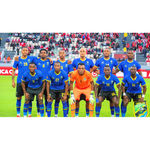
Taifa Stars players jet into the country today from Morocco, where they competed in the ongoing Africa Cup of Nations (Afcon) finals and reached the Round of 16 before being eliminated following a 1–0 loss to the hosts, Morocco.
Dar es Salaam. Only four players in the squad have achieved the rare distinction of representing Tanzania in three consecutive Africa Cup of Nations (Afcon) tournaments, an achievement that reflects their consistency, longevity and strong influence within the national team setup.
Taifa Stars players jet into the country today from Morocco, where they competed in the ongoing Africa Cup of Nations (Afcon) finals and reached the Round of 16 before being eliminated following a 1–0 loss to the hosts, Morocco.
A warm welcome awaits the team for their achievement, which prompted President Samia Suluhu Hassan to send a special aircraft to bring them back from Morocco. On Saturday, the players will also be hosted for a grand reception at the State House.
According to available records, only four players — Taifa Stars captain Mbwana Samatta, forward Simon Msuva, attacking midfielder Feisal “Fei Toto” Salum and left back Mohamed “Tshabalala” Hussein, have achieved this milestone. All four have featured at Afcon 2019 in Egypt, the 2023 edition in Ivory Coast, and the ongoing 2025 tournament in Morocco.
Their continued presence across these three finals reflects not only individual discipline and quality, but also the steady evolution of the Taifa Stars over the past decade.
From Tanzania’s long absence after the 1980 Afcon to their return in 2019 and subsequent qualifications, these four players have served as pillars of continuity and leadership within the squad.
Key roles in attack, midfield and defence
Samatta and Msuva lead the attacking line, combining experience, mobility and goal scoring instinct. Feisal Salum has been a key creative force in midfield, linking play and driving attacking transitions, while Mohamed Hussein has remained a dependable figure in the defensive unit, offering stability at left back.
Together, they form the core spine that successive coaches have relied upon through tactical changes and competitive challenges.
Age still in their favour for future tournaments
Age wise, the four players still appear well positioned to continue contributing to the national team beyond the current tournament. Samatta is 32 years old, the same age as Msuva, while Feisal is 27 and Mohamed Hussein is 29.
Based on current records and performance levels, all four remain strong candidates to feature again at the next Afcon finals, which are scheduled to be jointly staged in Tanzania, Kenya and Uganda.
The upcoming edition is expected to be a historic event for the East African region.
Their ages also compare favourably with several senior stars competing at the ongoing Afcon.
The tournament includes players in their mid-thirties such as Comoros captain Youssouf M’Changama aged 35, Morocco goalkeeper Munir Mohamedi aged 36, Morocco defender Jawad El Yamiq aged 33, Zambia defender Kabaso Chongo aged 33, as well as a number of Angola internationals aged 33 including captain Fred and midfielder Agostinho Cristóvão “Mabululu”.
These examples demonstrate that modern training standards and professional club environments enable players to remain competitive beyond the age of 30.
Across most teams, however, the average squad age ranges between 25 and 28 years, reflecting a balance of youth and experience.
Within that context, Tanzania’s four Afcon stalwarts continue to offer composure, tournament exposure and leadership while still maintaining the physical readiness required at continental level.
TFF president hails Golden Generation
Tanzania Football Federation (TFF) President Wallace Karia has described the current Taifa Stars generation as a golden age, citing their progress, resilience and history making performances at recent tournaments.
Reflecting on the national team’s participation in the 1980 Afcon in Lagos, Nigeria, followed by their return in Egypt and Ivory Coast and now their qualification to the knockout stage, Karia noted that this era marks a significant milestone in the nation’s football journey.
“It is an open fact that this Taifa Stars has done the best in our history. It is the golden age of the team and we are all celebrating it,” said Karia. “The players and the technical bench deserve compliments for these achievements.”
Legacy of leadership and continuity
Karia’s remarks underline the leadership roles played by Samatta, Msuva, Feisal and Mohamed Hussein.
Their presence across three Afcon tournaments has ensured continuity, mentorship to emerging players and a high standard of professionalism within the squad.
As Tanzania looks ahead to future competitions, especially the forthcoming East African hosted Afcon, the experience and legacy of these four players will continue to shape the ambitions of the Taifa Stars. Their contribution has already earned them a lasting place in Tanzania’s football history.