Samia weighs in as Taifa Stars’ Afcon exit sparks officiating debate
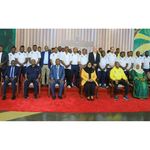
President Samia Suluhu Hassan receives an award from the Confederation of African Football (CAF) President, Patrice Motsepe, presented to her by former Minister for Information, Culture, Arts and Sports and current Minister-designate of State in the President’s Office (Special Duties), Professor Palamagamba Kabudi, during a ceremony to honour athletes who excelled in international competitions at State House in Dar es Salaam on January 10, 2026. The award recognises the government’s contribution to the development of football in Africa. PHOTO | COURTESY
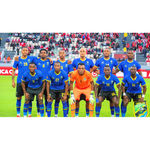
Tanzania were eliminated in the Round of 16 after a 1–0 defeat to tournament hosts Morocco following extra time
Dar es Salaam. President Samia Suluhu Hassan has added her voice to the growing debate surrounding Tanzania’s controversial exit from the Africa Cup of Nations (Afcon) 2025, saying the Taifa Stars displayed courage and discipline despite circumstances that appeared stacked against them.
Tanzania were eliminated in the Round of 16 after a 1–0 defeat to tournament hosts Morocco following extra time, but the manner of the loss has sparked widespread criticism of officiating and tournament neutrality.
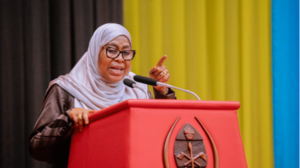
Speaking after hosting the national team at State House in Dar es Salaam, President Hassan revealed that she watched the entire match and commended the players for their resilience under pressure.
"The team fought bravely and represented our country with dignity,” she said, noting that the Taifa Stars remained composed despite what many observers viewed as contentious decisions.
However, the Head of State went further, suggesting that Morocco’s progression had felt inevitable given their status as hosts and their influence within African football.
“We all know why what happened had to happen. The team we were playing against is the host of Afcon and a wealthy nation with influence over the organisers,” President Hassan said.
Her remarks resonated with frustrations expressed by fans and analysts across the continent, particularly following a key incident late in extra time when Tanzania were denied a penalty. Despite appeals, the referee declined to consult the Video Assistant Referee (VAR), intensifying criticism over the technology’s inconsistent application at the tournament.
Referee Boubou Traore has since come under scrutiny, with observers arguing that several marginal decisions favoured the hosts.
Statistics circulating online indicate that in seven Afcon matches officiated by Traore involving Morocco, the Atlas Lions have won all seven, conceding just one goal,with all penalties awarded in their favour.
While not proof of wrongdoing, the figures have fuelled suspicion and eroded confidence.
Tanzania’s elimination was particularly painful given their overall performance at Afcon 2025. The Taifa Stars drew 1–1 with Tunisia and Uganda, narrowly lost 2–1 to Nigeria in their opener, and delivered what many regarded as their strongest display against Morocco.
Concerns over officiating have not been limited to Tanzania’s match. Morocco’s subsequent 2–0 win over Cameroon was also overshadowed by disputed decisions, prompting protests from Cameroonian players and supporters.
Tensions escalated further when the Moroccan Football Federation successfully objected to the appointment of Egyptian referee Amin Omar ahead of that fixture.
The Confederation of African Football (CAF) replaced him with Mauritanian official Dahane Beida, a decision Cameroon’s federation reportedly learned about through social media.
CAF also raised eyebrows by appointing the same VAR assessor, Congolese official Rene Daniel Louzaya, for Morocco’s fifth consecutive match.
That was an unprecedented move that drew criticism from several football administrators, including Cameroon FA president Samuel Eto’o and Nigeria Football Federation president Ibrahim Musa Gusau.
As the tournament continues, President Hassan’s comments have positioned Tanzania firmly within a wider continental conversation about fairness, transparency and governance in African football.
For the Taifa Stars, Afcon 2025 ends with pride in performance but lingering bitterness over the circumstances of their exit. For CAF, the challenge remains restoring trust in officiating and ensuring that results are decided on the pitch rather than in controversy off it.