I&M Bank Tanzania eyes more growth after crossing Sh 1 trillion asset mark

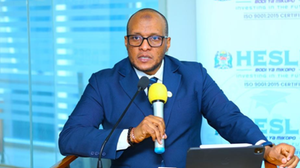
The I&M Bank Tanzania Chief Executive Officer and Managing Director, Mr. Zahid Mustafa.

I&M Bank Tanzania has crossed the Sh 1 trillion asset threshold and set its sights on joining the country’s top 10 banks within the next three to four years, as it turns to the capital market to finance its next phase of growth.

The bank’s expansion strategy will be supported by the I&M Hatua Bond, a Sh 100 billion Medium-Term Note Programme intended to diversi­fy funding, support loan growth and strengthen balance-sheet manage­ment.

Chief Executive Officer and Man­aging Director Zahid Mustafa said the bank could reach the top 10 through organic growth in about four years, while an acquisition could shorten the timeline to approximately three years.

“Once we crossed the one-trillion mark, which was our theme for this year, our next goal is to be among the top 10, and then progress from the top 10 to the top five,” Mr Mustafa told Mwananchi Communications Limit­ed Executive Editor Mpoki Thomson.

The bank’s unaudited financial results show that total assets stood at Sh 1.013 trillion as at June 30, 2026. Customer deposits had risen to Sh 719.2 billion, while net loans, advanc­es and overdrafts stood at Sh 572.5 billion. Non-performing loans were equivalent to 4.18 percent of gross loans.

The milestone follows strong per­formance in 2025. According to the bank’s annual report, profit before tax increased by 21 percent to Sh 22.14 billion, total assets grew by 18.7 per­cent to Sh954 billion, loans expanded by 21.4 percent to Sh 528 billion and customer deposits reached Sh610 bil­lion. The non-performing asset ratio also declined.

Bond to fund expansion

The Hatua Bond is the bank’s first issuance under the five-year Medi­um-Term Note Programme. The programme documentation pro­vides for total debt issuance of up to Sh 100 billion in multiple tranches, with proceeds earmarked for gen­eral corporate purposes, including loan growth, funding diversification, liquidity management and other bal­ance-sheet requirements.

The current offer has a base size of Sh 20 billion and a Sh 5 billion greenshoe option, according to the bank’s investor FAQ. The programme memorandum lists an indicative first tranche of Sh 25 billion, equivalent to the base offer plus the full green­shoe option. The bond carries a fixed coupon of 13 percent per annum, pay­able quarterly over five years, with no withholding tax charged on the inter­est earned. The minimum investment is Sh 500,000, and the offer is open to individuals, corporations and insti­tutions. The bank officially launched the bond on August 4, 2026, and said the offer was open to investors.

The instrument is expected to be listed on the Dar es Salaam Stock Exchange, allowing investors to sell before maturity through the sec­ondary market, subject to market conditions. The bank has urged pro­spective investors to understand the difference between corporate bonds and government securities, including the risks associated with the issuer’s financial performance.

For I&M Bank Tanzania, the bond is intended to address a funding challenge common in the banking sector: providing longer-term loans while relying heavily on short-term deposits. Mr Mustafa said the five-year instrument would give the bank a more stable medium-term funding source as it expands lending.

“We want to diversify our fund­ing,” he said, explaining that the bond would provide investors with an alter­native investment while helping the bank support its growth.

The I&M Bank Tanzania Chief Executive Officer and Managing Director, Mr. Zahid Mustafa (right), poses for a photo with Mwananchi Communications Limited Executive Editor, Mpoki Thomson, shortly after an exclusive inter­view held at the I&M Bank Tanzania headquarters in Dar es Salaam.

Regional advantage

I&M Bank Tanzania is part of I&M Group, which has operations in Ken­ya, Rwanda, Tanzania, Uganda and Mauritius. Mr Mustafa said Tanza­nia’s position within the group gives the bank an advantage in serving busi­nesses with operations in more than one East African market.

A customer with an established banking relationship in Kenya who expands into Tanzania, Uganda or Rwanda can be assessed using exist­ing information and experience, rath­er than being treated as an entirely new borrower, he said.

The group’s cross-border proposi­tion includes Brisk, an instant-credit product designed to support cus­tomers operating across borders. Mr Mustafa said Tanzania was strategi­cally important to the group because of its large population, growing mid­dle class and opportunities in areas such as infrastructure, mining, ener­gy, oil and gas.

He said Tanzania currently ranks fourth among the group’s five mar­kets. Kenya remains the largest busi­ness, while Rwanda is the group’s oldest operation. Tanzania’s own business was established in 2010 fol­lowing the acquisition of CF Union Bank.

Digital-first growth

I&M Bank Tanzania entered the market primarily as a corporate and business bank before expanding into retail and consumer banking as the middle class grew and the economy became more digital.

Rather than competing for every retail customer, the bank has chosen selected segments in a market where the three largest banks control about 70 percent of retail banking revenue, according to Mr Mustafa.

The bank has nine branches, but has used digital channels to extend its reach. Mr Mustafa said I&M had the second-largest digital-lending port­folio in Tanzania and more than six million customers on a mobile-net­work-operator platform. The plat­form has originated more than bil­lions in digital loans over the past four years, he said. The bank is also the sec­ond-largest digital lender in Zanzibar despite not yet having a branch there. Mr Mustafa said a branch in Zanzibar was planned.

Another part of I&M’s strategy is allowing customers to move money between mobile wallets and bank accounts without a charge under the ‘Ni Bure’ compaign. Mr Mustafa said the decision reduced fee income in the short term but helped attract cus­tomers, deepen account balances and create a bridge between mobile-mon­ey users and formal banking services.

Focus on SMEs and last-mile finance

The bank also plans to expand lending to small and medium-sized enterprises through faster, technol­ogy-based credit assessment. Mr Mustafa said traditional bank pro­cesses often made it too costly to serve smaller borrowers because loans of Sh10 million were assessed using pro­cedures similar to those applied to much larger corporate facilities.

He identified last-mile financing as a major opportunity, particularly loans of between Sh1 million and Sh10 million for retailers, distributors and other businesses in supply chains that remain heavily cash-based.

I&M is piloting partnerships with companies in the fast-moving con­sumer goods and distribution sectors. Mr Mustafa said the partnerships would need to demonstrate viable business models, manageable credit risk, sound technology and a reliable customer experience.

The bank’s efforts to expand lend­ing will be accompanied by risk-based pricing and improved credit scoring. Mr Mustafa said earlier asset-qual­ity challenges were partly linked to concentration in a smaller number of corporate borrowers, where the fail­ure of one customer could have a sig­nificant effect on the bank’s non-per­forming loan ratio. Portfolio diversifi­cation, stronger recovery efforts and improved underwriting have since helped reduce the ratio, he said.

Growth through consolidation

Mr Mustafa said I&M Bank Tanza­nia would continue developing capa­bilities in sectors that support Tan­zania’s economic priorities, includ­ing infrastructure, energy, mining and manufacturing. The bank also intends to participate in syndicated financing for large projects while sup­porting the suppliers, contractors, engineering firms and distributors linked to those investments.

He said the bank remained open to acquisitions as Tanzania’s bank­ing sector moves towards possible consolidation. While organic growth could take I&M into the top 10 in about four years, he said the right acquisition could make the target achievable in roughly three years.

The bank’s immediate challenge will be to convert its asset milestone and new capital-markets access into sustainable growth while maintain­ing asset quality in a competitive banking market.