Stand with science: Tanzania urged to embrace evidence in health sector
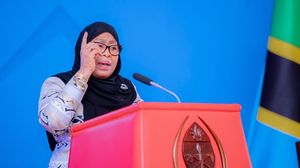
The Assistant Director of Public Health Education at the Ministry of Health, Dr Rahma Hingora, speaks while moderating a discussion during the World Health Day celebrations carrying the theme: “Together, let us use science for the benefit of all.”
The commemoration of World Health Day 2026 has come with a strong call for Tanzanians to stand with science in safeguarding health and building a better future, as the World Health Organization (WHO) emphasizes that scientific evidence is the cornerstone of progress in the health sector.
This year’s theme, “Together for Health; Stand with Science,” aims to promote evidence-based decision-making, strengthen health systems, and address emerging challenges, including disease outbreaks and the impacts of climate change.
According to the WHO, science has played a crucial role in saving lives in Tanzania through interventions such as vaccination, disease diagnostics, and surveillance systems. These efforts have improved healthcare delivery and reduced preventable deaths.
Research institutions in the country have been identified as key pillars of this progress. Institutions such as the National Institute for Medical Research (NIMR), Ifakara Health Institute (IHI), Muhimbili University of Health and Allied Sciences (MUHAS), and Sokoine University of Agriculture (SUA) have been at the forefront of generating evidence to inform policy and improve health services.
The impact of science is evident, including a decline in under-five mortality rates and improvements in safe motherhood services and surgical care. Studies show that the application of scientific methods in healthcare has reduced post-surgical infections and maternal deaths during childbirth.
The WHO has also underscored the importance of the One Health approach, which integrates human, animal, and environmental health particularly in addressing zoonotic diseases and environmental challenges.
However, challenges such as the spread of health misinformation online continue to undermine these efforts. The WHO has called on the public, health professionals, and journalists to share accurate, evidence-based information.
The Assistant Director for Health Education at the Ministry of Health, Dr Rahma Hingora, said the government, in collaboration with the WHO, continues to educate the public on the importance of embracing science to protect health. She linked these efforts to the One Health approach, which connects human, animal, and environmental health.
She noted that outbreaks such as the Marburg Virus Disease and Mpox highlight the need for such collaboration, as many diseases emerge from interactions between humans, animals, and the environment.
Dr Nyanda Ntinginya, Director of Research Promotion and Coordination at NIMR, said the institution has been generating scientific evidence for over four decades to support improvements in health policies and systems.
He added that NIMR had been collaborating with both local and international partners to conduct research and translate findings into actionable health decisions.
Dr Siril Kullaya, Technical Director for the Global Health Security Project at CIHEB Tanzania, noted that approximately 60 to 70 percent of infectious disease outbreaks originate from animals and the environment.
He emphasized that the One Health strategy enabled early detection and control of diseases before spreading to humans, stressing the importance of collaboration across human, livestock, and environmental health sectors.
“Health and the economy go hand in hand. With strong national collaboration, we can strengthen health security and drive economic growth,” he said.
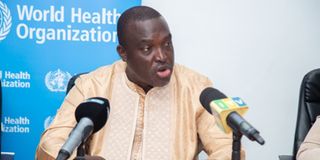
Speaking on behalf of the WHO Representative to Tanzania, Dr Alex Gasasira, Dr Thomas Fedjo Tefoyet, Coordinator Health Systems Strengthening (HSS), delivered remarks during the World Health Day celebrations under the theme: “Together, let us use science for the benefit of all.”
In his official message, the WHO Regional Director for Africa, Dr Mohamed Janabi, said this year’s theme reflected the vital contribution of scientific research in saving lives and improving healthcare globally. He noted that scientific advances had led to better prevention, effective treatments, and increased life expectancy, with Africa contributing significantly to some of these achievements.
“African scientists, institutions, and communities have played a major role in addressing health challenges. For example, the rapid development of Ebola vaccines during outbreaks in West and Central Africa,” he said.
He added that genomic sequencing capacity in South Africa enabled early detection of new COVID-19 variants, helping the world respond more quickly.
Despite these achievements, he noted that Africa continued to face challenges, including non-communicable diseases, emerging outbreaks, and weak health systems.
He explained that the One Health approach had helped many African countries strengthen disease surveillance, risk assessment, and emergency response systems.
However, gaps remain, including limited research funding, weak surveillance systems, and inadequate early warning mechanisms.
Currently, 46 African countries have developed national health security plans, while all member states have strategies to combat antimicrobial resistance.
The WHO has urged African governments to increase domestic investment in science and innovation, while calling on international partners to support Africa-led initiatives and expand access to technology and knowledge.
“Scientific innovation must reach everyone. A discovery that does not reach those who need it most remains unfinished work,” Dr Janabi emphasized.
Overall, this year’s message stresses that everyone has a role to play in trusting science, using evidence, and contributing to building healthier communities.
The WHO has also called on health institutions and researchers in Tanzania to strengthen the use of implementation of science to improve healthcare delivery and outcomes.
Speaking on behalf of the WHO Representative to Tanzania, Dr Alex Gasasira, Dr Thomas Fedjo Tefoyet, Coordinator Health Systems Strengthening (HSS) said health success depended not only on discovering solutions but also on how effectively they are implemented in real-world settings.
He noted that implementation, operational, and action research are critical in answering key questions such as: “What works, where, for whom, and how?”
“While basic research is important, it does not address all needs. Tanzania has significant potential to do better by directly integrating evidence into health systems,” he said.
He added that effective use of data in planning services, quality assessments, and the ability of professionals to adapt interventions to local contexts are key to improving health sector performance.
However, challenges remain, including poor dissemination of research findings, limited resources, and weak data coordination systems.
He also highlighted the need for institutions such as SUA and NIMR to intensify research on emerging and re-emerging diseases, neglected diseases, and youth mental health.
WHO further encouraged young researchers and health workers in training to recognize that their country needs their scientific expertise and innovation. WHO stands with the Government of Tanzania and reaffirms its commitment to working together to ensure that science benefits all citizens.