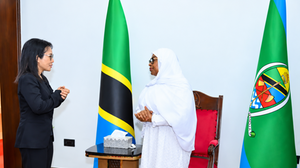
Unguja. The formation of Zanzibar’s Government of National Unity (SUK) now rests with a 10-member joint committee appointed to guide negotiations between CCM and ACT Wazalendo.
The committee, appointed by Zanzibar President Hussein Ali Mwinyi, brings together five representatives from each party following an agreement signed by the two sides on July 9, 2026.
The appointments have drawn mixed reactions, with some political analysts welcoming the move as a step towards restoring political stability, while others have questioned its constitutional basis and the exclusion of other political parties.
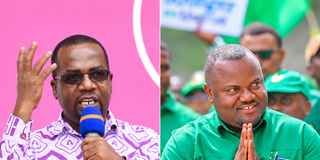
The committee is chaired jointly by ACT Wazalendo Deputy Secretary-General Omar Ali Shehe and CCM Zanzibar Deputy Secretary-General Abdi Mahmoud Abdi.
CCM’s representatives are Minister for Construction and Transport Khalid Salum Mohamed, legislator Najma Murtaza Giga, former House of Representatives Deputy Speaker Mgeni Hassan Juma and Mohamed Nur Mohamed.
ACT Wazalendo is represented by House of Representatives member Masoud Ali Mohamed, the party’s Attorney General Omar Said Shaaban, former 2025 running-mate candidate Fatma Abdulhabib Fereji and House member Said Ali Mbarouk.
The President also appointed joint secretaries and members of the committee’s secretariat, which is led by Mwalim Ali Mwalim and Seif Khamis Mohamed. The appointments follow nearly eight months of talks between CCM and ACT Wazalendo that began on November 9, 2025, after the October 29 General Election.
Under Zanzibar’s 2010 Constitution, the second-placed party is required to submit the name of the First Vice President and representatives for appointment as ministers in the SUK.
ACT Wazalendo, which emerged as the second-largest party, declined to submit the names, citing concerns over the conduct of the election and calling for changes.
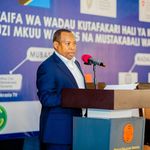
Political analyst and activist Ali Makame questioned the joint committee, arguing that the process appeared to prioritise the interests of the two parties over broader national concerns. He said bypassing constitutional procedures could trigger legal challenges, while the exclusion of other political parties and institutions from the reconciliation process could limit its legitimacy.
“A decision made by people from only two political parties cannot be taken as the position of all Zanzibaris,” he said.
Political analyst Prof Mohamed Makame Haji, however, described the committee as an important step towards strengthening the SUK and political stability.
He said reconciliation was necessary to address grievances that had previously affected full participation in the unity government.
“Zanzibar’s politics are directly linked to the Constitution. Without strong reconciliation, the constitutional requirement for a Government of National Unity cannot be fully realised,” Prof Haji said.
The July 9 agreement outlines seven areas for implementation, including establishing the SUK, putting Zanzibar’s broader interests first, good governance, respect for national principles, dialogue and cooperation, and implementation of the reconciliation agenda.
Zanzibar has a history of political reconciliation between CCM and opposition parties. Similar initiatives were undertaken in 2001, 2010, 2016 and 2020, although their outcomes varied.
The latest process involves President Mwinyi and ACT Wazalendo chairman Othman Masoud, following the 2025 election.
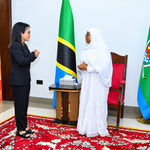
At the signing of the agreement in July, President Samia Suluhu Hassan described the move as a sign of political maturity and a new chapter of unity, peace and stability in Zanzibar.
“Reconciliation is not weakness but political maturity, and it opens a new chapter of unity, peace, stability and solidarity for the development of the people of Zanzibar,” she said.
Register to begin your journey to our premium contentSubscribe for full access to premium content