Free medical camp delivers eye surgeries and care to over 6,800 Zanzibaris
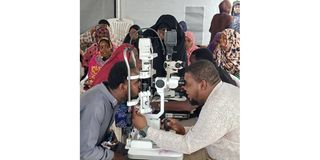
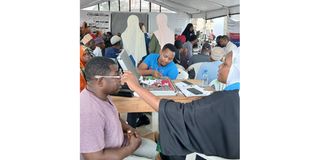
Eye specialists examining citizens who turned up at the eye camp at Sebleni health centre, Urban West Region in Unguja on Saturday, September 4, 2026. PHOTO| JESSE MIKOFU
Unguja. Exactly 6,809 citizens in the North Unguja and Urban West regions received specialist eye screening and treatment services during a seven-day medical camp.
The initiative, resulting from a collaboration between the Zanzibar First Vice President's Office, Muhimbili National Hospital (MNH), and Qatar Charity, aimed to reduce avoidable visual impairment.
According to a report issued on Friday, September 4, 2026, by the MNH director-general, Dr Delilah Kimambo, during the closure of the at the Sebleni Health Centre, 6,809 citizens were screened across both regions.
"In North Unguja Region, 971 citizens received medical treatment, with 136 patients undergoing eye surgery," stated Dr Kimambo.
"The response was even larger in Urban West Region, where approximately 4,536 people turned up for services, and 254 among them underwent surgery," she added.
Dr Kimambo noted that 373 patients underwent cataract surgery, whilst 446 were diagnosed with the condition.
Furthermore, she mentioned that 3,830 citizens received various treatments, including spectacles, medication, and professional advice.
The Council for People with Disabilities executive secretary, Mr Ussi Khamis Debe, said eye health forms the foundation of education, employment, and productivity.
"Diseases like cataracts, glaucoma, and diabetic complications can be detected early and treated before causing permanent disability," he said.
He cited 2022 census figures showing visual impairments feature among disability types holding high percentages nationally.
The Qatar Charity country director, Mr Amjad Al Tahan, called the camp one of their most successful campaigns ever conducted.
He promised that given the evident high demand, the organisation is considering expanding these services to Pemba Island and broadening community healthcare reach.
The Urban West Regional Commissioner, Mr Mohamed Ali Abdallah, who served as chief guest, requested stakeholders consider offering targeted services for schoolchildren, alongside boosting screening for other diseases like cancer and abdominal issues amongst women.
"What occurred here is momentous; truly, our people face numerous health challenges, as demonstrated by this immense public turnout," he said.
Some citizens receiving services expressed gratitude, stating they would have spent heavily on treatment, making the camp a lifesaver.
One patient from Magomeni, Mr Maulidi Haji Tigizi, explained that the service he received was excellent and hassle-free.
Mr Tigizi noted he had never visited a hospital for his eye issue previously, but decided to attend Sebleni upon hearing experts had arrived offering free services, subsequently receiving surgery.
For her part, a resident of Mwera Mtofaani, Ms Fatma Fadhil Machano, extended special thanks for bringing these free services closer to the people.
"The eye is a vital organ providing life's light, and without government efforts offering free care, many citizens could not afford treatment costs," said Ms Machano.