Pressure mounts on Zanzibar Agriculture Ministry over Sh181 billion 2026/27 budget plan
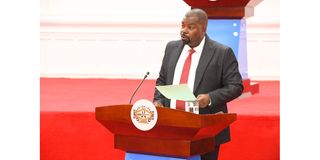
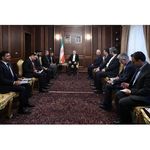
Zanzibar Minister for Agriculture, Irrigation, Natural Resources, and Livestock, Mr Suleiman Masoud Makame, presents estimates of revenue and expenditure for the 2026/27 budget during the ongoing House of Representatives budget session at Chukwani in Unguja, Zanzibar, on Monday, May 18, 2026. PHOTO | JESSE MIKOFU
Unguja. Members of the House of Representatives have criticised the Ministry of Agriculture, Irrigation, Natural Resources, and Livestock for what they described as “theoretical” agricultural plans.
The Zanzibar lawmakers said the plans were not reflected on the ground, as the Ministry seeks approval of Sh181.8 billion for the 2026/27 financial year to implement 10 development projects.
They urged the government to adopt modern agricultural technologies and learn from countries that have successfully transformed their farming systems, warning that Zanzibar risks continued dependence on food imports if current practices persist.
Presenting the ministry’s estimates of revenue and expenditure during the House budget session on Monday, May 18, 2026, the minister responsible for Agriculture, Mr Suleiman Masoud Makame, said the allocation includes Sh12.4 billion in subsidies for the Agricultural and Livestock Research Institute and the government agency responsible for tractor and agricultural equipment services.
Mr Makame said implementing the planned projects would require Sh145 billion, with Sh86.5 billion expected from the Revolutionary Government of Zanzibar (RGZ) and Sh58.4 billion from development partners.
Members’ contributions
During the debate, several representatives said agricultural plans in Zanzibar remain largely on paper, calling for a shift from traditional farming methods towards science-based and technology-driven agriculture.
Mtambile representative, Mr Alley Masoud Alley, said irrigation farming was still being promoted in theory while relying on wells that, in his view, cannot support sustainable production.
“Currently, agriculture is still based on tradition and not a system that can uplift farmers and improve food security,” he said.
Magomeni representative, Mr Mahfoudh Abdallah Mohamed, CCM, said the government must strengthen the use of technology, warning that without it, meaningful transformation would not be achieved.
“Without technology, we will not succeed. If we truly want to end food dependency, we must invest in technology. If we continue as we are, we will not get there. We must focus on scientific agriculture,” he said.
Pandani representative, Prof Omar Fakih Hamad, said large sums were being allocated to agriculture, yet tangible results were still lacking despite repeated parliamentary approvals.
“There are no results for farmers. It has been stated in the budget report that 50 percent of households in Zanzibar lack food security, yet we are being asked to approve Sh75 billion for the rehabilitation of warehouses,” he said.
He added that Zanzibar had partnerships with countries such as Thailand, India, and Vietnam, which had advanced their agricultural sectors, but had not fully benefited from their technologies.
Another women’s representative, Ms Aza January Joseph, said agriculture remained largely theoretical despite government efforts to increase production.
“Agriculture is not visible in reality. If you go to the markets, you do not see the produce that is said to be grown in Zanzibar, yet we keep talking about agriculture every day,” she said.
Minister outlines projects
Responding, Mr Makame outlined a series of projects to be implemented, including strengthening food systems by boosting productivity through modern irrigation-based agriculture.
“The main goal is to strengthen food security in Zanzibar and increase rice farmers’ incomes by improving production. We will also improve agricultural infrastructure such as rural roads, tractor access routes, wells, protective fencing, storage facilities, drying floors, tractor sheds, sanitation facilities, and warehouses in six irrigation schemes,” he said.
He added that another project involves supplying agricultural machinery and water management equipment to farmer groups and government agencies under the General Agriculture Tractor Fleet Management Services (GATFMS).
On the Tanzania Food Systems Resilience Programme, he said it would strengthen food systems by improving service delivery, adopting climate-resilient technologies, and enhancing capacity to respond to climate change.
Another initiative involves rehabilitation of storage facilities and food reserves to improve strategic food stocks and reduce shortages during emergencies.
“This includes rehabilitation of 10 dilapidated warehouses, construction of silos with a capacity of 80,000 tonnes in Unguja and Pemba, purchase of rice for strategic reserves, and construction of a food storage centre and a central agricultural laboratory,” he said.
On the food system transformation and inclusive economic growth project, Mr Makame said it would improve food and nutrition security while strengthening value chains for crops such as bananas, cassava and seaweed using climate-resilient approaches.
Other interventions include strengthening agricultural research, livestock and natural resources institutions.
“This is a new project expected to begin this financial year. It will strengthen research capacity in agriculture, natural resources and livestock through establishment and improvement of laboratories, research centres and animal trial facilities in Zanzibar,” he said.
Additional projects include land rehabilitation systems, coastal forest protection programmes, and development of livestock and forestry infrastructure.
Committee views
Presenting committee observations, Chairperson, Ms Fatma Ramadhan Mohamed, commended the government for increasing the agriculture development programme allocation from Sh49.3 billion to Sh147.7 billion, recommending full funding of the programme as requested.
She said the programme was intended to improve irrigation infrastructure, boost food production, strengthen seed systems, control crop diseases, and enhance food storage and availability in the country.