Unguja. Members of the House of Representatives have said that despite the government’s major investment in education infrastructure, more effort is needed to ensure the quality of education matches the standards of the newly constructed schools.
They said although modern multi-storey school buildings have been constructed, many citizens, including leaders and financially capable families, still do not enrol their children in those schools because of concerns over education quality.
The legislators urged the government to further improve curricula to ensure education offered in Zanzibar meets higher standards and enhances graduates’ competitiveness in the labour market.
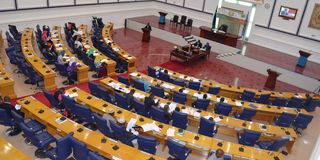
The remarks were made on Saturday, May 16, 2026, during debate on the Ministry of Education and Vocational Training’s revenue and expenditure estimates at the House of Representatives in Chukwani, Unguja.
The House approved Sh1.1 trillion for the ministry to implement six priorities in the 2026/27 financial year.
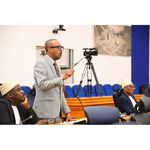
Contributing to the debate, Amani Representative, Mr Masoud Amour Masoud, CCM, said despite heavy government investment in multi-storey primary and secondary schools, many people, including legislators, still do not take their children there.
“We must be honest here. We praise these beautiful buildings, but even many of us here do not take our children to those schools. The main reason is that there is still no proper English-medium teaching,” he said.
He advised the ministry to review and further improve the curriculum.
“English has become a challenge because from Standard One to Standard Seven all subjects are taught in Kiswahili except English, but when students join secondary school all subjects are taught in English except Kiswahili,” he said.
“When you look at this system, it cannot bring educational transformation. If possible, pupils should study in Kiswahili up to Standard Four, then from Standard Five to Seven all subjects should be taught in English,” he added.
He added that Zanzibar’s education system still encourages memorisation instead of helping learners develop understanding, something he said lowers education standards.
Paje Representative Jaku Hashim Ayub, CCM, said Arabic has been mixed into some educational books, which he described as inappropriate because education and religion should remain separate.
“On education quality, we are mixing Arabic and religion in books. These are major mistakes. Religion should remain independent and educational books should not be mixed,” he said.
Chaani Representative, Mr Juma Usongi, CCM, said there is a need to introduce history lessons from lower levels of education to build a strong national foundation.
“A nation without history cannot progress anywhere,” he said.
He also called for stronger emphasis on moral education, saying discipline and values appear to be deteriorating in many schools.
Mtambwe Representative, Dr Mohamed Ali Suleiman, ACT-Wazalendo, said students with special needs continue to face discrimination despite the construction of modern school buildings.
“We are told students with special needs should remain on lower floors in these multi-storey schools. This continues discrimination because they also want access to upper floors. We must establish infrastructure that accommodates them,” he said.
He also noted that some schools remain in poor condition with leaking roofs and require urgent rehabilitation.
Ole Representative, Me Seif Hamad Suleiman, said school infrastructure still lacks adequate facilities for students with special needs, while there is also a shortage of specialised teachers.
“I have not seen sufficient investment in this area. Teachers are unavailable, yet these students need instructors who are specifically trained to meet their needs,” he said.
A women’s representative, Ms Zainab Shomari said Zanzibar still needs to improve services for people with special needs and suggested facilities should be tailored according to different disabilities where possible.
Women’s representative, Ms Tabia Maulid Mwita, said some nursery school teachers lack professional qualifications, urging the ministry to ensure teachers handling young learners are properly trained and certified.
“There are teachers without qualifications teaching these children. It is impossible for someone trained in another field to simply be assigned to teach young learners. We must end this negligence because education is everything,” she said.
Another women’s representative, Ms Chumu Kombo Khamis, urged authorities to consider geographical challenges affecting students with special needs to ensure equal access to education.
“Let us consider geographical conditions and establish facilities in every district if possible because in the past some parents hid these children, while environmental barriers also contributed to the problem,” she said.
Chambani Representative, Mr Mahmoud Shineni Ali, said nursery and primary education remain the foundation of learning but still receive insufficient emphasis.
He said literacy alone should not be treated as the sole indicator of education quality, urging greater focus on competence and practical skills.
He also said graduates of alternative education programmes lack competitiveness because they receive more theoretical than practical training.
“We are spending huge amounts constructing large library buildings while the world is becoming digital. We should invest more in systems that allow students to learn from anywhere instead of focusing only on physical libraries,” he said.
Responding to the concerns while winding up debate on the budget, Minister for Education and Vocational Training, Ms Lela Mohamed Mussa, said the government continues implementing major reforms in the sector, which explains the large allocation given to the ministry.
She said several curriculum reforms have already been introduced in both general and vocational education.