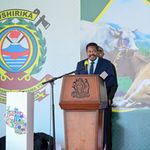
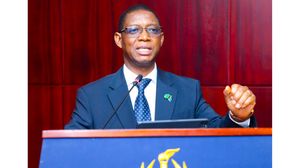
Unguja. Vice-President, Dr Emanuel Nchimbi, said major reforms made in the education sector in Zanzibar and Tanzania as a whole have produced many positive results, including a substantial rise in student enrolment across various learning levels.
He made the statement on Tuesday, August 11, 2026, when opening a girls' dormitory at Hasnuu Makame Secondary School in Kibuteni, South Unguja Region, as part of the Kizimkazi Festival celebrations.
"Significant investment in the education sector and modern infrastructure across both governments is expanding educational and employment opportunities," he said.
Other positive outcomes include improved teaching and learning infrastructure, which has contributed to higher pass rates in national examinations.
Despite major achievements recorded in improving the education sector, Dr Nchimbi noted that challenges have emerged due to the large number of students enrolling at various levels, particularly shortages of classrooms, desks, and dormitories.
"In that sense, the opening of this dormitory will address the challenge faced by students who walk long distances and spend considerable time commuting to and from school," said Dr Nchimbi.
He said students have saved time and will now have opportunities to attend classes, study independently, and get adequate rest.
Furthermore, Dr Nchimbi said the presence of this dormitory environment will boost focus, discipline, and close collaboration among students while offering teachers a solid opportunity to supervise, nurture, and assist them fully in performance.
He noted that performance derived through the dormitory will significantly boost student pass rates and academic standards at the school.
He said government efforts to bolster educational infrastructure are continuous and encompass providing various supplies, including teaching materials, furniture, and numerous qualified teachers.
Thus, according to Dr Nchimbi, the government will continue allocating sufficient resources to ensure all schools have modern infrastructure, qualified teachers, and appropriate learning and teaching equipment.
He said the goal is to prepare knowledgeable, innovative, skilled, and self-reliant youth who contribute fully to national development.
He urged them to safeguard the infrastructure constructed by the government so it serves users for a long period.
"Parents and the community should continue supporting government efforts by encouraging children to study hard and protecting all infrastructure, as sustainable development requires genuine cooperation between government and society," said Dr Nchimbi.
Zanzibar Minister for Education and Vocational Training, Ms Lela Mohamed Mussa, said the increase in such dormitories reflects how education is expanding.
The minister said when the eighth-phase government assumed office, the education budget stood at Sh256 billion, but to date, the budget has reached Sh1.1 trillion, representing massive investment in the sector.
"The government intends to eliminate double-session schooling, as experts have advised that it adversely impacts learning and deprives children of time to attend madrasa," she said.
Providing technical details, the director of secondary education, Ms Asya Iddi Issa, said the hostel has a capacity to accommodate 280 students at a time across 12 rooms.
She said construction of the girls' dormitory began in April 2025 and was completed in June 2026 at Sh1.58 billion under contractor Simba Developer Ltd and consultant AQ Consultant.
"This dormitory will feature a matron's room, 14 toilets, laundry areas, and two rooms dedicated to persons with special needs," she said.
South Unguja Regional Commissioner, Ms Hamida Mussa Khamis, said when the school was established, student numbers were insufficient, forcing them to source pupils from other regions to fill capacity, but currently, infrastructure and education standards have improved to self-sufficiency levels.
"We have transformed; students in the South are now self-aware, education standards are rising, and results continue to improve every year, so we no longer require students from other regions," she said.
For her part, Makunduchi MP and Deputy Minister for Education, Science, and Technology, Ms Wanu Hafidh Ameir, said they prioritise the school to ensure pass rates increase annually.
"Looking at this school's results, there is visible change, and we give high priority to this school," Ms Hafidh said.