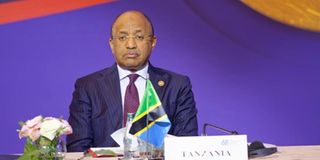
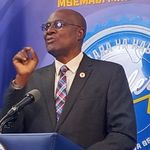
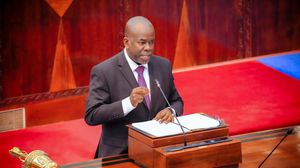
Unguja. Zanzibar President Hussein Ali Mwinyi has called on members of the Non-Aligned Movement (NAM) to strengthen their unity and coordinate their positions to increase their influence in global decision-making.
Dr Mwinyi said a united NAM would enable developing countries to have a stronger voice in defending equality, peace, international law and a more representative global order.
He made the remarks in Belgrade, Serbia, on Tuesday, September 1, 2026, while delivering a speech on behalf of President Samia Suluhu Hassan at a special high-level meeting marking 65 years since the first NAM Heads of State Summit.
According to a statement issued by the President’s Office, State House, Dr Mwinyi said the principles on which NAM was founded in 1961 remained relevant amid today’s political, economic and security challenges.
“Especially at a time when nations face political, economic and security challenges requiring cooperation, mutual respect and the independence of every nation to make decisions in its interests,” he said.
He said non-alignment should not be interpreted as a lack of position, but as the freedom of countries to make decisions based on their national interests, safeguard their political independence and avoid being forced to adopt positions taken by powerful nations.
For Tanzania, he said, the principle was rooted in the philosophy and leadership of the late Mwalimu Julius Nyerere, who viewed non-alignment as essential to protecting the independence of smaller nations and enabling them to participate meaningfully in international affairs.
On global peace, Dr Mwinyi said conflicts could not be sustainably resolved through force, calling instead for greater investment in dialogue, mediation, conflict prevention and trust-building.
He said addressing the root causes of conflicts, including injustice, inequality and exclusion, was equally important in promoting lasting peace.
Dr Mwinyi also called for reforms to the United Nations system, including the Security Council, as well as international financial institutions, to improve representation, transparency and their ability to respond to the needs of developing countries.
“Africa ought to have greater and fairer representation in international decision-making, given its position, population and vital resources,” he said.
He further stressed the importance of strengthening South-South cooperation, including enhancing the capacity of the South Centre to provide research, technical advice and support to developing countries during international negotiations.
Dr Mwinyi also called for stronger cooperation between NAM and the Brics grouping, particularly in development finance, South-South cooperation and reforms to the global governance system.
He said Tanzania would continue supporting NAM as a relevant and united movement capable of responding to contemporary challenges while promoting peace, cooperation, the right to development and reforms to global governance.
The meeting, held under the theme “The Legacy of Non-Alignment: Lessons for Today’s World,” was opened by Serbian President Aleksandar Vučić and attended by senior government officials and heads of delegation from 34 countries.