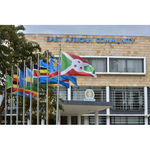
EAC trade surges 21.9 percent to $40.3 billion as regional integration deepens

Arusha. The East African Community (EAC) recorded a 21.9 percent rise in international merchandise trade in the third quarter of 2025 (July–September), with total trade increasing to $40.3 billion, according to the latest EAC Quarterly Statistics Bulletin.

The bulletin, released in late January, shows that growth was driven largely by a sharp increase in exports, which surged by 32.3 percent to $19.6 billion.
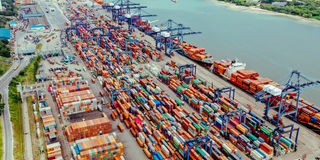
Imports A grew, albeit at a slower pace of 13.3 percent, reaching $20.6 billion during the same period.

As a result, the region’s trade deficit narrowed si ACgnificantly to $1.0 billion, down from $3.4 billion recorded in the third quarter of 2024, reflecting stronger export performance and improved external balances.

The EAC Secretariat, which compiles the quarterly bulletin in collaboration with national statistics offices and central banks of Partner States, said the figures point to a resilient and increasingly diversified regional economy.

“Trade within Africa remained robust, accounting for 32.2 percent of total trade valued at $10.1 billion,” the bulletin states.

“Intra-EAC trade expanded by 15 percent to $4.8 billion, underscoring continued progress in regional integration and the implementation of trade facilitation measures,” reads another part.

The Secretariat noted that sustained trade flows with the Common Market for Eastern and Southern Africa (Comesa) and the Southern African Development Community (Sadc) further reinforced the bloc’s commercial linkages with neighbouring regional economic communities.

According to the bulletin, leading export commodities included base metals, precious stones and metals, mineral fuels, and key agricultural products.

“China, the United Arab Emirates (UAE), South Africa, Hong Kong, and Singapore jointly absorbed 58 percent of total exports during the quarter, highlighting the importance of Asian and Middle Eastern markets,” it states.

On the import side, petroleum products, machinery, vehicles and cereals dominated the import bill, supporting infrastructure expansion, industrial production and food security across Partner States.

The Secretariat said improved trade performance, coupled with a reduced deficit and rising intra-African commerce, signals positive momentum towards deeper economic integration and sustainable long-term growth.

It added that the EAC continues to prioritise creation of an enabling trade and investment climate, promotion of value addition and advancement of inclusive prosperity across the region.

However, the bulletin shows that inflationary pressures remain a concern.

Annual headline inflation in the EAC, measured by the EAC Harmonised Consumer Price Index (EAC-HCPI), rose to 28.3 percent in September 2025 from 24.2 percent in August 2025. In September 2024, the rate stood at 14.8 percent.

The annual average headline inflation for the 2024/25 financial year climbed to 23.0 percent, up from 6.6 percent in the previous financial year.

“The surge is largely attributed to sharp price increases in South Sudan and Burundi, which recorded inflation rates of 179.4 percent and 34.1 percent, respectively,” the bulletin states.

Core inflation, which excludes food and energy prices, eased to 18.3 percent in September 2025 from 21.1 percent in August, but remained close to the 18.6 percent registered in September 2024.

Meanwhile, broad money supply (M3) growth moderated to 15 percent year-on-year in the third quarter, supported by a 13.2 percent expansion in private sector credit.

Net foreign assets rose by 21.9 percent, signalling strengthening external positions across the region.