East Africa Business body pushes for 40pc intra-regional trade by 2030

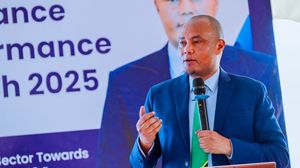
East African Business Council Executive Director, Mr Ahmed Farah 

What you need to know:

  • The appeal comes amid new data showing that while the East African economy continues to expand strongly, trade among member states remains far below the region’s potential under its Common Market framework.

Arusha. The East African Business Council (EABC) has urged East African Community (EAC) member states to align fiscal policies and national budgets to make regional trade more efficient and competitive as the bloc targets raising intra-regional trade to 40 percent by 2030.

The appeal comes amid new data showing that while the East African economy continues to expand strongly, trade among member states remains far below the region’s potential under its Common Market framework.

According to the International Monetary Fund (IMF), the EAC economy is projected to grow by 5.6 percent in 2026, above the African average of 4.3 percent.

At the same time, the EAC Quarterly Statistics Bulletin for October–December 2025 shows total trade within the bloc rose by 25.4 percent, increasing from $124.9 billion in 2024 to $156.6 billion in 2025.

In the final quarter of 2025, total trade stood at $42.4 billion, with exports at $20.8 billion and imports at $21.6 billion.

Despite this growth, intra-EAC trade reached only $19.3 billion in 2025, accounting for just 12.3 percent of total trade, highlighting untapped regional potential.

Speaking during regional finance meetings in Arusha, EABC executive director, Mr Ahmed Farah, said the figures reflect underutilisation of the regional market and call for urgent policy alignment.

He said rising transport costs, currency volatility and global geopolitical tensions should push member states to strengthen intra-regional trade rather than depend heavily on external markets.

“National budgets should not only focus on revenue collection, but also on reducing the cost of doing business across East Africa,” said Mr Farah.

The EABC said the 2026/27 budget cycle will be a key test of the region’s commitment to deeper economic integration.

It warned that conflicting national policies could continue to create invisible trade barriers despite tariff reductions under regional agreements.

The council also stressed the need to strengthen implementation of the East African Community Common External Tariff (CET), which is intended to support industrialisation, value addition and predictable trade policy across the bloc.

However, data presented at the meeting showed a rising number of tariff exemptions.

By June 2024, about 1,956 tariff lines, equivalent to 22 percent, had been suspended under various measures.

Further analysis of the 2025/26 Finance Acts showed that more than 2,464 tariff lines, or 41 percent, were affected by exemptions and special duty arrangements.

Mr Farah said the trend weakens the CET framework and undermines fair competition among regional producers.

“A manufacturer in one partner state should not face uncertainty while competitors in another enjoy different tariff advantages for the same product,” he said.

The EABC has recommended a common roadmap for CET implementation, removal of unilateral tariff suspensions and stronger regional oversight of sensitive products.

It also urged prioritisation of goods produced within the EAC market.

The council further called for harmonisation of domestic tax systems, saying differences in excise duties, VAT and other levies continue to act as hidden barriers to trade.

Mr Farah noted that some discriminatory taxes on regional goods still exist, increasing production costs and weakening competitiveness.

“Goods produced within the EAC should be treated the same as domestic products. Any levies that increase the cost of regional trade must be removed,” he said.

EABC also urged member states to eliminate non-tariff barriers (NTBs) by June 2026 and ensure that the 2026/27 Finance Acts support, rather than hinder, trade and investment.

It further proposed a harmonised regional budget consultation framework to allow early private sector engagement before finance bills are finalised, noting that differing national budget timelines make coordination difficult.

“If the EAC is to reach 40 percent intra-regional trade by 2030, national budgets must move in the same direction,” stressed Mr Farah.

The remarks were made during meetings of the EAC Sectoral Council on Finance and Economic Affairs (SCFEA) and pre-budget consultations held at the EAC headquarters in Arusha from May 11 to 15, 2026.

The sessions are reviewing fiscal coordination, customs harmonisation, statistical development and progress towards the East African Monetary Union.

Opening the meeting, SCFEA Chairperson, Mr Albert Musisi urged member states to move from lengthy consultations to full implementation of summit decisions.

EAC Secretariat representative, Aime Uwase, said the region is working to strengthen economic resilience and deepen integration amid global and domestic challenges.

“We are working to strengthen the economy, build resilience against external shocks and deepen regional integration,” she said.