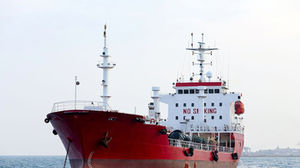
Dar es Salaam. Tanzania’s rising gold exports are helping to shield the economy from a global oil price shock triggered by escalating geopolitical tensions in the Middle East and disruptions to shipping through the Strait of Hormuz, according to the latest Bank of Tanzania (BoT) Monthly Economic Review for April 2026.
The report shows that gold has become a key stabilising factor for Tanzania’s external sector at a time when many import-dependent economies are grappling with rising fuel, fertiliser and freight costs following the March 2026 disruption of the Strait of Hormuz, one of the world’s most strategic oil transit routes.
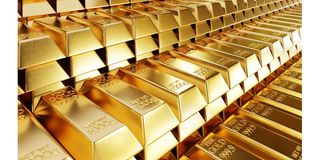
Gold exports generated $3.771 billion in the year ending March 2025 and $5.2 billion in the year ending March 2026.
It accounted for an estimated 30 to 40 percent of Tanzania’s foreign exchange earnings.
The BoT notes that this performance has helped offset the country’s rising oil import bill as global crude prices surge.
“Historically, periods of geopolitical tension tend to drive both oil and gold prices upward,” the report states, noting that increased investor demand for safe-haven assets has strengthened Tanzania’s export earnings during the crisis.
The Strait of Hormuz, a narrow waterway between Iran and Oman, carries nearly one-fifth of global petroleum supplies.
The recent military tensions involving the US, Israel and Iran disrupted traffic through the corridor, sending shockwaves across global commodity markets.
The disruption has also affected fertiliser markets, as Gulf countries account for a significant share of global sulphur, ammonia and urea production.
Within days of the crisis, nitrogen fertiliser prices rose by 30–40 percent, while urea prices jumped by 43 percent in a week.
Container freight charges between Asia and Africa also climbed to nearly $4,800 per 40-foot container, up from about $2,000 in early 2025.
The report warns that simultaneous increases in fuel, transport and agricultural input costs are creating a broad supply shock with implications for inflation, exchange rates and household purchasing power.
For Tanzania, higher crude oil prices are increasing the cost of imported petroleum products, while also pushing up transport and distribution costs across supply chains.
Since most goods are transported by road, rising logistics costs are expected to feed into prices of food, cement, fertiliser and other consumer goods.
“The increase in fuel prices affects almost every segment of the economy because transport costs are embedded in the movement of goods from farms and ports to local markets,” the report notes.
Low-income households are expected to be most affected, as they spend a larger share of income on food, transport and energy.
Agriculture is also highly exposed, with countries along the Indian Ocean sourcing 30–50 percent of fertiliser supplies from Gulf producers. Supply disruptions and higher freight costs are therefore expected to raise farming costs and heighten food inflation risks.
However, the BoT says Tanzania’s gold earnings are providing a crucial macroeconomic buffer by strengthening foreign exchange reserves and easing pressure on the current account.
“In many economies, rising oil prices quickly translate into deteriorating trade balances and currency depreciation.
Tanzania’s advantage is that higher gold prices are generating additional dollar inflows at the same time.”
Bank of Tanzania Governor Emmanuel Tutuba said the central bank is actively managing the balance of payments, noting that export earnings, particularly from gold, have increased significantly in both volume and value.
He cautioned that without the gold cushion, financing essential imports such as fuel would be more challenging, and stressed the need to broaden access to foreign exchange and strengthen banking systems to support economic stability.
Financial analyst Abel Kinyondo said Tanzania has been riding a “gold wave” since the Covid-19 pandemic, with the metal now the country’s leading foreign exchange earner.
However, he warned against overreliance on the sector, saying global gold prices are cyclical.
“Gold prices may eventually decline, which is why Tanzania must continue diversifying its economy,” he said.
Register to begin your journey to our premium contentSubscribe for full access to premium content