Government unveils measures to attract more youth in mining activities
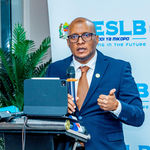
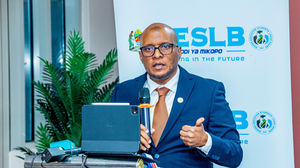
Tanzania Mining Commission's director of Mine Inspection and Environment, Hamis Kamando, addresses a news conference in Dodoma yesterday. PHOTO | CITIZEN CORRESPONDENT
What you need to know:
Among the measures include access to finance which is a major barrier for young miners

By Katare Mbashiru
Dodoma. The government has unveiled a broad set of measures aimed at dramatically expanding youth participation in Tanzania’s mining sector, as the industry continues to generate jobs and process minerals worth trillions of shillings within the country.
The Tanzania Mining Commission says the initiatives, planned for the 2026/2027 financial year, are designed to create more opportunities for young Tanzanians to enter mining, mineral trading and related businesses.
Speaking to journalists in Dodoma yesterday, the commission’s Director of Mine Inspection and Environment, Hamis Kamando said the commission is rolling out several strategies to expand youth participation across the sector.
He was speaking on behalf of the commission’s executive secretary, Ramadhani Lwamo.
Among the measures, he noted, include access to finance which he said was a major barrier for young miners“The commission recently signed an agreement with CRDB Bank to help small-scale gold miners, particularly youth, secure capital to invest in mining operations,’’ he said adding: “This partnership will enable small-scale miners to access financing more easily and expand their operations,” Kamando said.
The push to increase youth involvement comes as the sector records strong economic activity and increasing local participation.
Between July and December 2025, mines purchased goods and services worth Sh3.8 trillion from Tanzanian companies, including firms owned by or employing young people. The procurement followed the reservation of 20 categories of goods and services exclusively for companies that are 100 percent Tanzanian-owned under the country’s local content regulations.
He noted that value addition within the country is also growing steadily. According to Mr Kamando, seven mineral processing plants are currently operating in Tanzania, creating 273 jobs, any of them filled by young people.
During the six-month period between July and December 2025, minerals worth Sh5.802 trillion were processed domestically before export, reflecting the government’s policy of increasing local beneficiation.
Youth participation has also expanded through the Mining for Better Tomorrow (MBT) project, a reform programme aimed at promoting inclusive and sustainable mining development.
Under the project, the commission issued 273 mining licences to 183 youth groups between July and December 2025 in regions including Mara, Kagera, Shinyanga, Morogoro, Dodoma and Njombe. The groups are involved in extracting gold, copper, gemstones, salt and construction minerals.
By December 2025, the initiative had already created 2,550 direct jobs for young people.
The government has further strengthened support for small-scale mining, issuing 5,983 licences between July and December 2025—equivalent to 71 percent of all mining licences granted during that period.
Small-scale mining licences are reserved exclusively for Tanzanians, with most applicants falling within the youth age bracket of 18 to 45 years.
To further expand access to resources, the Ministry of Minerals, through the Mining Commission, has proposed setting aside 65 dedicated mining areas for small-scale operators across regions including Mtwara, Manyara, Lindi, Morogoro, Dodoma, Tabora, Geita, Shinyanga, Mwanza and Mbeya.