Josephine Christopher is a senior business journalist for The Citizen and Mwananchi newspapers
Mwananchi Communications Limitted
Dar es Salaam. Food inflation in Tanzania maintained strong upward momentum at the start of 2026, contributing significantly to overall price growth.
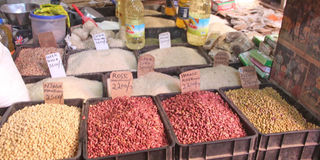
Wholesale markets mirrored this trend, with rice and sorghum emerging as the key drivers of rising costs across the country’s major trading hubs.
According to the Bank of Tanzania’s January 2026 Monetary Policy Report, food inflation averaged 7 percent in early 2026, up from 3.4 percent during the same period in 2024, driven largely by unprocessed staples such as maize, rice, sorghum, finger millet and wheat.
Wholesale markets reflected these broader inflationary pressures, with rice and sorghum emerging as the main drivers of higher costs across the country’s major trading hubs.
Ministry of Agriculture’s weekly crop price data from selected regions—Dodoma, Arusha, Dar es Salaam, Morogoro, Tanga, and Iringa—show that while some commodities such as beans and finger millet softened, the overall food basket became materially more expensive for consumers.
Rice prices rose sharply across all comparable regions, reinforcing its position as the most inflationary staple over the period.
The ministry data indicated that while rise prices in Dar es Salaam posted a moderate rise, from Sh2,400 to Sh2,600; In Dodoma, wholesale price climbed from Sh2,100 per kilogram in the week ending January 3, 2025 to Sh2,500 in week ending January 2, 2026.
Arusha, already the highest-priced rice market in 2025, saw a further increase from Sh3,200 to Sh3,300.
The most pronounced jumps during the period were recorded in Morogoro, Tanga and Iringa. Morogoro’s rice prices surged from Sh1,800 per kilo to Sh2,700, while Tanga recorded an increase from Sh2,000 to Sh3, 000.
In Iringa, rice rose from Sh2, 000 to Sh2,800.Maize, Tanzania’s primary staple, also became more expensive in most regions. Dodoma and Tanga each saw maize prices rise by nearly Sh300 to Sh900 and Sh1,000 per kilogram, respectively. Morogoro and Arusha posted more modest gains of Sh100 each.
Iringa was the only market to record a maize price decline, with wholesale prices easing from Sh700 to Sh600, reflecting its role as a major production zone and possible post-harvest supply effects.
Dar es Salaam, which lacked a 2025 maize benchmark in the dataset, reported maize at Sh1,100 in January 2026.
In contrast to cereals, beans prices declined in most overlapping regions.
Dodoma recorded the steepest fall, with wholesale beans dropping from Sh3,300 per kilogram in January 2025 to Sh2,400 in January 2026. Morogoro saw a Sh700 decline to Sh2,600, while Iringa posted a Sh600 fall to Sh2,400.
Arusha and Dar es Salaam also registered moderate declines of Sh400 and Sh500, respectively.
Tanga stood out as the sole exception, with beans prices rising from Sh2,800 to Sh3,000.
Potatoes became more expensive in most markets. Morogoro and Tanga each recorded a Sh400 increase to Sh1,300 and Sh1,400, respectively. Iringa rose by Sh200 to Sh1,000, while Arusha increased modestly by Sh100.
Dodoma was the only region to register a slight decline, with potato prices falling from Sh1,100 to Sh1,000.
Sorghum prices registered some of the steepest increases among cereals.
In Tanga, wholesale sorghum doubled from Sh1,100 per kilogram in January 2025 to Sh2,300 in January 2026.
Iringa followed with a Sh500 increase to Sh1,900, while Morogoro rose by Sh200 to Sh1,800. Dodoma and Arusha recorded smaller increases of Sh200 and Sh100, respectively.
Finger millet prices declined across all comparable interior and highland markets. Dodoma recorded a Sh500 drop to Sh2,300, Morogoro fell by Sh800 to Sh1,800, and Iringa eased by Sh400 to Sh2,400.
Arusha also posted a modest decline from Sh1,700 to Sh1,600.
Tanzania Institute of Accountancy (TIA)’s director of research consultancy and publication Dr Gorah Abdallah highlighted that Tanzania’s agricultural sector remains highly vulnerable to macroeconomic fluctuations.
“Farmers have not yet established themselves as fully autonomous economic actors, which means that wider economic changes such as rising fuel prices, inflation, and currency volatility directly affect them,” he explained.
He also pointed to the growing impact of climate change, noting that unreliable rainfall patterns are increasingly disrupting production cycles.
Infrastructure weaknesses remain a major challenge. He emphasized that transport costs are inflated because most production zones are far from urban markets, and roads and storage facilities are still underdeveloped
“We need to explore alternative transport systems for agricultural commodities, particularly in regions where infrastructure is poor,” he suggested.
Dr Abdallah stressed that high production costs including expensive fertilizers, substandard seed quality, and limited mechanization—continue to constrain farmers’ profitability and contribute to price increases at the wholesale level.
Agricultural Trade Economist at the University of Dodoma (Udom) Dr Mwinuka Lutengano, offered a complementary perspective, focusing on seasonal dynamics in Tanzanian agricultural markets.
“Most of our crops are highly seasonal, and prices tend to spike during the off-harvest period,” he explained.
He noted that at the beginning of the year, many regions have not yet harvested their crops, which naturally limits supply in local markets.
“The timing of harvests is critical. When crops are not yet available, prices increase, especially for staples like maize, rice, and sorghum,” Dr Lutengano added.
According to the central bank prices of food are expected to be stable, due to expectations of good harvests.
The risk to the projection is low due to adequate food stocks held by the National Food Reserve Agency (NFRA) of more than 590,000 tonnes and carry-over food stocks held by private firms and households.
Register to begin your journey to our premium contentSubscribe for full access to premium content