Dar es Salaam. For decades, sunset in Tanzania signalled a forced pause in the nation’s economic activity.
Long-distance buses remained parked at stations, while the bustling markets of Kariakoo fell silent under government-imposed restrictions on night-time operations.
Today, that silence has given way to the roar of engines and the rhythm of commerce as the country embraces a 24-hour economy, a shift stakeholders describe as a key driver of the newly launched Tanzania Development Vision 2050.
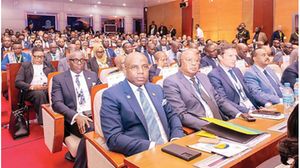
At a high-level meeting held at State House on Monday to launch four strategic implementation tools for Vision 2050, the transformative impact of round-the-clock trade took centre stage.
The Tanzania Private Sector Foundation (TPSF) president, Ms Angelina Ngalula, said allowing a 24-hour economy has fundamentally increased the pace of activity in local markets.
"Previously, buses could not travel at night for many years... but current policies allow goods, from fish in Mwanza to cargo in Kariakoo, to move across the country around the clock, significantly increasing the velocity of the economy," Ms Ngalula told investors and government officials.
She added that the policy forms part of a broader agenda of economic nationalism, which has enabled Tanzanian companies to expand beyond domestic borders and become major investors in neighbouring Kenya and the Democratic Republic of Congo (DRC).
During the meeting, President Samia Suluhu Hassan said the private sector had been entrusted with the "key" to the country's future and is expected to drive 70 percent of the implementation of Vision 2050 over the next 25 years.
"The private sector has been given approximately 70 percent in the implementation of this Vision for the next 25 years," she said.
"On our part as the government, we will continue to create a supportive legal, policy and institutional environment to attract domestic and foreign investment," added President Hassan.
To support implementation, the government launched four tools (Nyenzo): the Long-term Development Plan, the Fourth Five-Year National Development Plan (FYDP IV), the National Guideline for Monitoring and Evaluation, and the Communication Strategy.
National Planning Commission Executive Secretary, Dr Tausi Kida, said the tools are intended to ensure the Vision delivers "results that are visible to citizens."
The end of the 'aid era'
The shift towards a 24-hour, self-sustaining economy comes as Tanzania strengthens its fiscal independence.
Minister of State in the President's Office (Planning and Investment), Prof Kitila Mkumbo, said foreign aid, which once accounted for up to 12 percent of the national budget, has fallen to just 0.9 percent.
"This decline in concessional loans is a direct consequence of Tanzania's transition into middle-income status," said Prof Mkumbo, describing the shift as "modern fiscal autonomy" and economic pragmatism.
Echoing the message, President Hassan urged Tanzanians to tighten their belts and increase production for export as traditional aid continues to decline.
Tanzania as a natural hub
The 24-hour economy is central to the President's ambition of positioning Tanzania as a regional transport and production hub.
She reminded participants that the country's geographical location remains one of its greatest competitive advantages.
"Tanzania is a hub by nature. Even if we did not say it, we were placed here so that to enter various parts of Africa, one must pass through Dar es Salaam," said President Hassan.
She recalled that during her travels, "in Ghana, they talk about Mbeya's rice," illustrating the untapped potential of Tanzanian products if the private sector expands production and strengthens regional connectivity.
Tax reforms and startups
Supporting this momentum are landmark reforms, including a one-year tax holiday for newly established businesses.
Ms Ngalula welcomed the decision to exempt new businesses from paying taxes during their first year of operation, saying the private sector had advocated the reform for 15 years.
The measure is expected to particularly benefit startups, where the average founder is only 21 years old. These young entrepreneurs are regarded as key beneficiaries and drivers of the Vision 2050 agenda.
Peace as invisible capital
President Hassan also stressed that financial investment alone cannot guarantee national development.
"Peace and stability are a bigger capital than the financial capitals we have claimed here," she said.
"You can have trillions of money, but if there is no peace and stability, this Vision will not be implemented."
The event concluded with the signing of a Joint Declaration, under which the government committed itself to eight pillars, including macroeconomic stability and policy predictability.
President Hassan likened her role in the 25-year journey to that of a candle.
"As a leader of the government, I am just a candle. My job is to burn and provide light even as I consume myself, so that the crowd may rejoice."
With the 24-hour economy gathering momentum and the implementation tools for Vision 2050 now launched, Tanzania is shifting from a nation of job seekers to one that nurtures innovators and job creators.
Register to begin your journey to our premium contentSubscribe for full access to premium content