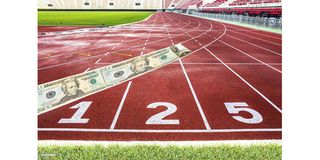
Dar es Salaam. Tanzania is beginning to reframe athletics, not just as a sport, but as a viable economic sector capable of generating millions of dollars annually if properly structured.
For decades, the country has produced flashes of brilliance but failed to translate its rich talent base into sustained global success and, crucially, into income.
Now, a new push by the government signals a shift towards treating athletics as an industry, with systems, investment and returns.
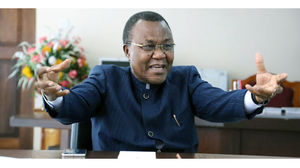
Speaking on March 22 during the 2026 Kili International Marathon in Moshi, the Minister for Information, Culture, Arts and Sports, Mr Paul Makonda, outlined plans to establish ‘first’ specialised athletics training centres across Kilimanjaro, Arusha and Manyara- regions known for their high-altitude advantage.
“We need structured training to build professionalism that will deliver victories globally,” he said.
Behind that statement lies a growing recognition by experts: global athletics is big business, and Tanzania has largely been absent from its most lucrative tiers.
A multi-million dollar global ecosystem
Elite road races and track competitions have evolved into a well-paying global circuit. Winners of major marathons such as London, Berlin and Chicago typically earn between $55,000 and $100,000, with performance bonuses pushing total earnings to over $150,000 for record-breaking runs.
Even beyond podium finishes, elite athletes can earn $30,000 to $100,000 per race through appearance fees, sponsorship deals and endorsements.
Over a single season, top runners can accumulate several hundred thousand dollars.
For countries with structured systems, these earnings translate into broader economic gains- from foreign exchange inflows to job creation in coaching, sports science, logistics and athlete management.
Yet Tanzania has struggled to consistently place athletes at this level.
The gap is not due to lack of talent. Athletes such as Alphonce Simbu have demonstrated that Tanzanians can compete with the world’s best.
However, isolated success has not been enough to build a pipeline that feeds into the global athletics economy.
Simbu himself has previously pointed to systemic gaps.
“Talent is there, but support is limited,” he has said, emphasising the need for better facilities and exposure.
Sports development expert, Dr Hemed Suleiman, argues that the country’s biggest loss has been economic.
“We have depended on individual effort instead of building a system. That means we are not only missing medals, but also millions of dollars that our athletes could be earning every year,” he told The Citizen.
A rough estimate based on global prize structures illustrates the scale of the opportunity.
If Tanzania consistently produced just five elite marathon runners competing in major international races annually, each earning an average of $80,000 per year, which alone would translate into $400,000 in direct athlete income.
Add endorsements, training camps, tourism linkages and local competitions, and the figure could easily climb into the millions.
While Tanzania stalled, neighbours moved strategically.
Uganda, for instance, invested in structured athlete development, high-altitude training and international exposure. The result is a steady stream of global champions who consistently earn top prize money.
Sports analyst Moses Kato explains that Uganda’s approach has been deliberate.
“They treated athletics as an economic sector, not just a sport. That is why their athletes are visible and competitive globally,” he said.
Kenya, meanwhile, has built a mature athletics ecosystem that supports thousands of runners.
Entire local economies- particularly in the Rift Valley- benefit from training camps, international scouts and sports tourism.
These examples highlight what Tanzania stands to gain if it gets the model right.
A new investment frontier
The government’s proposed northern zone training hubs could mark a turning point.
The regions of Kilimanjaro, Arusha and Manyara offer natural high-altitude conditions comparable to the world’s best training grounds.
But experts caution that infrastructure alone will not unlock the industry.
“Facilities are just one part. We need coaching, sports science, nutrition, and professional athlete management,” said Mr Kato.
There is also a need to integrate athletics into broader economic planning- linking it with tourism, education and private sector investment.
For instance, Dr Suleiman notes that well-developed training camps can attract foreign athletes, generating revenue through accommodation, training fees and local services.
“Even major local races, if properly marketed, can draw international sponsors and participants, further boosting earnings,” he said.
Tanzania’s demographic profile presents another opportunity. With over 75 percent of the population under 35, the country has a vast pool of potential athletes.
If properly scouted and trained, this youthful population could become a steady supply of talent feeding into the global athletics market.
For now, the challenge is execution.
Register to begin your journey to our premium contentSubscribe for full access to premium content