Poultry sector faces ‘chilling’ production crisis as cold bites

By Elsie Njovu

Dar es Salaam. Poultry farmers across Tanzania overall are grappling with losses and rising operating costs as the cold season affects bird health, growth and egg production.
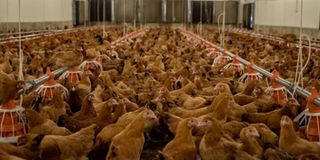
From Dar es Salaam to the Southern Highlands, farmers say falling temperatures have triggered respiratory diseases, increased mortality and reduced productivity, forcing some to raise prices to remain viable.

The Tanzania Meteorological Authority forecast a cool season from June to August 2026, with low temperatures, strong winds and dust across many regions.

According to the Ministry of Livestock and Fisheries’ 2026/27 Financial Year Budget speech, the number of chickens rose from 79.1 million in 2019 to 113.3 million in 2025.

Poultry farmers’ outcry

Speaking to The Citizen, Dar es Salaam poultry farmer Oliver Njovu said the weather affects poultry production. “Also, the eggs possess weak shells, becoming easy to break,” she said, adding that chickens can easily contract diseases such as flu during cold weather, leading to high mortality if treatment is delayed.

Another poultry keeper, Mr Steward Mkonyi, said birds often experience stress and reduced feed intake during cold weather.

“What kills chickens in the cold is the respiratory infection. They can die in small or large magnitude, depending on how quickly farmers react to the disease,” he said.

Songea, Ruvuma Region, poultry farmer, Ms Elimiana Luoga, said the burden had become difficult to bear.

“Feed expenses surge by over Sh150,000 per 100 birds, whilst daily egg output drops by half. Despite consuming more feed, birds grow slower, rendering standard two-month production cycles unachievable,” she said.

In Mwanza, Ms Deborah Mpagama reported similar temperature-control difficulties.

“Farmers cannot profit due to their low overall production volumes. Though cold-weather supply drops inflate market egg prices, heating using gas, charcoal, or Tanesco power is costly,” she said.

Arusha-based poultry farmer, Mr Asubisyege Mwaigisya, called for research into seasonal diseases.

“I have started to wonder why these diseases occur specifically during the cold month of June. Others suggested it is caused by certain mosquitoes rather than just the weather. We need government institutions to research because these challenges make citizens lose hope in farming,” he said.

His colleague, Ms Dina Mollel, said high input costs were a major obstacle. “The biggest problem is the cost of business. We buy chicks and feed at high prices, but customers refuse to pay a price that makes the venture worthwhile. If you keep them longer, they just eat more, and you lose your capital,” she said.

In Moshi, Ms Elitruda Mangia said maintaining temperatures was expensive. “To counter the weather, we have to incur very high costs to provide heat. We use charcoal and electricity, but the costs are overwhelming because of electricity challenges. Most of the expense goes into maintaining the temperature for the birds,” she said.

The sector also lacks price regulation, as Ms Eva Olomi said: “The chicken market is not official like the beef market. There is no firm stance on chicken prices, whether it is the cold season or any other time. Everyone sells at whatever price they want.”

Another Arusha resident, Ms Eveline Daniel, said birds grow slower during the cold season while feed costs remain high.“We need a uniform market price, as they have for cattle at auctions,” she said.

Moshi poultry farmer, Ms Rehema Mfinanga, said those who manage the cold weather effectively could benefit from higher prices.

“The price in Moshi has actually gone up because many people fear farming in winter, meaning there is high demand but few suppliers. If you manage your birds well, you can sell them quickly at a premium,” she said.

Livestock association’s statement

The Livestock Association of Tanzania (LAT) acknowledged the challenges, with its Secretary General, Mr Mathayo Mgusa, saying demand had outpaced production capacity.

“However, we strongly advise farmers to utilise the expertise available to them regarding weather conditions. They must stop farming simply based on tradition or habit,” he said in a telephone interview.

He urged livestock officers to visit farms and provide practical guidance rather than remain in their offices.

What experts said

The poultry desk coordinator at the Ministry of Livestock and Fisheries, Mr Wambura Messo, explained the biological effect of cold weather on production.

“Biologically, when the environment is favourable, a chicken has time to eat, and that food is used for growth and egg production. However, in extreme cold, the chicken is busy shivering to stay warm. This reduces its appetite, and the food it does consume is diverted. Instead of the energy being used to build the body or produce eggs, it is forced to convert into heat for survival,” he said.

He advised farmers to construct sheds with infrastructure capable of withstanding temperature changes.

“During cold spells, sheds should have systems to increase internal heat, such as using tarpaulins to block winds or heaters to ensure warmth is not lost,” he said.

Conversely, during high heat, he said infrastructure should allow air circulation, possibly through fans.

The ministry’s reaction

Deputy Minister for Livestock and Fisheries, Ms Ng’wasi Kamani, said the ministry launched a new poultry farming policy on August 1, 2026. “We must all agree that climate change is a cross-cutting challenge that affects every sector,” she said.

She said the ministry was working with the Vice President’s Office on mitigation measures, including encouraging tree planting to lower temperatures and restore environmental conditions favourable for livestock production.

“We are looking at how to mitigate these impacts. For instance, there are ongoing plans to encourage the planting of trees to help lower temperatures and return the environment to a state that is more favourable for livestock,” she said.

“However, we do not operate in isolation; collaboration across government departments is key. Beyond policy, we are connecting our farmers with extension officers in their respective local government authorities. Recently, we held a meeting with poultry sector stakeholders to discuss these challenges,” added Ms Kamani.

The developments highlight the need for farmers to combine experience with scientific guidance as changing weather patterns affect production costs, animal health and overall productivity.