Dar es Salaam. Tanzania has strengthened its position as an attractive destination for mining investment after ranking 34th out of 68 jurisdictions worldwide in the Fraser Institute’s Annual Survey of Mining Companies 2025.
The improvement is driven largely by its strong mineral potential and gradual improvements in the policy environment.
The survey, which is widely used by global investors to assess mining destinations, also places Tanzania fourth in Africa, behind Botswana, Morocco and Zambia on the Investment Attractiveness Index, a ranking influenced by both geological prospects and the regulatory framework governing the sector.
According to the report released last week, Tanzania’s overall score rose to 68.04 in 2025, up from 62.75 in 2024 and 46.38 in 2023, reflecting growing investor confidence supported by rich mineral resources, expanding exploration activity and ongoing policy reforms.
The Fraser Institute index combines two key measures: the Best Practices Mineral Potential Index, which evaluates the quality and availability of mineral resources, and the Policy Perception Index, which captures investor views on regulations, taxation, licensing systems and overall stability of the investment climate.
Tanzania’s high ranking was largely driven by its strong performance on mineral potential, where it placed 15th globally with a score of 75.00, highlighting the country’s significant endowment of gold, graphite, nickel, rare earth elements and other strategic minerals that are increasingly in demand worldwide.
The report also shows a modest improvement in Tanzania’s policy perception score, which rose to 57.61 in 2025 from 55.41 in 2024, signalling improving investor sentiment about the operating environment following regulatory adjustments and efforts to enhance transparency in the sector.
The 2025 survey was distributed to 2,304 senior executives in mining and exploration companies worldwide, with 256 responses used to assess 68 jurisdictions. Participating firms reported a combined $4.2 billion in exploration spending, making the survey a key indicator of global mining investment trends.
The latest ranking comes as Tanzania continues to position mining as a central pillar of economic transformation through expanded exploration, stronger oversight systems and policies aimed at increasing local participation while maintaining investor confidence.
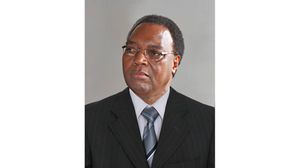
A professor at the University of Dar es Salaam’s Department of Geology and former Deputy Minister for Minerals, Shukrani Manya, said Tanzania’s strong showing reflects both its natural resource base and reforms introduced in recent years to improve governance in the sector.
“The policy framework for investment in the mining sector is clear, and regulations governing small-scale miners are transparent. This has helped reduce conflicts between small-scale operators and large investors,” he said.
According to Prof Manya, the 2018 mining legislation introduced reforms that strengthened state oversight while creating more opportunities for Tanzanians to participate in the industry.
“The reforms placed strong emphasis on local content, enabling Tanzanians and other stakeholders to benefit more directly from developments in the industry,” he explained. He said that improved regulation, together with the establishment of mineral markets across the country, has increased transparency and helped formalise trading activities that were previously conducted informally.
“Mineral markets have aligned trading practices with global standards, opened up better business opportunities for small-scale miners and helped increase their earnings,” he said.
Executive Secretary of the Tanzania Chamber of Mines, Benjamin Mchwampaka, said Tanzania’s ranking reflects the balance between strong geology and a policy environment that is improving but still has room for further reform.
“About 60 percent of investment decisions are influenced by mineral potential and 40 percent by policy and the legal framework. Tanzania scores highly on geological potential, particularly for critical minerals such as graphite, rare earths, nickel and lithium, which are attracting growing global demand,” he said.
He noted, however, that Tanzania still trails leading African destinations such as Botswana on policy perception, meaning further regulatory stability and consistency will be important to sustain investor confidence.
Register to begin your journey to our premium contentSubscribe for full access to premium content