Building investment confidence through ecological stability
By Hawa Urungu
Investment conversations in Tanzania have long centred on priority sectors such as agriculture, mining, tourism, manufacturing, and energy. Policy debates frequently focus on tax incentives, regulatory reforms, infrastructure expansion and export competitiveness.
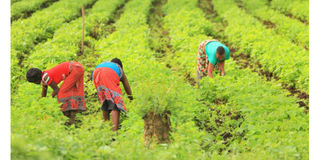
Agriculture remains central to this discussion, contributing roughly a quarter of national GDP and employing nearly two-thirds of the population, according to official statistics. It anchors rural livelihoods, food security, and value chain development.
Yet the stability of the backbone sector can no longer be assumed. Recently, the CEO Roundtable of Tanzania (CEOrt), together with the Agricultural Growth Corridors of Tanzania (AGCOT) and the International Union for Conservation of Nature (IUCN), convened two complementary discussions that sought answers for a critical question: how can the resilience of Tanzania’s agricultural sector strengthen investment confidence?
The first stakeholder discussion held on February 24, 2026 in Dodoma emphasised an important perspective. Tanzania generates a significant amount of environmental data through research, satellite systems, and policy frameworks.
However, the challenge lies in converting that data into structured insights that can inform capital decisions. Financial institutions need clear signals to assess risk accurately. Without this structured visibility, risk premiums remain high, leading to more cautious capital investment.
The Landscape Resilience Index (LRI), introduced under IUCN’s SUSTAIN initiative, aims to bridge this gap by incorporating indicators of land, water, and adaptive capacity into measurable baselines.
It consolidates factors such as soil fertility, water quality and availability, biodiversity, the adoption of sustainable land management practices, productivity trends, and socio-economic vulnerability into a resilience profile.
This transformation turns fragmented environmental information into a cohesive decision-support framework.
The second dialogue, held on February 26, 2026 in Dar es Salaam, examined how agricultural value chains can attract capital when risk is properly structured. This roundtable anchored the environmental logic within AGCOT’s expanded four-corridor strategy, which now extends across Southern, Northern, Central, and Mtwara corridors. The targets are ambitious: 350,000 hectares under profitable production, 420,000 jobs, $3.5 billion in catalysed investment and two million people lifted out of poverty by 2030. The model has detailed proof of concept. What remains constrained is affordable finance.
Bank representatives from ABSA, NBC, TADB, BRAC, and CRDB described a rational but restrictive lending environment, whereas agricultural loans compete internally against 15 percent risk-free treasury bonds.
The dialogue highlighted opportunities to further refine agricultural finance frameworks, particularly by tailoring products more closely to seasonal cash flows and production cycles.
Together, these dialogues established that Tanzania does not lack opportunity, farmer readiness, or environmental data. The central challenge lies in aligning sustainability metrics, corridor planning, and financial architecture into a coherent investment framework.
Both discussions converged on a single insight that Tanzania’s agricultural transformation requires dual integration. First, ecological resilience must be embedded within investment screening. The LRI and field data provide tools to price risk more accurately.
Second, financial architecture must adapt to on-ground realities. Grace periods, seasonal repayment schedules, cooperative governance training, and blended finance structures are prerequisites for scale.
Sustainability and capital are interdependent. Without financing, sustainable models struggle to scale. Without sustainability, investment outcomes are exposed to long-term risk.
Tanzania’s agricultural growth narrative depends on productive, investable and resilient landscapes.
These two engagements emphasised that sustainable agriculture is commercially viable when risk is structured, data is translated and finance is aligned to ecological realities.
Investment will continue to flow where confidence exists. The task ahead is to ensure that confidence is anchored in resilience.
Hawa Urungu is Head of Projects at the CEO Roundtable of Tanzania