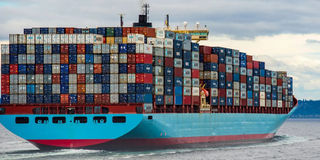
Arusha. Tanzania has launched an ambitious drive to harness the blue economy through a programme to rehabilitate all idle vessels across the country and construct two new large cargo ships, as part of efforts to boost maritime transport’s contribution to economic growth and support the country’s long-term development ambitions.
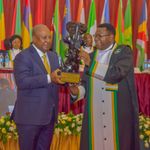
Speaking at the opening of the 18th Joint Transport Sector Review (JTSR) in Arusha yesterday, the Deputy Minister for Transport David Kihenzile said the government has already begun the process of sourcing a contractor to rehabilitate stalled vessels nationwide, with particular focus on Kigoma, Katavi and Rukwa regions, which rely heavily on Lake Tanganyika.
He said the initiative aims to revive inland water transport in order to stimulate trade, reduce transport costs and improve the efficiency of cargo and passenger services on the country’s major lakes.
“In addition to rehabilitating existing vessels, the government plans to build two large new cargo ships to serve both regional and international routes,” said Mr Kihenzile.
He explained that one vessel, with a cargo capacity of 3,500 tonnes, will be constructed to operate on Lake Tanganyika, while another, with a capacity of 3,000 tonnes, will serve Lake Victoria. The move is expected to strengthen cross-border trade with neighbouring countries and increase national revenues from maritime transport.
As part of the broader strategy, the government also plans to establish a large shipbuilding and repair facility within the country.
The proposed facility is expected to cut the high costs associated with overseas repairs while building domestic capacity in maritime engineering and technology.
“The overarching objective is to position Tanzania as a blue economy hub in East and Central Africa, while ensuring the sector accelerates progress towards the National Development Vision 2050,” he said.
He urged participants at the three-day meeting to engage in detailed discussions on implementation modalities, identify bottlenecks and propose practical measures to fast-track delivery so that tangible results are realised on schedule.
Held from December 15 to 17, 2025, the forum is guided by the theme “Integrated transportation system as the foundation of economic transformation towards Vision 2050” and seeks to assess the implementation of policies, plans and projects across the transport sector.
The meeting has brought together key stakeholders, including government officials, development partners, public and private institutions and civil society organisations.
Speaking separately, the Permanent Secretary in the Ministry of Transport, Prof Godius Kahyarara, said the annual forum provides a platform for transport professionals—particularly those in roads, railways and ports—to align plans and jointly address implementation challenges.
He said discussions focus on progress in upgrading road, rail, port and aviation infrastructure, as well as constraints affecting timely and efficient project execution.
“Issues of environmentally friendly transport and the sector’s role in driving national economic growth have also received significant attention,” he said.
He added that the meeting also offers an opportunity to review resource utilisation, transparency and accountability in project implementation, while setting sector priorities for the coming year.
Register to begin your journey to our premium contentSubscribe for full access to premium content