Dar es Salaam. Just two weeks after Tanzania and Kenyan leaders agreed to remove all trade barriers by mid-year in an effort to raise the countries’ trade to $1 billion, a Tanzania-based company is protesting Kenya’s 35 percent duty on its products.
President Samia Suluhu Hassan and her Kenyan counterpart William Ruto said two weeks ago that they have set June 30, 2026 as the deadline for eliminating remaining non-tariff barriers, in line with a directive of the East African Community summit.
The barriers, they said, have long affected trade in various products, with cross-border shipments often delayed by documentation and regulatory differences.
Bilateral trade between Kenya and Tanzania reached $860.3 million in 2025, accounting for nearly 40 percent of intra-EAC trade, making the two countries the bloc’s largest trading partners.
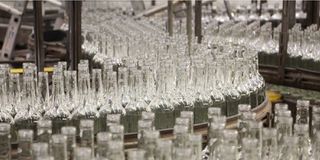
But in its letter dated May 20, 2026, Tanzania’s glass manufacturer, Kioo Limited, is now protesting against Kenya’s proposal to introduce a 35 percent excise duty on imported glass bottles from East African Community (EAC)
The letter, addressed to the ministries responsible for foreign affairs, finance, trade and investment, the company asked the Tanzanian government to intervene through diplomatic and regional channels to stop the proposed levy contained in Kenya’s Finance Bill, 2026.
“Kioo remains committed to resolving this matter amicably and through regional cooperation mechanisms,” the company’s general manager, Vineet Verma, wrote in the letter.
The company said the proposed amendment seeks to remove an exemption currently granted to glass bottles imported from EAC partner states and instead subject them to a 35 percent excise duty, except for pharmaceutical products.
According to the letter, the move contradicts the principles of the EAC Customs Union framework, which promotes free movement of goods and elimination of discriminatory trade barriers within the bloc.
The company warned that the proposed tax would significantly increase the cost of its products in the Kenyan market, making them less competitive compared to locally manufactured bottles.
“Kioo exports substantial volumes of glass bottles to Kenya, and the proposed excise duty would materially increase the cost of Kioo’s products in the Kenyan market,” the company stated.
Kenya is one of Kioo’s largest export markets, accounting for about 32 percent of the company’s export volumes.
The company said Kenya’s annual demand for container glass is estimated at 120,000 metric tonnes, while the combined production capacity of the country’s two major manufacturers stands at about 63,000 metric tonnes, leaving a substantial supply deficit.
Kioo said it is expected to supply around 40,000 metric tonnes of glass bottles to Kenya in 2026 alone.
The company warned that the proposed levy would increase packaging costs for Kenyan manufacturers and consumers, estimating that it would create an additional cost burden of about $7.7 million on imports valued at approximately $22 million.
“The proposed measure not only adversely affects Kioo and Tanzanian exports, but also negatively impacts Kenyan manufacturers and consumers who rely on competitively priced regional glass products,” the company said.
Kioo also argued that the tax would reduce access to its lightweight glass technology, which it said offers both environmental and cost-saving benefits to regional manufacturers.
The company further noted that a similar measure introduced by Kenya in 2020 was successfully challenged before the East African Court of Justice.
At the time, Kenya had imposed a 25 percent excise duty on imported glass bottles, including those from EAC partner states, through the Business Laws (Amendment) Act, 2020.
Kioo challenged the measure before the regional court, arguing that it was discriminatory and inconsistent with the EAC Treaty and Common Market principles.
The court suspended implementation of the tax, while Kenya’s subsequent appeal was later struck out by the Appellate Division.
The dispute eventually led to amendments through Kenya’s Finance Act, 2021, which expressly exempted glass bottles imported from EAC countries from excise duty.
Kioo warned that the proposed reintroduction of the levy could reignite regional trade disputes and undermine obligations under the EAC Treaty, the Customs Union Protocol and the Common Market Protocol.
“Resolving this matter amicably would preserve regional trade integration, protect regional manufacturing value chains and avoid renewed disputes before the EACJ,” the company said.
The company urged the Tanzanian government to engage Kenya to ensure that glass bottles originating from EAC member states continue benefiting from the current exemption framework.
Register to begin your journey to our premium contentSubscribe for full access to premium content