Iran War, Tanzanian pain: The hidden cost to small businesses
By Jemima Michael
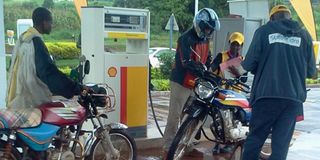
Ask a bodaboda rider in Kariakoo, Dar es Salaam, how he feels about the Strait of Hormuz, and he’ll likely stare at you blankly. Ask him how he feels about paying Sh3,820 for a litre of petrol — up from Sh2,864 just weeks before — and he’ll have plenty to say. This is the story of the Iran War in Tanzania: a conflict no one here started, priced in a currency everyone understands.
On February 28, 2026, the United States and Israel launched a military operation against Iran.
By March, Iran had shut the Strait of Hormuz — the narrow passage through which 20 percent of the world’s oil flows.
Global oil prices rocketed to $120 per barrel. A ceasefire technically holds — but “technically” is doing a lot of work in that sentence.
The Strait remains a contested warzone. Oil markets, and by extension Tanzanian fuel pumps, remain at the mercy of whatever happens next in that 33-kilometre-wide passage of water.
The hidden victims in the data
Tanzania’s micro, small, and medium enterprises contribute 35 percent of national GDP and employ over 5 million people — roughly half the working population (TICGL, 2025).
What those numbers don’t show is the structural nakedness of these businesses when a shock hits. There are no hedging instruments. No procurement contracts.
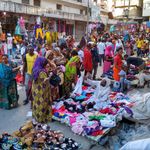
No emergency liquidity lines. When diesel jumps 39 percent in a month, a small importer’s trading cycle breaks. When kerosene hits Sh3,684 per litre, the woman frying vitumbua at dawn is not adjusting a spreadsheet — she is calculating whether the business still makes sense.
The shipping dimension adds another layer. Cargo from China, Tanzania’s largest import source — now reroutes around Africa’s Cape of Good Hope, adding 20–25 days to transit times and pushing freight costs up by an estimated 50–80 percent (Supply Chain Dive; Chatham House, 2026).
For a small trader restocking monthly on two to three weeks’ working capital, it doesn’t just delay business — it breaks how the business works.
What happens after the war?
The Strait will reopen — through diplomacy, military pressure, or exhaustion. Oil prices will ease, shipping routes will normalise — but Tanzania’s MSMEs will not snap back to February’s baseline. Recovery requires deliberate action on three fronts.
First, energy independence at the enterprise level. The bodaboda fleet — over one million operators nationally, is entirely dependent on petrol. A transition to electric motorcycles, financed in manageable daily-aligned payments, is no longer just a climate ambition — it is an economic resilience strategy. It shields livelihoods from geopolitical volatility and stabilises one of the country’s informal sectors.
Second, trade facilitation reform cannot wait. For small importers, time is as costly as price.
An MSME-dedicated clearance lane at Dar es Salaam Port — with a guaranteed three-day processing target, would restore the predictability that small businesses depend on most.
Third, and most urgently: the 94 percent must have access to credit at crisis speed.
Only about 176,213 of Tanzania’s 3 million-plus MSMEs hold formal credit accounts (Bank of Tanzania, 2025).
The rest borrow informally, expensively, slowly, and without safety nets. Mobile money already reaches millions; what is missing is a regulatory framework enabling mobile-linked loans at meaningful sizes, disbursed in hours, not weeks.
The longer arc
Tanzania’s MSMEs have survived shock after shock — Covid, the 2022 Ukraine-driven commodity surge, post-election uncertainty. But survival is not the same as recovery.
The government’s Vision 2030 targets MSMEs contributing 45 percent of GDP by decade’s end. The SME Credit Guarantee Scheme, NMB’s government-backed lending window, and CRDB’s $200 million SME fund are the infrastructure of that future.
The question is whether this crisis creates the political urgency to accelerate what was always necessary.
The war in Iran is not Tanzania’s story. But its consequences are. In Kariakoo, in Mwanza’s fish market, in the kerosene queues of Dodoma, the arithmetic of a distant conflict is being calculated one litre at a time. The Strait will reopen.
But the structural vulnerabilities that made a war in the Persian Gulf someone’s daily emergency in Kariakoo will not fix themselves.
Jemima Michael is a development economist based in Dar es Salaam