Tax commission proposes 284 changes to reform Tanzania’s tax system
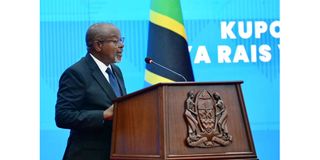
Chairman of the President’s Commission on Tax System Reforms and former Chief Secretary, Ombeni Sefue, speaks prior to handing over the commission’s report to President Samia Suluhu Hassan at State House in Dar es Salaam on March 18, 2026.
Josephine Christopher is a senior business journalist for The Citizen and Mwananchi newspapers
Mwananchi Communications Limitted
Dar es Salaam. A presidential commission has proposed 284 reforms to Tanzania’s tax system, including the introduction of a national tax policy and a comprehensive taxation law, aimed at restoring predictability, widening the tax base and easing pressure on businesses.
Presenting the report to President Samia Suluhu Hassan on March 18, 2026, commission chairman Ambassador Ombeni Sefue said the current system is fragmented, frequently changed and suffers from overlapping mandates among revenue authorities, undermining taxpayer confidence.
“The system must be predictable and aligned with national priorities. Taxes should support investment, business growth and poverty reduction,” he said.
Appointed in July 2024, the commission reviewed Tanzania’s tax framework during a period of economic growth of over six percent, benchmarking against countries including the United Kingdom, India, Vietnam and South Korea.
The report identifies structural weaknesses, such as frequent ad hoc taxes, a narrow tax base concentrated in the formal sector, and revenue collection below 16 percent of GDP, short of the 20 percent target in national plans.
The recommendations are grouped into seven areas. The largest, with 146 proposals, focuses on tax policy and legislation, including a National Tax Policy and a principal Taxation Act to provide a clear legal framework and reduce unplanned fiscal changes.
The commission also recommends updating outdated laws and enacting specific legislation such as an Excise Duty Act and a Stamp Duty Act.
On digital transformation, the report proposes 41 measures to modernise tax administration, including a mobile application for registration, filing, payments, statements and live support. A “faceless and paperless” system is envisioned to improve transparency and efficiency, alongside improved taxpayer portals and automated audits.
Administrative reforms include renaming the Tanzania Revenue Authority to the Tanzania Revenue Service, revising performance metrics, and limiting face-to-face interactions between officials and taxpayers.
Measures to expand the tax base include a one-year tax grace period for startups and simplified processes for informal businesses to formalise.
The commission also recommends improvements to the business climate, dispute resolution, governance, ICT integration, and taxpayer education to address negative perceptions of taxation.
President Hassan is expected to review the recommendations as the government considers a comprehensive overhaul of the tax system, a move that could significantly affect businesses, investors and taxpayers across the country.
Register to begin your journey to our premium contentSubscribe for full access to premium content