Udart seeks to revive BRT Phase One with new buses

Dar es Salaam. Public transporter UDA Rapid Transport (Udart), is seeking to increase passenger carriage fivefold in the Phase One of the Bus Rapid Transit (BRT) after purchasing new buses that are expected to boost its capacity.

The company in which the government is the major shareholder, operates the Phase One route since 2016 but its capacity deteriorated due to frequent breakdowns that severely affected service delivery.
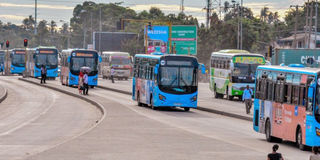
BRT Phase One is a 21km route, also known as the Kimara to Kivukoni Corridor, running along Morogoro Road, Sokoine Drive, and Kivukoni Front, with branches via Msimbazi Street (to Gerezani) and Kawawa Road (to Magomeni/Morocco), featuring 29 stations.

When it was launched in 2016, it had a daily capacity to carry 150,000 passengers but such deteriorated the current 30,000 commuters a day.

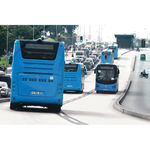
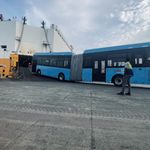
However, with the purchase of 100 new buses, the company seeks to revive the capacity to 150,000 passengers a day, according to Udart Public Relations Officer Mr Gabriel Katanga. He said Phase One initially began operations with 210 buses, but the number severely declined.

 “When Phase One started, we had 210 buses. However, as many of them broke down over time and floods occurred sometime in 2018, the number of operational buses dropped significantly, reducing our capacity to serve passengers,” he said.

Mr Katanga explained that between 2023 and 2025, daily ridership fell sharply to about 30,000 passengers as bus breakdowns became more common, discouraging commuters from relying on the BRT due to persistent operational challenges.

“Because of these challenges, many passengers stopped using the BRT regularly,” he said.

He noted that the situation is now improving, with the arrival of new buses expected to restore capacity to its respective levels.

According to him, 49 new buses arrived on January 8, while another 50 are expected later this month, bringing the total fleet to 310 buses, including those currently under repair.

“The government provided funds to purchase spare parts to repair damaged buses, and so far 30 buses have already been fixed,” he said.

All Phase One buses, he added, are manufactured in China by Golden Dragon, the original supplier of the fleet.

Mr Katanga noted that Udart will provide two articulated buses to transport students during peak hours, with one bus running in the morning from 05:00am to 08:00am and another in the evening 5:00pm to 8:00pm.