Vision 2050: Why Tanzania now sees investors as partners

Minister of State for Planning and Investment Prof Kitila Mkumbo

Dar es Salaam. Tanzania will no longer treat investors as mere stakeholders, Minister of State for Planning and Investment Prof Kitila Mkumbo announced to strategic investors as government takes steps to position the private sector as a partner in achieving its development vision, Vision 2050 (Dira 2050).

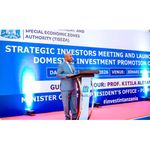
During a breakfast meeting on January 16, 2026, hosted by the Tanzania Investment and Special Economic Zones Authority (TISEZA), which also marked the launch of the National Domestic Investment Promotion Campaign 2026, Prof. Mkumbo highlighted a shift that could redefine Tanzania's approach to realizing its ambitious goals.
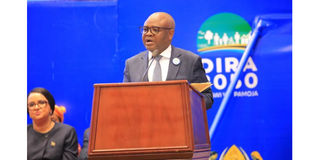
At the core of this vision is an ambitious target: to transform Tanzania into a Sh1 trillion economy by 2050, with economic growth accelerating to 10.5 percent by 2031.

“We are changing our approach,” Prof Mkumbo stated to investors. “It is not enough to engage you merely as stakeholders; we want to involve you as partners. Instead of just listening to your complaints, we aim to sit down with you and work together on problem-solving.”

Traditionally, government–private sector engagement in Tanzania, as in many developing economies, has been regulation-led. Investors complied, government supervised. Under Dira 2050, that relationship is being recast as a shared mission.

According to Prof Mkumbo, Tanzania’s economy, currently estimated at about $85 billion, is expected to grow to around $118 billion by 2030. Achieving that jump, and sustaining double-digit growth thereafter, he noted, cannot be driven by public spending alone.

“To be able to do that, it is not going to come from politicians or government officials who are wearing nice suits,” Prof Mkumbo said pointedly. “It is going to come from businesses investing and doing their businesses.”

Data supports this thinking. In 2021, the Tanzania Investment Centre (TIC) registered just 256 projects worth less than $3 billion. By 2025, annual registrations had risen to about 915 projects valued at roughly $11 billion.

Over the same period, Tanzania climbed into the top 10 African investment destinations, ranking ninth according to assessments cited by Business Insider Africa.

“These are not small changes,” noted an independent economist based in Dar es Salaam, Dr Godwin Mjema, in a separate interview.

“They show policy consistency and growing confidence. But to reach 10.5 percent growth, reforms must move from paper to practice, especially in how government agencies respond to investors’ real problems.”

Dira 2050 and the private sector’s place

Dira 2050 explicitly recognises the private sector as the engine of growth. The vision’s first operational phase, aligned with the current Five-Year Development Plan, places emphasis on industrialisation, export diversification and value addition.

Prof Mkumbo acknowledged that while exports have grown in recent years, Tanzania’s basket remains dominated by low-value products. The goal now is to attract strategic investors who produce for export and process resources locally, including minerals.

“This is where partnership becomes practical,” agreed Dr Mjema. “Value addition requires long-term capital, technology and markets. Government alone cannot provide these, but it can de-risk investment through predictable policies and infrastructure.”

From the private sector, the tone has been cautiously optimistic. Tanzania Private Sector Foundation (TPSF) chief executive officer Deogratious Massawe said the vision “clearly recognises the role of the private sector as the key driver of national development”.

“We are ready to ensure that the government attains its Vision 2050,” he said.

“What we require is a clear, predictable and transparent path so that our investments are secure.”

At the company level, the message resonates. Victor Byemelwa of Kilombero Sugar Company welcomed the new framing. “When the government looks at us as partners, our challenges become shared challenges, and our opportunities become shared opportunities,” he said.

Similarly, Azania Group’s director for business and corporate affairs, Joel Laizer, said the improving investment climate has opened space for expansion.

“There are still some minor challenges, but overall the direction is positive,” he noted. Prof Mkumbo hinted that further reforms are coming, including the rollout of a comprehensive tax reform review and a new national strategy for improving the business environment.

 Good governance, he stressed, will be central to sustaining investor trust. The move from treating investors as stakeholders to partners marks a