All eyes on Samia as African Court opens judicial year in Arusha

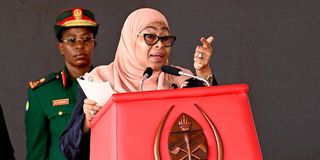
Arusha. All eyes are on President Samia Suluhu Hassan, who is expected to officially open the 2026 judicial year of the African Court on Human and Peoples’ Rights (AfCHPR) in Arusha on Monday, March 2, 2026, amid renewed debate over whether Tanzania will return to a key protocol allowing individuals to sue the State directly before the continental tribunal.

The ceremony will bring together judges, legal practitioners, diplomats, representatives of African Union member states, and human rights stakeholders.

It will also mark the launch of activities commemorating 20 years since the Court became operational, two decades dedicated to advancing human rights protection across the continent.

Established under a 1998 Protocol to the African Charter on Human and Peoples’ Rights, the Court began operations in 2006 with a mandate to strengthen human rights protection in Africa and to provide authoritative interpretation of the Charter.

Although Africa comprises 55 states, only 34 have ratified the Protocol establishing the Court, thereby accepting its jurisdiction in human rights matters.

Crucially, Article 34(6) of the Protocol requires states to make a special declaration permitting individuals and non-governmental organisations to file cases directly before the Court.

To date, only eight countries (Burkina Faso, The Gambia, Ghana, Guinea-Bissau, Malawi, Mali, Niger, and Tunisia) have deposited such declarations.

Tanzania ratified the Court’s Protocol in 2006 and, in 2010, made the special declaration under Article 34(6), positioning itself among a small group of African states that broadened access to regional justice.

However, in 2019, the government withdrew that declaration, citing legal and procedural concerns, including arguments that some applicants had bypassed domestic remedies before approaching the Court.

The decision by Tanzania, the Court’s host nation, to revoke the declaration sparked considerable debate both domestically and internationally.

The Pan-African Lawyers Union (PALU) chief executive officer, Mr John Deya, said the withdrawal significantly narrowed avenues for Tanzanian citizens seeking redress at the regional level.

Tanzania had previously ranked among the states with the highest number of individual applications filed before the Court without first passing through the African Commission on Human and Peoples’ Rights in Banjul, The Gambia.

“It has been more than six years since Tanzania withdrew the declaration. We hope the concerns raised have now been addressed and that President Samia will pronounce herself on the possibility of rejoining,” he said.

Similarly, the Legal and Human Rights Centre (LHRC) executive director, Dr Anna Henga, said that while President Hassan is the appropriate leader to preside over the judicial opening, stakeholders are particularly keen to hear Tanzania’s position on reinstating the Article 34(6) declaration, especially at a time when the country underscores its commitment to human rights and the rule of law.

“We expect the President’s speech to reaffirm Tanzania’s resolve to strengthen the rule of law, respect human rights, and deepen regional cooperation under the African Union framework,” she said.

Recently, the Court’s president, Justice Blaise Tchikaya, a national of the Republic of Congo (Brazzaville), acknowledged that limited ratification of the Protocol remains a major institutional challenge.

He said more than 21 African Union member states have yet to ratify it, among the 34 that have, over 26 have not made the Article 34(6) declaration allowing direct individual access.

“I will use my mandate as President of the Court to advocate for reducing the number of states that have not ratified the Protocol and those that have not deposited the Article 34(6) declaration,” said Justice Tchikaya.

Meanwhile, statistics indicate a worrying decline in the Court’s caseload, raising concerns about its effectiveness as Africa’s premier human rights judicial body.

In 2025, only eight new cases were registered, down sharply from 66 filed in 2019.

“As President Samia takes the podium to open the 2026 judicial year, we will be listening closely not only for ceremonial remarks but for a clear signal on Tanzania’s future engagement with one of Africa’s most significant human rights institutions,” said a senior law lecturer at the Faculty of Law, Tumaini University Makumira, Dr Elifuraha Laltaika.