How Samia’s strategic shuttling is rewriting Tanzania’s economic future

Dar es Salaam. In what senior officials and seasoned diplomats have dubbed the “Month of Economic Diplomacy,” President Samia Suluhu Hassan has concluded a high-stakes diplomatic marathon, travelling from the tech-driven skyscrapers of Dubai to the historic halls of the African Union (AU) in Addis Ababa.

Officials say the engagements, all held within February, were not a series of protocol-heavy summits but a targeted mission to secure Tanzania’s place at the global economic table.
Following her return, a high-powered delegation of cabinet ministers and senior technical officials convened at State House to outline the tangible outcomes of the missions, unveiling what was described as a policy of “sovereign pragmatism”—aimed at converting international presence into a Sh1.25 trillion industrial injection and a long-term roadmap for continental trade leadership.

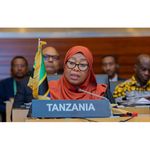
Speaking during the briefing on Monday, February 16, 2026, Director of Communications at State House, Mr Bakari Machumu, said the President’s participation in the World Government Summit (WGS), which began on Monday, February 2, in Dubai, was a deliberate assertion of national interest at the highest global level.

Since its inception in 2013, the summit has become a key global forum on governance and development.

This year, President Hassan was invited as a lead panellist alongside the President of the African Development Bank (AfDB), Mr Akinwumi Adesina, positioning Tanzania directly within global economic decision-making conversations.

“In diplomacy, if you are not at the table, you are part of the menu,” Mr Machumu said, quoting the stark reality outlined during the discussions.

“The President’s presence ensured Tanzania was not observing global economic shifts from the margins but actively shaping debates and inserting national interests into the international narrative,” he added.

He said the President used the platform to market Tanzania as a premier investment destination in energy, minerals, agriculture, logistics, and manufacturing, reinforcing the country’s image as stable and ready for business under the guiding philosophy of kazi na utu.

Barely two days later, on Wednesday, February 4, the diplomatic focus shifted to capital mobilisation at the Global Africa Investment Summit, also in Dubai.

There, Tanzania secured what officials described as the industrial centrepiece of the Dubai corridor, a $500 million (about Sh1.25 trillion) investment commitment from Masa Group, a global electronics manufacturer.

Director of International Trade and Economic Diplomacy, Mr John Ulanga, said the investment is structured around Original Equipment Manufacturing (OEM) within new industrial parks.

“The investor, Mr Pratik Suri, intends to act as an OEM, producing components for products such as refrigerators and sound systems,” said Mr Ulanga.

“This means a Tanzanian entrepreneur wishing to launch a local brand of speakers or cameras will not need to build a factory. Manufacturing will be done locally, while branding and marketing remain in Tanzanian hands,” he added.

He said the project, expected to be located in Bagamoyo or Kwala, will also include an innovation fund offering grants and subsidies to Tanzanian start-ups and small-scale investors, addressing the capital gap that has long constrained local industrial participation.

Matching the President’s international pace, Director General of the Tanzania Investment and Special Economic Zones Authority (Tiseza), Mr Gilead Teri, said the diplomatic gains now place responsibility on local actors.

“The era of rhetoric is over. The Global Africa Investment Summit is a major opportunity to access capital, but both public and private sectors must prepare bankable projects and feasibility studies so they are ready when the investment window opens later this year,” said Mr Teri.

He added that the authority’s priority is ensuring legal and physical infrastructure within economic zones can absorb the $500 million investment secured by the President, converting diplomatic goodwill into operational factories and assembly lines.

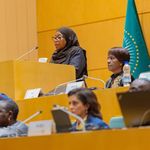
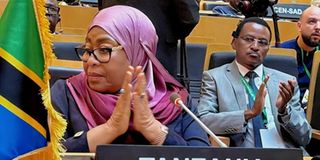
Later in the month, attention shifted to Addis Ababa for the African Union Heads of State and Government Summit, where Tanzania sharpened its continental trade strategy under the African Continental Free Trade Area (AfCFTA), now the world’s second-largest free trade area.

Mr Ulanga said 54 out of 55 African countries have signed the agreement, and Tanzania has identified pharmaceuticals as a strategic pillar for continental market dominance by 2030.

The Permanent Secretary in the Ministry of Health, Dr Seif Shekalaghe, told the briefing that Tanzania is repositioning its health sector from import dependency to export leadership.

“Our objective is clear: to move from being a consumer of imported medicines to becoming the pharmacy of Africa,” he said.

Echoing the briefing, Mr Ulanga said systems are being aligned to ensure locally manufactured pharmaceutical products comply with AfCFTA rules of origin, allowing duty-free access across the continent.

Addressing the meeting virtually, Minister for Finance, Mr Hamis Mussa Omary, said external trade ambitions must be matched by internal fiscal reforms.

He acknowledged that district-level levies and internal market fragmentation continue to undermine competitiveness.

“We cannot speak about an open African market while internal barriers persist. As we prepare the 2026/27 budget, we are working with TAMISEMI (Ministry of State in the President’s Office, Regional Administration and Local Government) to eliminate these micro-barriers so traders can move goods freely,” said the Finance Minister.

Minister for Foreign Affairs and East African Cooperation, Mr Mahmoud Thabit Kombo, linked Tanzania’s international security roles to everyday economic outcomes.

He noted that the country’s election to the AU Peace and Security Council and its pursuit of a UN Security Council seat help reduce insurance premiums on imports such as fuel and vehicles.

“Security directly affects the cost of living,” he said, adding that Tanzania’s position between the East African Community (EAC) and the Southern African Development Community (SADC) gives it a strategic advantage in regional trade flows.

On domestic infrastructure, Deputy Minister for Water, Mr Kundo Mathew, said international cooperation is supporting a Sh1.8 trillion national water programme, including the Sh330 billion Kidunda Dam, critical for industrial water security.

“The Kidunda Dam alone can supply Dar es Salaam for over eight months even without rainfall,” he said, adding that water reliability is foundational to industrial growth.

In a new development, Mr Kombo also dismissed social media claims that President Hassan was sidelined at the AU Summit, explaining that only newly elected leaders were required to make introductory remarks.

As the briefing concluded, Mr Machumu said the responsibility now shifts to domestic actors, “The President has opened the doors. What follows is implementation.”