Samia pushes for sustainable financing, strong African leadership in malaria fight

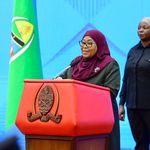
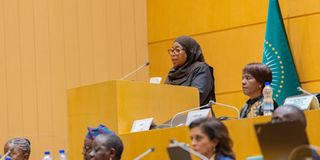
President Samia Suluhu Hassan speaks with journalists about sustainable financing for malaria eradication on the sidelines of the African Union Heads of State Summit in Addis Ababa, Ethiopia, on February 14, 2026. PHOTO | STATE HOUSE
Dar es Salaam. President Samia Suluhu Hassan has stressed that the fight against malaria in Africa requires strong African leadership and stewardship, genuine ownership of programmes, and long-term political commitment.

She said the war against malaria is not solely a health issue, but also a development, economic and human capital agenda for Africa.

President Hassan was speaking on Saturday, February 14, 2026, during a high-level media briefing on sustainable financing for malaria control in Africa.

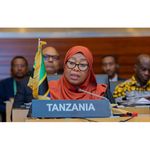
The briefing took place on the sidelines of the 39th Ordinary Session of the Assembly of Heads of State and Government of the African Union (AU) at the Union’s headquarters in Addis Ababa, Ethiopia.

The meeting, organised by the African Union in collaboration with the African Leaders Malaria Alliance (ALMA), focused on strengthening domestic financing for malaria programmes, reducing dependence on external aid, and reinforcing health systems across Africa.

A public notice shared with The Citizen on Saturday, February 14, 2026, signed by the Director of Presidential Communications, Mr Bakari Machumu, said the government has strengthened multi-sectoral collaboration to ensure malaria interventions are fully integrated into the primary healthcare system and the Universal Health Insurance Scheme.

The notice said the move aims to expand access to services and reduce deaths caused by the disease.

“In strengthening domestic financing, the Mainland Tanzania and Zanzibar Malaria Elimination Councils have continued to work with the private sector, faith-based institutions, civil society organisations and development partners to mobilise domestic resources for the fight against malaria,” she said.

President Hassan highlighted the importance of international cooperation, noting that alongside domestic efforts, international institutions and development partners must fully and promptly honour their commitments, particularly in strengthening the Global Fund to Fight Malaria and utilising World Bank resources for malaria programmes.

“Efforts to eliminate malaria require collective solidarity among member states, sustainable financing, the use of accurate data in decision-making, and innovation that accounts for environmental factors and the impact of climate change,” she said.

Sharing Tanzania’s experience, President Hassan said the country is among those leading the malaria elimination agenda, including hosting ALMA as a coordinating institution for Africa, built on robust accountability systems and implementation capacity focused on results.

She said Tanzania has invested substantially in scientific research and innovation through the Ifakara Health Institute (IHI), including research on modern technologies for controlling malaria transmission.

The President also highlighted Tanzania’s efforts to scale up the use of insecticide-treated nets, introduce malaria vaccines, and improve treatment systems and patient monitoring.

The AU Commissioner for Health, Humanitarian Affairs and Social Development, Ms Amma Twum-Amoah, said the decline in international financing in recent years has affected malaria control efforts in several countries.

She emphasised the need for a paradigm shift in financing, stronger health systems resilient to climate change, and greater participation of the private sector and development partners in combating the disease.

Botswana President and ALMA chairperson, Mr Duma Gideon Boko, said the 2025 Africa Malaria Progress Report shows the continent remains far from eliminating malaria by 2030.

“Member states should allocate dedicated budgets for malaria control, establish malaria elimination councils, and utilise data systems to improve implementation,” he said.

ALMA is a coalition of African Heads of State aimed at accelerating malaria elimination and strengthening health systems.

The high-level meeting, held alongside African Union activities, brought together heads of state, health ministers and development partners.

Participants discussed the Africa Malaria Progress Report 2025, which indicates that Africa still bears over 90 percent of global malaria infections and deaths, while the pace of elimination is slowing.

The renewed call to intensify malaria elimination efforts aims to achieve the 2030 target through country ownership, accountability and collective leadership.