Dar es Salaam. Chadema’s Vice Chairman (Mainland), Mr John Heche, has outlined two "non-negotiable" conditions the party requires before joining national reconciliation talks initiated by President Samia Suluhu Hassan.
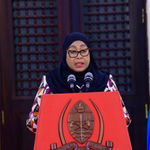
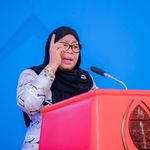
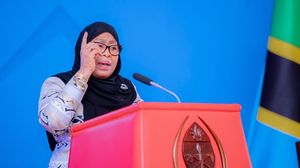
Addressing Parliament in Dodoma on November 14, 2025, President Hassan announced an investigative commission to probe the violence surrounding the October 29, 2025, General Election.
The unrest resulted in deaths, injuries, and the destruction of property, deepening the country’s political and social rifts.
In her speech, President Hassan emphasised that the commission would uncover the truth to lay the groundwork for peace.
“The government extended a hand... a gesture of goodwill that brought hope before some stakeholders chose to reject it. Since Tanzanians have mandated me to lead, I will not tire of extending the hand of reconciliation again,” President Hassan told MPs.
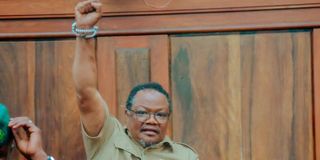
But, in an exclusive interview with The Citizen’s sister newspaper Mwananchi held on February 10, 2026, at his Dar es Salaam home, Mr Heche explained that for Chadema to consider the table, the party’s chairman, Mr Tundu Lissu, must first be released from detention.
He argued that only a free Lissu could preside over party organs to decide on engagement.
“Releasing Mr Lissu is one. The second is that our party must be fully operational. Only then can the reconciliation agenda be presented to members for a decision,” said Mr Heche.
He stressed there are no shortcuts: the party cannot participate while its leader is incarcerated and its activities are restricted.
“Detaining our chairman on fabricated charges prevents dialogue. Mr Lissu is the one elected by members. Others are his deputies; any internal decision is made on his behalf,” he explained.
He warned against any assumptions that the party could move without its leader's stance: “I am here to assist Mr Lissu in his mandate. He alone will lead Chadema in any reconciliation.”
Mr Heche further maintained that reconciliation is impossible without acknowledging past wrongs and holding those responsible accountable.
“There is no learning without consequences. Who kidnapped people? Who killed them? Without accountability, victims' wounds cannot heal,” he said.
Mr Lissu has been in detention for over 300 days on treason charges and allegations of spreading false information.
He was arrested on April 9, 2025, in Mbinga District, Ruvuma Region, following a “No Reforms, No Election” rally.
Current restrictions on Chadema stem from a June 10, 2025, order by Justice Hamidu Mwanga of the High Court, Dar es Salaam Sub-Registry, regarding a property dispute involving a Zanzibar faction.
The order barred the party from holding meetings pending the case's resolution.
Mr Heche added that the foundation for peace must include the release of all political detainees and clarity on the whereabouts of missing persons.
During the interview, he dismissed claims that Chadema is allergic to dialogue.
“That is false. I have served on previous committees, from Chamwino to Dar es Salaam. People claimed we were uninterested, but that was untrue,” he said.
However, he questioned the logic of negotiating with those who detained their leader: “Can we reconcile with someone who fabricated a case against our chairman? Mr Lissu is a politician challenging CCM policies, not a criminal.”
Chadema has a history of engaging in reconciliation to lower tensions. Under President Jakaya Kikwete (2012–2015), the party joined talks to ensure free elections and national cohesion.
After the 2020 polls, it similarly encouraged dialogue to protect the multiparty system.
Regarding social media rumours that some individuals benefit financially from Mr Lissu’s imprisonment, Mr Heche called the claims "nonsense."
“If there are beneficiaries, they should release him so those benefits cease,” he retorted, adding that members attending court hearings still face harassment.
“How do you discuss reconciliation under such circumstances?” questioned Mr Heche, adding that a multiparty system requires mutual political tolerance.
“Since we adopted this system in 1992, we should have moved past these divisions. If conducted well, politics unites; if mismanaged, it divides,” he reflected.
Chadema’s participation now hinges entirely on Mr Lissu’s freedom, the party's right to operate, and accountability for 2025 election-related crimes.
Until then, the party maintains that dialogue cannot occur under coercion.
Register to begin your journey to our premium contentSubscribe for full access to premium content