Arusha. Environmental experts, policymakers and private sector leaders from the eight member states of the East African Community (EAC) have convened in Arusha to explore ways of transforming waste into an economic resource through regional policies and circular economy initiatives.
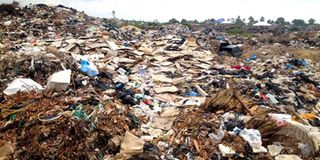
The meeting comes as the region is estimated to generate 56.7 million tonnes of waste annually, yet only about 40 percent is properly processed and managed. The rest is often dumped in open spaces and along streets, posing serious environmental and public health risks.
Participants at the forum said better waste management could unlock significant economic opportunities, including investments, job creation and the development of new industries based on recycling and resource recovery.
The forum, held under the theme “Driving Circular Economy and Sustainable Waste Management in East Africa,” was organised by the East African Business Council (EABC) in partnership with the Takataka ni Mali (Waste is Wealth) initiative.
The Director of Taka ni Amali, Mr Brian Kalekye, said the region must shift its perception of waste from a liability to a valuable economic asset.
“For decades, waste has been viewed primarily as a health and environmental problem. Today, we recognise that it can also be a resource capable of driving investment, creating jobs and supporting sustainable growth through circular economy principles,” he said.
Mr Kalekye explained that the circular economy model promotes reducing waste generation, reusing raw materials and recycling resources to maximise value.
“This approach minimises resource loss while strengthening economic productivity, innovation and social development across communities,” he said.
Chairperson of the East African Legislative Assembly (EALA) Sectoral Committee, Gideon Gatpan Thaor, stressed the need for stronger regional legislation to address cross-border waste and plastic pollution.
“Waste knows no borders, and plastic pollution does not respect national boundaries,” he said.
Mr Thaor cited Lake Kivu, which is shared by Rwanda and the Democratic Republic of Congo, where pollution levels differ significantly across the two sides of the lake.
“Without coordinated regional policies, such challenges cannot be effectively addressed,” he noted.
He also revealed that the EAC Single-Use Plastics Bill is in its final stages and is expected to be tabled for its first reading during the next legislative session.
“The proposed law aims to guide communities and businesses in phasing out harmful plastics while promoting safe alternatives,” he said.
Meanwhile, Gift Gabriel, a policy officer at EABC, said plans were underway to establish an East African Circular Economy Platform to coordinate regional initiatives and share best practices on waste management.
“The platform will help accelerate the shift from a traditional linear economy, where resources are used and discarded, to a circular economy that maximises value and reduces environmental impact,” he said.
For his part, Allen Kimambo of the Taka ni Ajira Institute said improved waste management could also help tackle youth unemployment in the region.
“With modern technologies, certain waste materials can be transformed into products such as fertilisers, decorative items and artisanal goods, generating income and creating employment opportunities for young people,” he said.
Experts at the forum agreed that coordinated policies, innovation and stronger private sector participation will be key to unlocking the region’s waste economy and advancing sustainable development across East Africa.