Why national reconciliation suggestion faces scepticism

President Samia Suluhu Hassan

Dar es Salaam. Political parties, analysts and human rights advocates have set out varied conditions, particularly on timing and sincerity, for Tanzania’s proposed national reconciliation process to deliver a credible and lasting settlement.

They say the process must be inclusive, structured and grounded in truth, involving all key stakeholders.
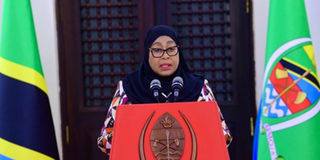
The views come amid ongoing debate following President Samia Suluhu Hassan’s end-of-year 2025 address, in which she said her administration had begun steps to establish a national reconciliation commission.

She stressed that the structure, composition, mandate and timeframe of the commission would be agreed upon through broad consultations.

“As we continue building our nation, we should not allow ideological or opinion differences to divide us,” said President Hassan, reiterating that peace, unity and solidarity remain central to sustainable development and national well-being as the country enters 2026.

Opposition parties, however, have questioned the timing and sincerity of the reconciliation initiative.

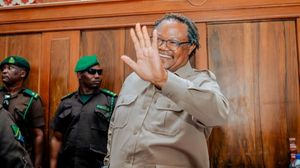
Chadema vice-chairperson (Mainland) John Heche said his party would not participate in what he described as “deceptive reconciliation”.

“It is absurd and disrespectful to call this reconciliation when the government deliberately ignored citizens, political parties and democracy stakeholders on the need for electoral reforms,” he said.

He added that reconciliation was being raised while investigations into the October 29, 2025, events were being conducted by a commission rejected by sections of the public.

ACT-Wazalendo secretary-general Ado Shaibu said reconciliation could not move forward without first addressing where previous efforts stalled.

He said although the party’s Central Committee was scheduled to meet on January 18 to deliberate on its final position, the broader issues were already clear.

“We cannot move forward without first reflecting on where the process previously stalled. It would be premature to establish new structures before addressing unresolved issues.

We cannot engage in reconciliation in an environment where political detainees are still in custody, nor can we proceed with a process centred on searching for a scapegoat,” Mr Shjaibu said.

Echoing the sentiments, CUF deputy secretary-general Magdalena Sakaya said the prevailing environment makes reconciliation extremely difficult.

She argued that the process should begin with an independent investigation into killings linked to post-election violence, noting that authorities have neither acknowledged wrongdoing nor provided official data on fatalities.

“There is deep bitterness. That is why we opposed this process,” Ms Sakaya said, calling on the government to step back to avoid creating commissions perceived as lacking credibility.

She added that excessive use of force had worsened tensions and that dialogue should have taken precedence.

For his part, NCCR–Mageuzi ice chairperson (Mainland) Joseph Selasini said genuine reconciliation could not take place without an independent inquiry into the violence and killings, questioning the point of reconciliation if there was no clarity on what, or between whom, it was meant to address.

“Reconciliation must start from the truth of what happened and between whom it is sought,” he said.

On the other hand, experts say that for reconciliation to succeed, the process must be inclusive, structured and grounded in truth, involving all key stakeholders.
A political analyst and law lecturer at the University of Dar es Salaam, Dr Onesmo Kyauke, said meaningful reconciliation would only be possible if all parties involved accept responsibility and prioritise truth over blame, warning against turning the process into a search for scapegoats.

“Truth is the foundation of reconciliation. It should not be used for a witch-hunt, but to bring the nation together,” said Dr Kyauke.

He said genuine reconciliation requires compromise, noting that no side should expect to achieve all its demands and called for broad engagement beyond politicians alone.

According to him, the process should safeguard freedom of expression and avoid emotionally driven political accountability if it is to restore public trust.

Similarly, a political analyst from the University of Dodoma (Udom), Dr Paul Loisulie, said reconciliation must be institutional, structured and inclusive, involving all key groups in society.

He stressed the importance of engaging political parties, religious leaders, civil society organisations and professionals from different fields, including economists, to provide a wider understanding of the country’s challenges.

Dr Loisulie also emphasised the need to include young people, who form the largest segment of the population, warning that their exclusion would weaken the legitimacy of the process.

He added that unresolved weaknesses in the electoral process, including limited participation by some parties, must be openly addressed to prevent future tensions and ensure reconciliation delivers lasting stability.

Human rights advocates emphasise that any reconciliation process must begin by addressing the root causes of conflict and giving citizens, especially young people, a voice.

The Legal and Human Rights Centre (LHRC) acting executive director Fulgence Massawe said reconciliation should start with identifying those root causes.

He urged a participatory process that allows citizens to express their views.

Mr Massawe warned that the collapse of reconciliation talks between the government and Chadema in 2024 should serve as a lesson to avoid repeating past mistakes.

Human rights activist Ananilea Nkya said reconciliation cannot succeed unless the voices of young people and ordinary citizens, who have borne the brunt of political unrest, are genuinely heard.

“These talks will be meaningless if the people carrying the pain and demands are not listened to,” she said, emphasising that any process must begin by addressing the concerns of ordinary citizens.