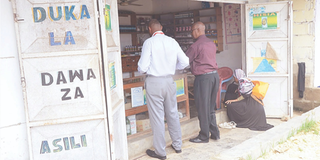
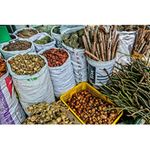
Dar es Salaam. Something quite extraordinary is unfolding across Tanzania’s major cities: the rapid proliferation of traditional medicine shops.
This trend is emerging at a time when the country has been making notable strides in modern healthcare.
Over the past decade, Tanzania has expanded its capacity to offer specialised treatments, including cancer care, kidney transplants, heart surgery, neurosurgical procedures, bone marrow transplants and in vitro fertilisation (IVF) services among others.
These developments, which have seen Tanzania embarking on a strategy to promote itself as a medical tourism hub in the region, were expected to reduce dependence on alternative remedies, but the opposite appears to be happening.
Traditional medicines are not only holding their ground; in some areas, they are flourishing at a pace that is difficult to ignore.
In the bustling commercial district of Kariakoo, one street that once accommodated dozens of general retail shops has transformed into a hub for traditional remedies.
About forty outlets selling herbal products now line the same stretch.
Similar patterns are visible in other parts of Dar es Salaam, including Mbagala, Buguruni and Manzese, where traditional medicines, both locally produced and imported, are becoming increasingly common in households.
Business operators in Kariakoo say renting a single stall can cost between Sh800,000 and more than Sh2 million per month.
The ability of herbal medicine vendors to survive, and even expand, under such costs suggests that the trade is not only popular but also lucrative.
Much of the concentration of these shops in busy areas is driven by customer behaviour and the ease of access.
A proprietor of Herbal Care Supplies in Kariakoo, Abdallah Rashid, said location was central to their business strategy.
“We are here because people come to Kariakoo from many parts of Dar es Salaam,” he told The Citizen.
“Customers look for traditional medicine in accessible places, and that is why we opened the shop here.
Being close to the main roads and markets makes it easier for clients to find us, and it also increases our business visibility.
”In Buguruni, another seller, Faudhia Salum, highlighted the role of population density in shaping the trade.
“Buguruni has many residents, and a large number rely on traditional remedies. Opening a shop in a busy area makes it easier for customers to reach us,” she said.
“Being registered helps build customer confidence, but not all shops are officially recognised.
Some competitors operate without any formal verification, and that is a risk for the public.
”In Mbagala, the owner of Ndola Herbal Centre, Hamisi Ndola, said moving his business from Kivule to a busier street was a strategic decision.
“Customers prefer shops that are visible and easy to find.
Being in a registered shop reassures them that the products meet required standards,” he said.
Another practitioner in the same area, Jongo Omary of Afya Asili Centre, attributed the growth in the number of outlets to affordability and convenience.
“Many customers come to us because services are quicker and more affordable. That demand encourages more shops to open in areas like Mbagala,” he said.
In Manzese, proprietor of Uhai Herbal Solutions, Rehema Mkinga, said increased competition among regulated shops had also raised the stakes for sellers.
“There are many shops now, so customers can choose. If you do not guide clients properly, they will simply go elsewhere,” she said.
“Being here also gives us a chance to explain that traditional medicine must be used carefully and correctly.
She added that operating in high-traffic areas allows practitioners to engage directly with customers and clear up misconceptions.
“Many people come with questions about what is safe and what works. This gives us a platform to educate them on proper usage,” she said.
However, health professionals warn that the growing number of outlets, particularly those operating without proper registration, poses risks to patients.
A clinician at Temeke Regional Referral Hospital, Dr Agnes Kweka, said traditional medicine remains an important part of the country’s cultural heritage, but the lack of disclosure by patients can complicate treatment.
“We respect traditional medicine as part of our culture, but patients often do not inform clinicians about what they are using,” she said.
“Some remedies, especially when combined with conventional medication, can interfere with hospital treatment or pose serious health risks.
Public education alongside regulation is crucial to minimise harm.”
A pharmacist and clinical researcher in Dar es Salaam, Dr Clemence Mushi, said the public often assumes that all herbal medicine shops are registered and safe, which is not necessarily the case.
“Some remedies may contain harmful substances, incorrect dosages or contaminants,” he said.
“Consumers must be cautious, and practitioners must adhere strictly to safety guidelines. Otherwise, public trust is undermined, and patients risk serious complications.
“A medical doctor at Mwalimu Nyerere Memorial Regional Referral Hospital in Mara Region, Dr Neema Mtatiro, echoed those concerns.
“The combination of herbal remedies and conventional drugs without supervision can be dangerous,” she said.
“Awareness, professional guidance and responsible practice are essential to prevent such outcomes.
“The Ministry of Health says regulated traditional medicine is supported, but only within a framework that prioritises public safety.”
, said the government registers traditional medicines only after they undergo scientific testing.
“The Ministry, through the Traditional and Alternative Health Practice Council, registers traditional medicines after they have undergone scientific testing for quality, safety and dosage before they are used by humans,” she told The Citizen.
She said that the ministry conducts post-marketing surveillance targeting both registered and unregistered products.
“During the 2024/25 financial year, surveillance was conducted three times, and the findings were communicated to the public through official statements.
Any medicine that fails to meet standards is removed from the registration register and the public is formally informed,” she said.
At the Institute of Traditional Medicine at Muhimbili University of Health and Allied Sciences (Muhas), researchers emphasise that commercial growth must be matched by scientific verification.
A researcher at the institute, Dr Benson Mugaka, said any medicine intended for human use must pass through a rigorous process.
“The process involves plant identification in botany, chemical analysis in chemistry, and safety and dosage testing in pharmacology,” he said.
“No plant should enter the market without passing through all three departments.
That is the scientific chain that ensures quality and safety.
”He warned that rapid commercial expansion without such procedures exposes users to serious risks.
“Unregulated products may contain fungal toxins, heavy metals or other contaminants, and some may cause liver or kidney damage,” he said.
“There is a commercial incentive to cut corners, and that is where the danger lies.
“As the number of traditional medicine shops continues to rise, the debate over their role in public health is likely to intensify.”
For some, they represent an affordable and accessible alternative to conventional treatment.
For others, they raise concerns about safety, regulation and the potential for exploitation in a booming but loosely supervised market.
The question, therefore, remains: are these remedies medicines, poison or simply business?
Register to begin your journey to our premium contentSubscribe for full access to premium content