Samia says strong, principled courts key to Tanzania’s peace

By Katare Mbashiru

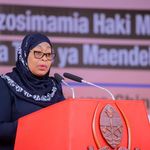
Dodoma. President Samia Suluhu Hassan has called on judges and magistrates across Tanzania to remain steadfast in the dispensation of justice, stressing that a strong, principled judiciary is a key pillar for safeguarding the country’s peace, security, and stability.
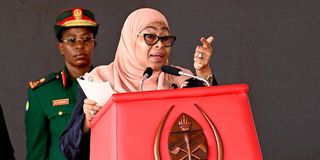
“Make sure that you stay firm in the line of justice without fear or favour, guided by professionalism, patriotism and integrity,” said President Hassan.

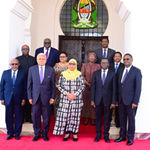
The President spoke on Tuesday, January 13, 2026, while officiating at the Annual General Meeting (AGM) of the Judges and Magistrates Association of Tanzania (JMAT), held in Dodoma.

She emphasised that a strong, independent and principled judiciary is essential for national cohesion, noting that judges and magistrates carry a heavy constitutional responsibility, as their decisions directly affect public trust in state institutions.

“The peace we enjoy as a nation is closely linked to how justice is delivered,” she said, adding that fairness, accountability, and efficiency in the courts are key to sustaining stability and harmony in society.

Her remarks come amid growing calls from analysts, religious leaders, and members of the political class urging all law enforcement organs to uphold justice strictly, arguing that lasting peace cannot be achieved without fairness and equal application of the law.

Responding to these concerns, President Hassan acknowledged their importance, saying her government recognises the role of justice in governance and development.

She reiterated her administration’s commitment to strengthening the judiciary through reforms, upgraded infrastructure, adoption of technology, and continuous capacity building for judicial officers.

President Hassan also cautioned judges and magistrates against corruption and external influence, urging them to be guided by the Constitution, the laws of the land, and professional ethics at all times.

She equally urged judicial officers to carry out their duties with integrity, professionalism, and courage, particularly as the demand for fair and timely justice grows.

The AGM of JMAT brought together judicial officers from across the country to discuss challenges facing the judiciary and strategies for enhancing efficiency and public confidence in the justice system.

JMAT is the professional body representing Tanzania's judiciary by fostering judicial independence, integrity, unity, and collaboration among judges and magistrates to enhance access to justice, often working with the broader Judiciary of Tanzania and regional counterparts such as the East African Magistrates’ and Judges’ Association (EAMJA).

JMAT President Elimo Massawe, said out of 1,700 members, a total of 1,200 attended the AGM, noting that the association has been in existence for 41 years since its establishment.

He underscored JMAT’s role in supporting its members and working with other stakeholders to uphold justice, integrity, and the rule of law within the Tanzanian judiciary.

At the event, Chief Justice George Masaju requested President Hassan to improve the welfare of judges and magistrates, helping prevent judicial compromise and reducing opportunities for corruption among officers.

During her remarks, President Hassan said the government would continue increasing the salaries and stipends of judges and magistrates in line with the country’s economic growth.

Among the key issues to be discussed at JMAT’s meeting, according to Chief Justice Masaju, is the role of judicial independence in the administration of justice.

He stressed the need for judicial autonomy by enacting laws that grant greater independence to judges and magistrates.

“In intensifying self-regulation, we are now drafting a bill to remove Regional and District Commissioners from chairing ethics committees in their respective areas of jurisdiction, after recognising that their impartiality is questionable,” he said.

According to the CJ, the bill seeks to strengthen judicial independence, increase courage, accountability, and reduce interference from government officials.

However, the judiciary boss noted that independence has already strengthened at all levels.

He added that justice dispensation has improved, case backlogs have been reduced, and by December 2026, all backlogs are expected to have been cleared.