Dar es Salaam. Tanzania is turning to its domestic natural gas resources to accelerate the transition to clean cooking, as the government seeks to reduce reliance on charcoal and firewood while strengthening energy security.
Minister for Energy Deogratius Ndejembi said Africa had an opportunity to use its natural gas resources to expand access to clean cooking, arguing that the continent should derive greater social and economic value from its energy resources.
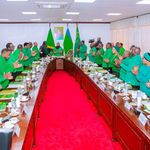
“Natural gas is a matter of energy security, not just an energy issue,” Mr Ndejembi said in Dar es Salaam, recently, during the AFRICASO Annual General Meeting and Africa Infrastructure Forum.
He said Tanzania's domestic gas resources could reduce dependence on imported energy while supporting efforts to improve access to cleaner cooking fuels.
“For Tanzania, having natural gas resources produced domestically provides an opportunity to strengthen energy independence and security, reduce dependence on energy from outside the country and use available resources for the development of our people,” he said.
Mr Ndejembi said more than 2.1 billion people globally still lacked access to clean cooking energy, with about one billion living in Africa, 85 per cent of whom were in sub-Saharan Africa.
He said that amid growing geopolitical tensions, Tanzania and other African countries needed to strengthen their capacity to harness and benefit from their natural resources, particularly energy resources, as a way of enhancing energy security and reducing dependence on external supplies.
“Africa has an opportunity to use its natural gas resources to accelerate access to clean cooking energy for its people,” he said.
For Tanzania, natural gas is being positioned alongside liquefied petroleum gas (LPG) and improved cooking technologies as part of a broader strategy to expand clean cooking access.
Mr Ndejembi said access to clean cooking energy in Tanzania had increased from six percent before 2021 to 28 per cent in 2026, which he attributed to the Government's decision to make clean cooking a national priority.
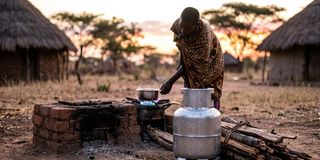
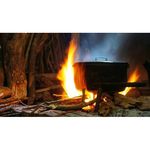
However, about seven in every 10 households continue to rely on charcoal and other polluting cooking fuels, highlighting the scale of the remaining challenge.
The government is therefore seeking to expand infrastructure needed to make cleaner fuels more accessible and affordable.
“Achieving the clean cooking agenda requires investment in gas infrastructure, regional cooperation and policies that enable people to access this energy at an affordable cost,” Mr Ndejembi said.
He said connecting gas pipeline infrastructure between Tanzania and neighbouring countries, including Mozambique, Kenya, Uganda and the Democratic Republic of Congo, could expand access to LPG and compressed natural gas (CNG) while strengthening regional energy security.
The push comes as demand for LPG continues to grow. According to Mr Ndejembi, annual LPG imports increased from about 290,000 tonnes to 459,000 tonnes in 2025.
The government is also expanding the direct use of natural gas in households. So far, 1,000 households in Lindi and Pwani regions have been connected to natural gas for cooking, with 470 in Lindi and 530 in Pwani.
The next phase will focus on expanding natural gas connections in Dar es Salaam through a project targeting more households in the country's largest city.
“Natural gas can be part of the solution for Tanzania's clean cooking needs because it is available domestically and can be used as a cooking energy source for households and institutions,” Mr Ndejembi said.
He added that using domestic gas could help reduce dependence on charcoal and firewood while contributing to environmental protection.
Natural gas was first discovered in Tanzania in 1974 at Songo Songo in Lindi and began commercial use in 2004. Gas from Mnazi Bay in Mtwara subsequently began commercial use in 2006, after which its use expanded into several sectors.
Alongside gas, the government is expanding LPG access through a subsidised cylinder programme.
Senior geologist from the Ministry of Energy's Clean Cooking Energy Unit, Mr Ngeleja Mgejwa, said the government was implementing a programme to distribute 452,445 subsidised LPG cylinders. Of these, 359,887 cylinders had already been distributed across the country, he said while providing training to councillors of Singida Municipal Council on August 6, 2026.
The clean cooking drive also targets public institutions. Mr Mgejwa said 1,472 institutions had so far shifted to clean cooking energy, against a national target of more than 30,000 institutions.
Meanwhile, the government is promoting improved cooking technologies. Mr Benezeth Kabunduguru, a specialist from the Ministry's Clean Cooking Energy Unit, said 122,776 improved cookstoves had been distributed against a target of 200,000.
“The government continues to implement the National Clean Cooking Energy Strategy through various projects aimed at increasing access to and use of clean cooking energy among citizens,” Mr Kabunduguru said.
He said other measures included connecting households to natural gas, encouraging institutions to adopt clean cooking energy and conducting public awareness campaigns.
The government says the transition is intended to deliver benefits beyond energy access, including improved public health, environmental protection and stronger social and economic development.
Mr Ndejembi said reaching the country's 2030 clean cooking targets would require sustained political commitment and cooperation between the government, private sector and development partners.
“Achieving access to clean cooking energy by 2030 requires political commitment and cooperation between the government, the private sector and development partners to ensure that more people across Africa can access this essential service,” he said.
Register to begin your journey to our premium contentSubscribe for full access to premium content