Dar es Salaam. Tanzania’s ambition to move 80 percent of its population to clean cooking energy by 2034 is gathering momentum, but the country’s progress is exposing a deeper challenge, experts say. According to them, achieving the target will require not only more clean-energy technologies, but also a fundamental alignment of policies, institutions, markets and livelihoods.
The challenge was laid bare at the weekend, during an inter-ministerial policy dialogue that brought together clean-energy stakeholders and policymakers to examine Tanzania’s transition away from traditional cooking fuels.
Launched by President Samia Suluhu Hassan in May 2024, the National Clean Cooking Strategy (2024–2034) represents one of Tanzania’s most aspiring attempts to address a household energy problem. The urgency is evident in the country’s household energy mix.
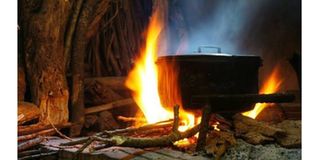
Data from the 2022 Population and Housing Census shows that firewood remains the dominant cooking fuel, accounting for 56 percent of household cooking energy, followed by charcoal at 25.8 percent.
LPG accounts for 9.1 percent, electricity 4.2 percent, while other sources account for 4.9 percent. Yet the country is beginning to demonstrate that a transition is possible.
According to the Ministry of Energy’s implementation report, clean cooking access has increased sharply from just 6.9 percent in 2021 to 28.6 percent.
Under the Rural Energy Agency (REA), the government has distributed 122,776 subsidised improved cookstoves against a target of 200,000, while 359,887 subsidised six-kilogramme LPG cylinders have been distributed against a target of 452,445.
TANESCO is also scaling up its on-bill financing model for electric cooking, following a successful pilot, with a plan to reach one million customers.
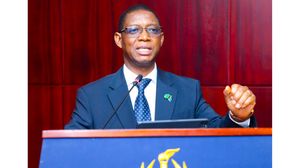
“Tanzania has continued to make great strides in increasing the use of clean cooking energy,” said Director of Clean Cooking Energy at the Ministry of Energy, Mr Nolasco Mlay.
“Reaching 28.6 percent access is an encouraging milestone, but to achieve our 80 percent goal, we require seamless collaboration across financial institutions, private sector investors, and regulatory bodies.” However, the greatest obstacle is not technological.
It is policy friction. At the policy dialogue, Tanzania Renewable Energy Association (TAREA) Chairperson, Dr Prosper Magali highlighted what he described as a fundamental contradiction between two government strategies.
He noted that the Ministry of Natural Resources’ National Charcoal Strategy and Action Plan (2021–2031) recognises charcoal as an enduring source of energy and seeks to make its production more sustainable.
Meanwhile, the Ministry of Energy’s National Clean Cooking Strategy (2024–2034) seeks to eliminate traditional charcoal and firewood use.
“These strategies are complementary in intent, yet conflicting in execution,” Dr Magali said.
His argument points to the economic complexity surrounding charcoal. The fuel contributes 44.2 percent to the forest sector’s GDP, generates more than $1 billion annually and supports hundreds of thousands of rural livelihoods.