UK issued its inaugural sovereign Sukuk 200 million pounds in 2014 and the second in 2019 worth 500 million pounds. Yes, it requires just two things, political will by a country leadership and pragmatism.
The same year South Africa issued its sovereign Sukuk worth $500 million and followed with another in 2024 worth $3.25 billion with its first tranche achieving $1.09 billion.
Luxemburg issued its inaugural sovereign Sukuk, worth 200 million euros. Hong Kong Special Administrative Region (HKSAR) issued its sovereign Sukuk worth $1.0 billion - the largest single sovereign Sukuk issuance at the time.
The World Bank issued its Sukuk in 2005 worth $200 million followed by International Finance Corporation (ICF) Sukuk in 2010 worth $100 million. The World Bank working in cooperation with Gavi and Islamic Development Bank (IsDB) assisted International Finance Facility for Immunisation (IFFIm) to issue two vaccination Sukuk, in 2010 $500 million and $200 million in 2015.
Why World bank and IFC issue Sukuk? Were they out of funds? It seems, they wanted to send a message that Sukuk is issued by any entity be it a government, an international corporation like IFFIm or any other Sukuk issuer.
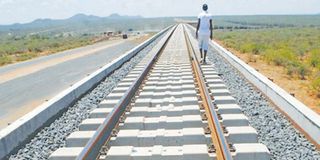
Uganda is currently issuing its inaugural sovereign Sukuk for a portion of Malaba to Kampala standard gauge rail (SGR) worth Euro 450 million. The news is out that those structuring Uganda Sukuk are Tanzanian citizens with history of Sukuk issuance in Tanzania and beyond and connectivity to global Sukuk partners.
Why Tanzania refrains from taping into Sukuk?
Why would a country, like ours, with huge infrastructure financing needs restrain itself from issuing a sovereign Sukuk while UK, Luxembourg, South Africa, Hong Kong, Philippines and other African countries do tap into that huge reservoir of capital? Is it the lack of political will, lack of their pragmatisms or both?
Recently, Works Minister Abdallah Ulega said “the government plans to use bond financing to fund major road construction and upgrade projects as it seeks alternative funding sources to meet growing infrastructure demands.” The Minister said that President Samia Suluhu Hassan had directed the government to explore alternative financing mechanisms, including bonds, to bridge the widening infrastructure financing gap.
I appreciate President Samia Suluhu Hassan’ timely directive to use alternative project financing mechanism. It is high time for Tanzania to tap into Sukuk for financing public projects especially infrastructure.
The Ministry of Finance has Alternative Project Financing (APF) policy in place since 2021.
Why doesn’t Tanzania actively implement its alternative project financing policy?
It has only done so once through Tanga UWASA bond, a Sh53 billion bond, equivalent to 17.8 million euros.
The APF mentions several financing instruments which can be used by the government, state-owned-enterprises (SOEs) and local government authorities (LGAs). These include conventional bonds such as green bonds, infrastructure bonds, municipal bonds, diaspora bonds, blue bonds and Sukuk.
Tanzania should not only turn into the use of bonds to finance its public projects but should also use Sukuk which are more financially inclusive, attract a wider investor base both locally and internationally and, being asset-backed, allows for the versatile use of public assets to back up a Sukuk hence winning investors’ trust.
The legal and regulatory framework is available
Apart from preparing the APF policy, the Ministry of Finance prepared two legal and regulatory frameworks in 2022 and 2023. The first one is Sovereign, Quasi-Sovereign and GREs Sukuk Guidelines and the other is Sovereign, Quasi-Sovereign and GREs SRI Sukuk Guidelines using taxpayers’ and a development partner money.
Using Sukuk has many advantages to a nation ranging from tapping into idle capital domestically and internationally, avoiding harsh loan terms and conditions from export credit agencies (ECAs) and other loan providers, increasing financial inclusion since even those who detest interest taking will be involved, accessing affordable financing and many more.
Why is Tanzania mainland an exception even when Zanzibar, as a part of the United Republic of Tanzania issued its Quasi-Sovereign Sukuk worth Sh1.115 trillion with tranche one getting Sh382 billion being an oversubscription of 127 percent? Once again, is this due to lack of political will or pragmatisms?
Sheikh Mohamed Issa is a certified Sukuk professional (CSP).