Dr Ameesh Mehta is a third-generation Zanzibari, born and raised on the island. For ten years, the qualified physician called Houston, Texas, home.
He relocated to the country to pursue a master’s degree. After completing his master’s degree, he enrolled in additional degree programs and remained in the US.
He returned to Zanzibar in 2011 for what was meant to be a brief stay to attend to his ailing mother. But a man of his skills as a medical doctor was in high demand.
He was later invited to the State House of Zanzibar, where he was greeted by Ambassador Mohamed Ramia Abdiwawa, who was the foreign affairs adviser to then-President Dr Ali Mohamed Shein.
The message to him was clear. The government didn’t want him to go back to America; they urged him to stay, his service was needed in his motherland. Dr. Mehta’s family legacy on the island dates back to 1922, when his grandfather came to the island from India during British rule.
“My grandfather was a doctor, then my father became a doctor, my uncle was a gynecologist, and I’m the third-generation doctor in my family,” he said.
As Zanzibar was undertaking an ambitious plan to improve the health coverage for its people, his addition as a medical doctor was instrumental in reaching out to locals at the village level. “I returned to Zanzibar to serve my people.
I would love to impart my knowledge and help the people of Zanzibar from the village level all the way to the top,” he added.
Despite the fact that as a medical doctor, he would have earned significantly higher income in the US, Dr Mehta did not doubt that his destiny was to serve his country.
“First of all, I was born here, so my roots are attached. My father was born here, I was born here, and I drank my first water here.
I always wanted to come back to my mother country so that I could live here and serve the community,” he insisted.
His focus was to attend to the underserved communities, and that is what he has been doing ever since he returned home.
The medical doctor with more than 29 years of experience was recently inducted as the President of the Lions Club of Zanzibar. Founded in 1917 in Chicago, Illinois, in the US.
The international charitable organization has grown into a global volunteer service organization with local branches, which they refer to as clubs in countries around the world.
After more than two decades of silence, the revival of the Lions Club of Zanzibar in Stone Town is being celebrated as more than just the return of a service organisation; it is emerging as a powerful symbol of how diaspora engagement is reshaping Zanzibar’s development landscape.
The event told a deeper story, one of Zanzibaris in the diaspora responding to a national call to return, invest, and contribute to the well-being of their communities.
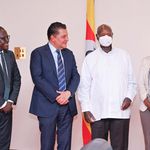
The relaunch, held in Stone Town on June 6, 2026, brought together government officials, business leaders and members of the global Lions movement in a gathering that blended philanthropy with a renewed sense of purpose.
Their focus will be on nine goals, which include vision care, diabetes, mental health, humanitarian needs, and environmental needs.
“In humanitarian services, we will provide clothes and food to the people. In the environment, we will clean the beaches and plant trees. We will be doing a lot of vision tests and giving free eyeglasses to the people,” he explained.
Dr. Mehta has built three hospitals now, in Stone Town, Nungwi, and Paje. With plans underway to build a hundred-bed hospital very soon, which will serve all kinds of people. His investment in the health of the people of the island is at the forefront, which aligns with the role the Lions Club will play in Zanzibar.
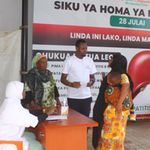
The impact is evident, having delivered health care to thousands of patients across an area of over one hundred and fifty kilometers. So the impact that they have created is taking their medical clinics into the interior villages, and they are treating the village people, which includes consultation, laboratory tests, and medications.
“We are creating a system where a person from the village who cannot access medical care can come to our clinic 24 hours a day at a very affordable fee.
And even if they don’t have money, we don’t have a problem; we will do free service.” He said.
Being a doctor, he is able to facilitate all the health improvement goals the Lions Club envisions. With much more time reserved to help with the garbage disposal issues that plague the island, “People are throwing plastic bottles. So we are going to do recycling, we’re going to clean the beaches, and we’re going to make disposal green in nature,” he said.
He was the first member of the diaspora to be registered in Zanzibar. That was in 2010. Sixteen years later, he is still on the island. “I’m already used to home,” he quipped.
In recent years, leaders of the United Republic of Tanzania have encouraged diaspora communities to play a greater role in nation-building.
The revival of the Lions Club in Zanzibar appears to be one of the clearest examples of that call being answered, not only through financial contributions, but also through skills, networks, and long-term investment.
The diaspora community in Zanzibar not only committed to investing in improving the lives of the communities but also held a fundraiser to fund future projects.
By the end of the event, under the guidance of Swapna Brahmaroutu, her company, Floton Africa, donated Sh30 million to support charitable initiatives across the islands, reflecting both local commitment and international solidarity.
Yet beyond the fundraising and speaking at the event, the Deputy Minister for Youth, Employment and Economic Empowerment, Mr Hassan Khamis Hafidh, described the revival as timely, noting that it aligns with broader government efforts to improve livelihoods and expand opportunities for citizens. “This is an important moment in Zanzibar’s history.
Reviving the Lions Club after 25 years supports the efforts of our governments under President Hussein Ali Mwinyi and President Samia Suluhu Hassan to serve citizens,” he said. “Dr Samia was once a member of the Lions Club of Zanzibar in 1992,” He added.
The Zanzibari-born diaspora returnee from the United States described the relaunch as “the rebirth of a legacy of service.”
His journey reflects a broader trend among diaspora professionals who are leveraging international experience to drive local impact.
Having invested more than one million US dollars in Zanzibar’s healthcare sector, Dr Mehta represents a new wave of investors whose contributions go beyond profit to include social transformation.
Through initiatives like these, diaspora engagement is becoming a key pillar of Zanzibar’s economic growth. Investments in health, education, and entrepreneurship are not only creating jobs but also improving access to essential services and building local capacity.
Other diaspora members are also stepping forward. Mr Dipak Joshi, a returning member from Canada, is now serving as First Vice President of the club. More importantly, it serves as a reminder that development is not confined by borders.
The contributions of diaspora communities. Whether through philanthropy, investment or knowledge transfer, they are increasingly shaping the trajectory of Zanzibar’s growth.
The message is clear: when diaspora communities return with purpose, they bring more than resources; they bring momentum for lasting change. “I’m staying here.
I’m never gonna go back. I’m a Zanzibari, and my goal and my motto are to serve my fellow Zanzibaris. So this is the impact, creating accessibility of healthcare.