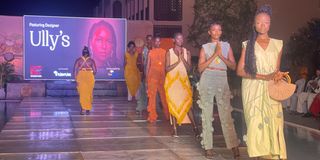
The runway was not built on a conventional stage. It stretched across one of the swimming pools at The Mora Zanzibar, turning the water into part of the setting as models walked through an evening that brought together fashion, music, culture and hospitality.
By the time the first model appeared, the poolside setting had already established the mood.
There was something theatrical about watching fashion unfold around the water, with the resort’s tropical surroundings providing a backdrop that felt distinctly Zanzibar, while the clothes, styling and movement kept the focus firmly on the designers.
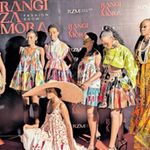
It was an unexpected setting for a fashion show, but one that seemed to suit the spirit of Rangi za Mora, which returned on Saturday for its fourth edition under the theme “Woven. Worn. Reimagined.”
Over the course of the evening, Mnazi, Maridadi Collection, M2MOKO, and Asiili by Naliaka, Ully, and Nyuzica presented collections reflecting different approaches to contemporary fashion, while Mimi Mars, who attended as Guest of Honour and performer, and host and vocalist Chi Temu added another dimension to an event increasingly positioning itself at the intersection of style and entertainment.
From where I was seated, what stood out was not simply the individual collections but the way the setting and the audience worked together to make the runway feel less formal and more immersive.
Guests gathered around the pool, reacting to the models, applauding particular looks and raising their phones to capture moments as each collection unfolded.
The result was a fashion show that felt as much like an evening experience as an industry presentation.
That distinction is important because Rangi za Mora, now in its fourth edition, appears to be developing an identity beyond the traditional runway.
Fashion remains at its centre, but the event has created room for music, performance, dining, hospitality and social interaction to exist alongside the clothes.
The pool was therefore more than an attractive setting. It helped transform the runway into an experience that felt connected to the destination itself.
The six designers brought different creative directions to the showcase, allowing each label to retain its own aesthetic and interpretation of contemporary Tanzanian fashion.
Rather than presenting one definition of what local fashion should look like, the runway became a collection of different voices, ideas and visual languages.
Watching the models move through the collections also offered a reminder that fashion changes once it leaves the hanger and meets the body. Fabrics respond to movement, silhouettes take on a different character, and styling becomes part of the story.
For model Zawadi Joseph, walking at the showcase was one of the highlights of the evening.
“I thoroughly enjoyed doing the runway. The show was very intriguing and entertaining, and the audience was very responsive to the designers and the models,” Miss Joseph told The Beat.
Joseph said she would have welcomed more designers on the programme, particularly because of the audience’s enthusiasm throughout the presentations.
“I just wish there had been more designers because the audience seemed like they wanted more,” she added.
Her observation offered an interesting measure of the evening from the runway itself. When an audience remains engaged and responsive, the appetite for fashion becomes part of the spectacle.
At Rangi za Mora, the applause, cheers and reactions around the pool suggested that guests were not simply watching the show but actively participating in its energy.
That energy became even more visible when Mimi Mars took to the stage. As guest of honour and performer, the Bongo Flava star found herself in somewhat unfamiliar territory, performing within a fashion showcase rather than a conventional concert setting.
For Mimi, the experience initially came with nerves.
“I was freaked out at first because I had never performed on a runway before, so I was really scared,” she told The Beat.
“But once I got on stage, OMG, the audience, the models, everyone was so receptive. I really enjoyed it.”
The response quickly eased those nerves, with cheers, smiles and applause accompanying her performance of “I’m in Love.”
“There was a lot of cheering, a lot of smiles, lots of clapping. I was really honoured to be part of the Rangi za Mora Fashion Show, fourth edition,” she said.
Mimi later described her participation as an “absolute honour” and praised the turnout and energy of the event, congratulating the organisers for bringing together fashion, talent and entertainment.
Her performance reinforced the growing relationship between fashion and music in Tanzania, where musicians influence style trends, designers shape artists’ visual identities and fashion has become increasingly important to concerts, music videos, red carpets and social media
The two creative worlds shared the same space.
Chi Temu, who hosted the evening while also contributing as a vocalist, helped maintain that connection between the runway and the audience.
Her role gave the programme a sense of rhythm, allowing the fashion presentations, performances and transitions to flow naturally rather than feeling like separate segments.
The creative vision behind the event also comes into focus through Nasreen Karim, organiser of Rangi za Mora and founder and creative designer of Enjipa Jewellery.
For Karim, producing the showcase has been both a personal and creative milestone, particularly because it gives other designers an opportunity to be seen.
“As a creative, being trusted to produce Rangi za Mora was a dream come true. It meant I could showcase my work and, more importantly, create a real pathway for other designers to be seen,” Karim said.
Her interpretation of this year’s theme was equally straightforward and purposeful.
“I kept it simple: celebrate the making and weaving, show how clothes live and move, wear, and let designers rethink and remix those traditions, reimagined. The theme guided curation and styling so each designer’s collection felt rooted but fresh,” she said.
She further adds that the most rewarding moment came when months of preparation finally became a shared experience.
She believes platforms such as Rangi za Mora are essential to the growth of the local creative industry because they provide visibility and connections that can extend beyond the runway.
“It’s essential. Platforms like Rangi za Mora give our work visibility and real opportunities. They connect Tanzanian designers to buyers, press, and people from around the world. If we get more platforms like this, our industry will grow,” she said.
Karim also points to how far the event has come since its first edition.
“Rangi za Mora has grown tremendously since its first edition, from an intimate experience mainly for guests of The Mora to a platform now open to the wider public, bringing together designers, models, sponsors and creatives from Zanzibar and Mainland Tanzania,” she said.
That evolution was visible in the audience itself. One attendee, Naet Mmbaga, said the combination of fashion, culture and entertainment was among the elements that made the evening memorable.
“I really liked the blending of entertainment, culture and fashion, although the show ended with most of us still craving more,” she said.
Another described the experience as “a more luxurious fashion show than what I’m used to attending, with the setting at The Mora adding an entirely different level to the experience.”
The idea of something being woven, worn and reimagined therefore extends beyond the garments and into the cultural landscape surrounding the event.
The production was also supported by partners including Flightlink and Sun Tours & Travel, whose involvement complemented the event’s connection to fashion, travel and hospitality.