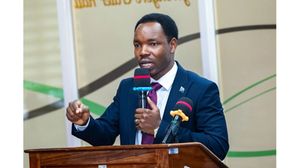
At the 14th Scientific Conference of the Muhimbili University of Health and Allied Sciences in Dar es Salaam, the university launched next-generation sequencing services. Experts say this move could mark the beginning of a new era of precision medicine, outbreak preparedness, and biomedical research in Tanzania.
For decades, advanced genetic testing in Tanzania has often meant one thing: sending samples abroad.
Patients suspected of having rare inherited disorders, complex cancers, or unusual infectious diseases frequently faced long waits and high costs as laboratories outside the country conducted analyses that local facilities could not perform.
At the 14th Scientific Conference of the Muhimbili University of Health and Allied Sciences (Muhas) in Dar es Salaam, the university launched next-generation sequencing (NGS) services. Experts say this move could mark the beginning of a new era of precision medicine, outbreak preparedness, and biomedical research in Tanzania.
“Today, we mark a historic milestone for Muhas and for Tanzania. We are not simply launching a laboratory service; we are opening the door to a new era of genomic medicine in our country and in the region,” said Dr Siana Nkya, head of the Muhas Genetics Laboratory, who presented the genomics initiative.
The significance of the launch extends far beyond a laboratory upgrade. It arrives at a time when Tanzania is simultaneously pursuing Universal Health Coverage (UHC), preparing for a future of declining donor support, and confronting a changing disease landscape that includes both infectious diseases and a growing burden of non-communicable diseases (NCDs). Genomics analyses a person’s genetic material to understand why diseases occur, why medicines work differently from one patient to another, and how infections evolve.
Globally, the technology has become essential for cancer diagnostics, the detection of rare diseases, antimicrobial resistance surveillance, and epidemic response.
“Genomics helps us understand why diseases occur, why people respond differently to medicine, and how we can provide the right intervention to the right person at the right time,” Dr Nkya said.
The new NGS platform at Muhas is expected to strengthen Tanzania’s capacity to diagnose genetic and infectious diseases, guide treatment decisions, support advanced research, and improve preparedness for future outbreaks.
It also reduces reliance on overseas laboratories, a step that could lower costs and shorten turnaround times for patients.
According to the World Health Organisation, countries with stronger laboratory and sequencing networks are better positioned to detect outbreaks early and respond more effectively.
Tanzania’s 2025 Universal Health and Preparedness Review highlighted the importance of robust laboratory systems and local sequencing capacity for national health security.
Lessons from Covid-19
The Covid-19 pandemic demonstrated the value of genomic surveillance. Countries that could rapidly sequence viral samples were able to identify new variants, track transmission patterns, and inform public health responses more quickly than those that depended on external laboratories.
Africa’s experience during the pandemic prompted the Africa Centres for Disease Control and Prevention to prioritise expansion of genomic surveillance across the continent.
For Tanzania, the launch of local sequencing services means that biological samples with epidemic potential can be increasingly tested and managed within the country, thereby strengthening national sovereignty over health data and enhancing outbreak response capabilities.
According to Dr Nkya, traditional healthcare often relies on standard treatment protocols in which patients with similar symptoms receive the same medicines.
Precision medicine takes a different approach.
“Using genetic information, clinicians can predict how an individual is likely to respond to a drug, allowing more targeted and effective treatment,” she said.
This, she says, is particularly important for cancers, where genetic mutations can determine which therapies are likely to succeed.
Dr Nkya argued that genomics can contribute directly to Universal Health Coverage by enabling faster diagnosis, earlier access to appropriate treatment, reduced spending on overseas testing, and improved quality of life for patients.
The health system challenge
Yet conference participants repeatedly emphasised that sophisticated technology alone will not deliver universal healthcare.
Giving his keynote address, Muhas researcher, Prof Nathanael Sirili, argued that Tanzania must rethink how its entire health system operates.
“It is time for shifting our mindsets from single disease logic to integrated care. We should not see malaria in a patient, but we should see a patient with malaria,” he argued.
His point reflects a broader global debate. For decades, many African health programmes were organised around individual diseases such as HIV, tuberculosis, or malaria. While those programmes saved millions of lives, they often created parallel systems for financing, data management, and service delivery.
Today, patients increasingly present with multiple conditions at the same time. A diabetic patient may also have hypertension and malaria. A cancer patient may require genetic testing alongside conventional treatment.
“The delivery of care requires strengthened primary healthcare, hospitals, laboratories, medicines, and referral systems which function as one network rather than solitary institutions,” Prof Sirili said.
WHO estimates that at least 33 percent of all deaths in Tanzania are due to NCDs, with 17 percent occurring prematurely among people younger than 70 years.
At the same time, the country continues to face a high burden of tuberculosis, malaria, and other infectious diseases.
This “triple burden” of communicable diseases, NCDs, and mental health challenges is expected to intensify as the population grows and ages.
Financing UHC in an era of shrinking aid
One of the most important discussions at the conference concerned financing. International health assistance is becoming less predictable, forcing many African countries to increase domestic investment in healthcare.
During the week the conference was held, Tanzania signed a five-year health partnership with the United States under which Washington will invest more than $1.3 billion, while Tanzania has committed $1.8 billion of its own resources over the same period.
The agreement is intended to strengthen the country’s ability to finance and sustain essential health services.
Prof Sirili said the changing funding landscape requires a stronger focus on efficiency.
“Domestic priorities have to come first, and value for money becomes more important.”
Recent analyses of health financing reforms in the WHO African Region show that progress toward UHC has slowed. The region’s UHC service coverage index reached 44 in 2021, still far below the global average of 68, while out-of-pocket spending continues to push many households into financial hardship.
Health financing specialist, Dr Ifeanyi Nsofor, a senior fellow at the Global Health Security Agenda and a recognised advocate for African health systems reform, has repeatedly argued that countries cannot achieve UHC without reducing fragmentation in financing and service delivery.
“The challenge is not only raising more money for health; it is ensuring that resources are pooled and used strategically to protect the poorest households,” he said in a recent policy discussion on African health financing.
Genomics researcher, Prof Ambroise Wonkam, one of Africa’s leading geneticists and former director of the Human Heredity and Health in Africa initiative, has similarly argued that African countries must build their own genomic infrastructure.
“Africa cannot remain a source of biological samples while the analysis and innovation happen elsewhere,” he said during a continental genomics forum. “Building local sequencing capacity is essential for both scientific sovereignty and better patient care.”
Their observations align closely with the arguments presented by Dr Nkya and Prof Sirili at Muhas.
Tanzania has already invested heavily in laboratory networks, surveillance systems, and digital platforms such as GoTHoMIS, which has been installed in nearly all public health facilities.
Genomics could complement these efforts by supporting local development of diagnostics, strengthening antimicrobial resistance monitoring, and improving disease surveillance.
Perhaps the most significant message from the conference was that genomics should not be viewed as an isolated scientific achievement. For precision medicine to benefit ordinary Tanzanians, sequencing results must move through an integrated health system—connecting community clinics, district hospitals, referral facilities, and specialised centres.
Prof Sirili challenged researchers to focus on implementation science and practical solutions.
“Research should ask what works, for whom, at what cost, and under what conditions.”
That question may ultimately determine whether Tanzania’s genomic ambitions translate into real progress toward Universal Health Coverage.