Why Chakwera’s mission could signal potential turning point for Tanzania
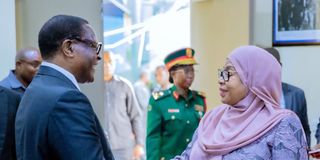
President Samia Suluhu Hassan welcomes Special Envoy of the Commonwealth Lazarus Chakwera at State House in Dar es Salaam on April 15. PHOTO | STATE HOUSE
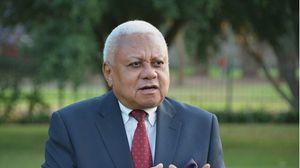
Dar es Salaam. When former Malawi President Lazarus Chakwera landed at Julius Nyerere International Airport on the evening of April 8, few could have predicted how quickly his visit would evolve into one of the most closely watched diplomatic engagements in Tanzania’s post-election political landscape.
What is clear, however, is that for the first time since the 2025 election, government officials, opposition leaders, and international actors are operating within a shared diplomatic framework—one that may either narrow political divisions or redefine how Tanzania manages electoral tensions in the years ahead.
Arriving as Special Envoy of the Commonwealth, Dr Chakwera was received by Deputy Minister for Foreign Affairs and East African Cooperation Ngwaru Maghembe, marking the formal start of a mission mandated to facilitate dialogue and reconciliation following the disputed 2025 General Election.
His appointment had been announced in November 2025 by Commonwealth Secretary-General Shirley Ayorkor Botchwey, who underscored the importance of his experience as a former Head of State in navigating politically sensitive environments.
“Dr Lazarus Chakwera’s experience and leadership will be important in supporting constructive dialogue among all stakeholders,” she said, adding that the mission was intended to contribute to peace and stability across member states facing political tensions.
Dr Chakwera, in accepting the role, framed his mandate around dialogue and regional responsibility. “As an African from a neighbouring country who has followed developments in Tanzania closely, I am honoured to serve in this capacity,” he said shortly after his appointment.
His first engagements began on April 9, 2026, when he met the Minister for Foreign Affairs and East African Cooperation Mahmoud Thabit Kombo, who welcomed the Commonwealth initiative but stressed that Tanzania’s internal stability remained paramount.
“We remain committed to maintaining peace and stability while strengthening democratic institutions,” Mr Kombo said, adding that engagement with external partners must align with national frameworks already in place.
Later that same day, Dr Chakwera met Minister of State in the Prime Minister’s Office Palamagamba Kabudi, who provided a historical and institutional briefing on Tanzania’s governance structure since independence.
“We explained the history of this country since independence in 1961 and the steps the government continues to take to ensure stability and inclusive development,” Prof Kabudi said, noting that Tanzania’s political management had long been anchored in institutional continuity.
One of the most consequential meetings took place on April 11, 2026, when Dr Chakwera engaged the Commission of Inquiry chaired by retired Chief Justice Othman Chande, which is investigating violence and alleged human rights violations linked to the 2025 elections.
Justice Chande said the engagement focused on clarifying the commission’s mandate and ongoing work.
“Today we received the former President of Malawi, Dr Lazarus Chakwera, who is in Tanzania as a Commonwealth envoy. We held discussions for about two hours,” he said. “The main issue was to explain the commission’s duties and terms of reference, which are already publicly known.”
He added that the team also outlined its methodology: “We explained our mandate and how we intend to proceed with our work. We also informed him of the nature of questions we are handling and the processes we are following.”
After the meeting, Dr Chakwera offered a reflection that would define the tone of his mission.
“I love the country and I love what is happening. Everyone is just happy to find solutions and not stay marred in problems. That’s what we support, and the Commonwealth is with Tanzania,” he said.
Observers say the statement signalled an early preference for dialogue-oriented engagement rather than adversarial mediation.
The most politically sensitive exchanges came during separate meetings with opposition parties, where contrasting interpretations of the 2025 election were presented.
ACT Wazalendo leader Dorothy Semu told the envoy that Tanzania was experiencing a serious democratic setback.
“According to our assessment, Tanzania is currently facing a serious political situation that signals the erosion of multiparty democracy,” she said.
She further alleged structural manipulation of the electoral process, adding: “The election was turned into a process of results fabrication,” arguing that irregularities spanned the entire electoral cycle.
Chama cha Demokrasia na Maendeleo (Chadema), through its Vice Chairman for Mainland John Heche, also raised concerns over political repression, arrests, and restrictions on opposition activity.
The party said it had formally requested that Dr Chakwera be granted access to visit its detained chairman Tundu Lissu, who is facing treason charges.
Chadema reiterated its broader reform agenda, stating: “Chadema continues to reaffirm its commitment to fighting for justice, democracy, good governance and the interests of citizens through peaceful and lawful means.”
The party maintained that the electoral outcome did not reflect the will of citizens and called for structural reforms, including an independent electoral commission and stronger accountability mechanisms.
While opposition voices raised concerns, government officials maintained that Tanzania remained stable and institutionally sound.
Prof Kabudi reiterated this position, saying: “We explained the steps the government continues to take to ensure the country remains calm, thus enabling Tanzanians to participate fully in building an inclusive economy.”
Beyond political actors, Dr Chakwera also engaged the Office of the Registrar of Political Parties, led by Francis Mutungi, who briefed him on regulatory frameworks governing political party operations in Tanzania.
According to analysts, the significance of the mission lies in its attempt to create a structured space for competing narratives.
Prof Makame Ali Ussi of the State University of Zanzibar noted that timing is critical in determining outcomes.
“This mission comes at a moment when trust in political institutions is under strain,” he said. “The challenge is whether dialogue leads to reforms or remains consultative.”
The visit followed earlier international engagement, including a March 2026 mission by United Nations Special Envoy Parfait Onanga-Anyanga, reflecting sustained global attention on Tanzania’s post-election environment.
Dr Chakwera concluded his visit on April 16 after delivering a Commonwealth message to President Samia Suluhu Hassan at State House.
According to a statement signed by Shaaban Kissu on behalf of the Director of Presidential Communications, the message emphasised dialogue, transparency and institutional strengthening as central pillars for post-election stability.
President Hassan reaffirmed that Tanzania was addressing post-election concerns through national institutions, including the Commission of Inquiry, whose findings will guide future reforms and reconciliation efforts.
She said: “The findings of the commission will inform subsequent actions, including accountability processes, reconciliation efforts and institutional reforms.”
Commonwealth Special Envoy Dr Chakwera himself summarised the spirit of his mission by stressing that the organisation’s role is not to impose solutions, but to support national processes.
“The Commonwealth’s role is to support dialogue and national processes that lead to peace and stability,” he said.
“I love the country and I love what is happening,” he added. “Everyone is just happy to find solutions and not stay marred in problems.”
Register to begin your journey to our premium contentSubscribe for full access to premium content