Dar es Salaam. Dar es Salaam remains a city that continues to hold mystery and adventure despite its rapid urban growth and modern skyline.
The historic port city established in the 1860s hosts some of Tanzania’s oldest cultural institutions, museums, and heritage sites that reflect centuries of interaction between local communities, traders, scholars, and travellers from across the Indian Ocean world.
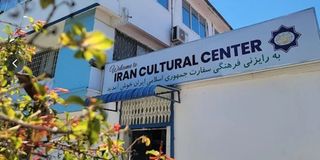
These institutions preserve stories of migration, commerce, faith, and cultural exchange that shaped the identity of coastal societies and contributed to the formation of the Swahili civilisation known today. Among these landmarks stands the Iranian Cultural Centre located along Ali Hassan Mwinyi Road in one of the busiest corridors of the commercial capital.
The centre is often described as a hidden gem, quietly operating in the background of the city’s vibrant cultural landscape. Unlike more prominent institutions such as the Alliance Française, the Chinese Cultural Center, and the Goethe Institut, the Iranian Cultural Centre has rarely enjoyed widespread publicity or large promotional campaigns.
Yet for decades it has remained open to the public, steadily hosting exhibitions, lectures, and cultural programmes that attract students, researchers, diplomats, artists, and curious residents seeking to understand the historical ties between East Africa and the Middle East.
Over the years, the centre has showcased celebrated Persian poets, painters, calligraphers, and historians whose works highlight the intellectual and artistic traditions of Iran.
Traditional paintings illustrating early scientific discoveries and medical knowledge have been displayed alongside handicrafts demonstrating centuries-old techniques used to produce carpets, ceramics, jewellery, and decorative objects carefully crafted by skilled artisans.
These exhibitions not only celebrate artistic excellence but also underline the depth of friendship between Tanzania and Iran, a relationship historians say dates back several centuries to the period when merchants sailed across the Indian Ocean in wooden dhows carrying spices, textiles, ivory, and knowledge.
Exhibition panels within the centre provide visitors with a detailed narrative of how these communities interacted and influenced one another across generations. Much of this historical account has been documented by scholars, including Dr Mohsen Maarefi, whose research examines the arrival of the Shirazi people from the Persian Gulf to the islands of Zanzibar.
According to historical accounts, these settlers brought with them architectural skills, maritime knowledge, and cultural customs that later blended with local traditions to form distinctive Swahili practices.
One example frequently cited by historians is the similarity between the Kilwa Jame Mosque on the Tanzanian coast and the Vakil Mosque in Iran. Although the exact origins of the Shirazi narrative remain debated among academics, the exhibition presents maps, artefacts, and written records suggesting strong commercial connections between Persian merchants and coastal African communities.
These materials trace ancient sea routes linking the Persian Gulf to East Africa during periods of flourishing maritime trade when sailors from Greece, Rome, Arabia, and Egypt navigated the Indian Ocean in search of new markets and resources.
For visitors interested in literature and poetry, the centre offers an inspiring introduction to Persian creative expression where themes of spirituality, philosophy, love, and justice are intertwined. At the entrance stands a display dedicated to Jalal ad-Din Muhammad Rumi, the renowned scholar born in 1207, whose poetry continues to influence readers across continents.
Rumi’s writings emphasise compassion, tolerance, and inner transformation, encouraging individuals to seek meaning beyond material success.
Scholars note that the spread of the Persian language through literature and trade helped introduce numerous words into Kiswahili, strengthening linguistic ties between distant societies. Nearby displays honour other influential poets, including Hafez, Ferdowsi, and Saadi Shirazi, whose literary works shaped Iranian identity and continue to inspire modern writers and philosophers.
The exhibition also highlights Persian contributions to science and medicine, fields in which early scholars achieved remarkable progress long before the emergence of contemporary medical systems.
Historical accounts indicate that organised hospitals and teaching centres existed in Persia centuries ago, making them among the earliest institutions of formal healthcare education.
One prominent figure featured in the displays is Avicenna, also known as Ibn Sina, the physician and philosopher who authored The Canon of Medicine. This influential text served as a primary reference for doctors in Europe and the Middle East for more than six centuries, demonstrating the lasting impact of Persian scholarship.
Ceramic artefacts displayed throughout the building provide further evidence of Iran’s ancient craftsmanship. Archaeological discoveries reveal that pottery production in the region dates back nearly ten thousand years, evolving from simple clay vessels into sophisticated artistic creations decorated with intricate patterns and bright colours.
As trade expanded between Asia and Africa, artisans adopted new technologies and design influences, including the distinctive blue and white ceramic style associated with Chinese craftsmanship.
Similar decorative motifs can be observed in historic buildings along the Swahili coast, particularly in Zanzibar, where mosques and houses feature tiles and patterns reflecting centuries of intercultural exchange.
Another section of the exhibition presents colourful figurines known as Iranian folk dolls representing the diverse ethnic communities living across the country. Each doll is dressed in traditional clothing that reflects regional identity and lifestyle.
One figure symbolises the Gilaki people from the Caspian region wearing a multi-layered skirt decorated with colourful horizontal stripes. Another represents the Bakhtiari and Qashqai nomadic communities known for their distinctive headgear, flowing garments, and travelling traditions.
Additional figurines portray women from the historic village of Abyaneh recognised for their white headscarves decorated with bold floral patterns.
Kurdish attire is also displayed, featuring wide belts and embroidered waistcoats worn over long dresses. Together, these miniature artworks provide visitors with a visual introduction to Iran’s cultural diversity and social traditions.
After spending time exploring the centre, visitors quickly recognise the significant influence of Persian civilisation on East African societies.
Architectural elements such as carved wooden doors, arched windows, and decorative stone features found in coastal towns, including Bagamoyo and Zanzibar, illustrate enduring connections formed through centuries of trade and cultural interaction. Beyond architecture, Persian influence can also be observed in religious education, clothing, cuisine, and language.
The spread of Islam along the coast encouraged the establishment of madrasa schools where children learned reading, writing, and religious teachings.
Traditional garments such as the kanzu, as well as certain embroidery styles and spice-based dishes, reflect aspects of this historical connection.
The Iranian Cultural Centre continues to serve as a bridge linking past and present through exhibitions, educational programmes, and artistic exchanges that encourage dialogue between nations and communities.
Although modest in size, the institution holds a wealth of knowledge that rewards repeated visits from students, researchers, tourists, and residents seeking a deeper understanding of shared heritage and global history.
The centre periodically hosts exhibitions featuring Tanzanian and visiting Iranian artists whose works explore themes of identity, memory, migration, and cooperation.
These events create opportunities for cultural dialogue, public learning, and creative collaboration, strengthening relations between people of different backgrounds.
In a rapidly changing city where new buildings rise each year, the Iranian Cultural Center stands quietly as a reminder that history, culture, and friendship remain essential foundations for peaceful coexistence and mutual respect among nations, preserving stories that continue to inspire future generations across Tanzania and the wider global community today.