The anti-poaching fight that the world waged against the ivory trade has phenomenally reduced elephant poaching and revived its population in Tanzania.
The widely reported case of 2019, Yang Fenglan, the Chinese lady who was convicted of ivory trafficking, is a prime example of the efforts. According to the international wildlife trade treaty, the Convention on International Trade in Endangered Species of Wild Fauna and Flora (CITES), pangolins rank among the most trafficked animals in the world.
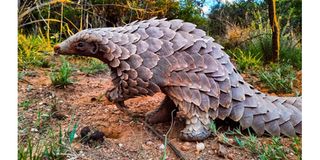
Hundreds of thousands, possibly over one million, have been trafficked over recent decades, driving severe population declines in both Asia and Africa. In Tanzania, these small scaly anteaters are found in MiIombo woodlands, Morogoro, the coastal region, Tabora, Katavi and Rukwa.
Related
Their population is scattered and their precise number has not been documented. The two species, the ground pangolin and the tree pangolin, are both elusive and nocturnal in nature, which adds to the difficulty in observing the animals’ behaviour and daily habits.
It's the very rarity and mystery that have made it the most sought-after animal by traditional healers who claim its scales possess the power to bring riches, prosperity and good luck charms to whoever carries it.
These beliefs vary, as in Africa, people think money comes with owning the pangolin scale. In certain traditional medicine markets across Asia, pangolin scales have been mistakenly believed to boost sexual performance or libido, improve fertility and increase manhood strength.
These myths have persisted even in light of scientific evidence that debunks these beliefs.
“Pangolin scales are made of keratin, the same material as human fingernails and hair. There is nothing special about their scales. If you think they do, then why can't you just use your nails? It is the same,” said Makene Ngoroma, a conservationist. He has rescued and translocated more than 17 pangolins across the Mikumi region in Morogoro.
The highly endangered animal is a victim of dubious practices by fraudulent traditional healers. They have a tendency to ask those who approach them for help to request odd items to be brought before the supposed healing can take place.
Since in Tanzania, pangolins have always been regarded as mysterious and elusive animals, the healers would tell their clients to bring their scales, knowing that it is nearly impossible. Surprisingly, the demand for the scales has grown over the years. People would travel far and wide to locations they believe pangolin habitats are just so they can get the scales back to the charlatan healers.
This animal is the most traded in the black market. UNESCO, the United Nations Educational, Scientific and Cultural Organization, ranks pangolins above elephants on their list of endangered species. No formal censors have been conducted, though Tanzania Research and Conservation Organization has made initial steps to address the dangers that face this vulnerable animal.
They recently held a workshop in Morogoro, bringing together under one roof all stakeholders concerned with the welfare of Pangolin. These research institutions have started to raise awareness keenly. The neglected animal is finally having the spotlight it direly needs lest it go extinct.
Since 2013, Makene has witnessed the shift in perception among members of the communities he works in Morogoro. When he started rescuing and translocating these animals, locals would always stop him and request that the pangolin predict the upcoming crop harvesting session. “They believe a pangolin can tell the future harvest, if we will have plenty of maize or rice, so they would always want me to give the animal to them before I release it to the wild,” he explained. He instinctively started doing community outreach, starting with a pangolin display at the village office. He wanted the villagers to see the elusive animal.
Many of them had never laid their eyes on one. Locals came in hundreds to view the small animal with a tongue that is longer than its body. The anteater gathered crowds and Makene used that opportunity to ask villagers to help protect the animal. From then on, community members would always pay a visit to his office carrying pangolins that they had seen outside the conservation zones. They became pivotal to his rescue initiative.
The efforts and attention the animals received. Made the communities collaborate with Makene, but some saw that if this small anteater is so valuable, then they should be paid for helping him rescue them. One of the downsides of the translocation drive. He went through another community outreach, telling them why they have to volunteer and that no budget has been set for that mission.
“People thought that I had been funded to do this, but the truth is, not a penny has been set aside; this is something that I am passionate about as a conservationist,” he said.
He resorted to documenting the whole rescue mission by taking pictures when the locals handed him over the animal and throughout the process, until the time he handed over the animal to park rangers in Mikumi National Park. The communities trusted him. And his phone started ringing frequently; the locals would call whenever the animal was spotted. And he had to make the trip to rescue them.
Strong laws enacted by the government also played a huge role as a preventive measure against animal trafficking. It was designated under economic sabotage to traffic this rare animal, an unbailable offence that carried heavy punishment when caught.
The community got to witness a case where a perpetrator was given a lengthy prison sentence. It sobered the people who took lightly the act of grabbing this mammal that curls in a hardball when it feels threatened.
“No one wanted to have these animals in their possession; they would call me as soon as they saw them and they became reluctant to help the traffickers too,” he said. The sentence was more severe than that for ivory poaching. Without those stern measures, it is likely that this scaly mammal would have been extinct many years ago.
The brutality of dubious traditional healers came to light when Makene found a Pangolin that had escaped with its foot torn by a leg tether used to constrain it. The bloody animal was rescued and attended by a veterinarian before being translocated weeks later after it had healed.
The rumours and myths that were started by fake traditional healers have spread and ingrained in some communities who have truly believed the notion of passion for power, these pangolins. No one has bothered to research but beliefs can be powerful and not easily dismissed, regardless Makene is still on a mission to educate the communities in hopes the population of these rare animals will be revived.
Against the backdrop of all these beliefs across Africa and Asia, this animal is yet again in more danger due to a new assertion that their meat is high in protein.
Now they are being sold not only for their potential to increase men's libido but also for the perceived richness in protein. More reasons for people to hunt this vulnerable animal. Elephants' massive size and popularity as a big 5 animal to see on safari helped create the global outcry against their poaching. An advantage a pangolin doesn't enjoy.
There are no set standards or operational procedures in rescuing and translocating this animal, nor are there specific funds, equipment, or vehicles allocated in rescue efforts. Makene's improvisation and dedication have played a role in safeguarding these animals in the Mikumi region. Hopefully, these animals will receive the protection they need to sustain the ecosystem.
Register to begin your journey to our premium contentSubscribe for full access to premium content