Before Paulo Joshua became a Tanzania National Parks (Tanapa) award-winning mountaineer, the then 17-year-old boy’s only dream was joining the Tanzania People’s Defence Force, which is known for its gruelling recruitment regimen.
But as a teenager, he knew that was his path in life, a path his parents had consented to and given their blessings.
That changed once his curiosity for the mountain got the best of him.
“My first dream was being a soldier. The first time I went to Kilimanjaro, I was still in school, just out of wonderment about what goes on there,” he remembers.
The Arusha-born boy had heard a lot of stories about the highest mountain in Africa; in the streets, youth would talk with fascination about the hiking tales.
But Paulo had also read in school; he truly wanted to see the mountain with his own eyes.
The curiosity turned to passion; he wondered if he could get a chance to work as a porter there.
It was a tough occupation for his young body, carrying the heavy bags for tourists and tour guides ascending the mountain.
But Paulo was mentally prepared for the army, so the arduous work that comes with being a porter didn’t frighten the young boy.
He was welcomed by older boys and seasoned porters; their cooperation and appreciation for each other became the cornerstone that made the laborious job doable.
“Man, I wanted to be a soldier, so this is it. I’m in,” he said.
To become a porter on Kilimanjaro, your body adapted well.
Being a native of the high-altitude region helped Paulo adjust seamlessly to the high altitude of the mountain.
He still insists anyone from anywhere can be a porter. “You just need an adaptive body, and human bodies are very resilient.”
Paulo’s biggest challenge was not on the mountainous terrains but at home, where his parents refused to accept his new-found career path.
A lot of youth who took similar jobs of baggage-carrying had nothing to show for it.
“My parents didn’t see these porters as good role models; that discouraged them even more,” he said.
Paulo’s mother had already envisioned his son as a soldier; accepting the change was heartbreaking for the parent.
Even when he showed interest in joining the tour guide college, they refused to fund his studies, so he had to hike with the bags on his back daily and use the money he made to pay for his school fees.
He kept climbing the mountain while paying for the tourism college for almost two years before his parents came to the realisation that they wouldn’t be able to change his mind and accepted his decision.
That strenuous work made a man out of the curious boy.
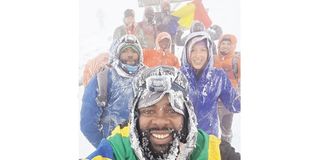
From a porter to a mountain guide, suddenly Paulo had not only his life in his hands when climbing Kilimanjaro but the lives of the whole group of tourists and porters that supported him along the way.
“That’s the level where you start making decisions, from the path you choose, to making sure everyone gets home safe after summiting the 5,895-metre mountain,” he said. Paulo got his mountain guiding licence in 2012.
But he kept getting more training, from Wilderness First Responder and all and other kinds of tourism training. “I really wanted to be a professional.”
He started mentoring young people in his team who were fresh from school, inspiring the youth, and going out of his way to make sure they became the best at what they do.
In March of 2020, he received a call from a friend, and he told him that Tanzania National Parks was conducting the Best Guide Challenge, and urged him to apply.
More than 200 guides came forth. What followed was a nerve-wracking elimination process; more than 15 judges asked probing questions, ranging from their safari experience to their expedition in the mountains.
“Everyone had their questions regarding all angles of tourism, of guiding, wildlife, mountain climbing activities, geology, botany, and everything,” he said.
On August 6, 2020, he was crowned the best guide and handed his award. An inspiring moment, after years of hard work.
Kilimanjaro has more than 12,000 guides, and being number one was surreal. It made him even more passionate.
“I am still the reigning champion because Tanapa didn’t organise another Best Guide Award,” he laughed.
Being a guide, the role comes with a great responsibility for human lives; everyone depends on you to lead them.
As much as it is challenging, Paulo wouldn’t have it any other way.
“I believe in growth, and I believe the best way to grow is through challenges,” he said.
“You need to be very competent, and you need to be very sure of every decision you’re making because any mistake you make as a leader affects not only your client, but also all the team you’re leading, the porters, and everything.”
A guide also carries the reputation of the company he works for, even the country.
How a tour guide handles the tourists is how they will remember their experience in Tanzania, when they are telling their friends back home about their expeditions and adventures up the mountain.
“I don’t aim at being the best guide in Tanzania, but I want to be better than I was yesterday,” Paulo said.
The recent meeting between President Samia Suluhu Hassan and tourism stakeholders has brought forth tourism to the spotlight, and its contribution to Tanzania’s foreign earnings.
And Paulo is excited about the future, “The President did things like The Royal Tour; we see her constant support for tourism, and the support she’s giving to tourism. I can tell her that she has to keep the good job alive,” he said.
“Another thing I will tell her is just to make sure that the local guides are well recognised.”
Paulo views that local guides need more recognition locally and internationally; the Tanzania Tourist Board has to create room to include them in international and local exhibitions; the country could benefit from their vast knowledge and firsthand experience.
“Nepal has a lot of good guides. But for a long time now, they have had a person called Nimsdai who unfortunately died a few days ago. If you read about Nimsdai, you can always see Nepal behind him. You can always see Nepal recognising him.”
Tanzania is not using them, he said; there have been exhibitions in South Africa, Germany, London, and many countries around the world, and he didn’t see any local guide being invited, other than socialites and social media influencers.
“Use real professionals from the industry to market the country and what it has to offer in tourism; we can answer questions competently and persuade potential tourists to visit,” he said.
“They interviewed one of the Instagram-famous people, and he said Kilimanjaro is in Arusha.”
Paulo aims to guide and nurture the new generation of mountaineers, understanding that guides on Mount Kilimanjaro carry the heavy responsibility of ensuring that all tourists who summit leave the country satisfied, safe, and with the best stories to tell the world about the highest point in Africa.