Ever wonder why people sometimes hate you for no good reason at all? You can’t remember doing anything to them, no matter how hard you try. Sometimes, people hate you simply for existing.
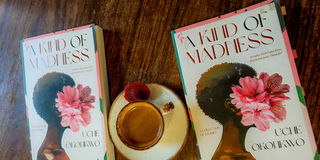
The world is full of madness, depending on the lenses through which you see it. What looks like madness to you may not look the same to the next person. We all experience the world through different lenses, shaped by our upbringing and our social or economic circumstances. In A Kind of Madness, Uche Okonkwo walks the reader through some of the things the characters in her book deem madness.
A Kind of Madness is a collection of ten short stories set in contemporary Nigeria. Each story carries its own kind of madness.
Let’s start with my favourite story in the entire book, Animals. This is my favourite mainly because of the relationship between Nedu and Otuanya, the chicken who later became the chicken pepper soup.
This story highlights a typical family in a humorous, light-hearted tone. The two parents illustrate different parenting styles: Ebube, who is playful and approachable, making kids feel closer to him; and Uzoma, a strict parent who kills the fun but is unhappy about it, yet unable to change it.
“Uzoma told herself there were advantages to having parents with different styles, one with a gentle touch, one to lay down the law. But sometimes she would hear the echoes of laughter in the house and feel her heart sink, knowing from experience that if she tried to join in, the laughter would sputter into silence.”
The story highlights corruption and abuse of power in many African countries. A traffic police officer humiliates Uzoma, a self-reliant woman, when she refuses to bribe him during a wedding trip. They are released only after Ebube offers a bribe, creating tension in their marriage as Uzoma loses respect for him.
“Was she still angry at him for humouring the chubby policeman when he had made a joke about putting a leash on her? See, that was her problem; she’d never understood the little things normal people did to defuse situations, to oil the wheel of ordinary interactions.”
Ever wonder why sometimes people hate you for no good reason at all? You do not remember what you did to them, no matter how hard you try. Sometimes, people hate you for simply existing. Long Hair is a story about such a dynamic. It tells the story of Jennifer, a new girl in a boarding school admired for her long hair and beauty, except for one girl who cannot understand the fuss.
“It pained me the way Jennifer started walking about the whole school like it was her father’s compound,” thought the other girl. When a rumour spreads about a Mami Wota (demon) roaming the school, every girl is worried except Jennifer, who goes on with life as if nothing is wrong. So the other girl starts a rumour that Jennifer is the Mami Wota, and suddenly everyone turns against her.
Through Jennifer, Okonkwo shows how fear and envy can turn ordinary people cruel and how what we don’t understand, we often label as madness or evil. In this story, madness lives in the way people convince themselves that destroying someone else will restore their relevance.
Mental health is another theme Okonkwo explores with deep understanding and gentleness through two characters, a mother and a daughter, who are emotionally developed to draw the reader into their complicated lives.
Adanna lives with her mother, who wakes up with different moods and personalities each day. Adanna is never sure who she will get in the morning, so she has learnt to adapt to whoever comes. When she wakes up with a heavy face like a stone, Adanna finds herself with her mother at the top of the mountain, praying because her mother believes that Adanna does not want to live; she wants to go back to the other kids in the spirit world.
“How many spirit friends do you have?” the dibia (healer) asks. Adanna’s life revolves around her mother's mental state, leading her to search for unattainable solutions and blame others. Those around her see her struggles but remain indifferent: “Whatever happens with this apostle, there will be another door, mountain, or buried thing to find.” Her mother seeks what Adanna cannot provide. True healing must come from within, not from external sources.
These stories breathe life into readers. They are masterfully written, carrying themes of parenthood, societal pressure, friendship, mental health, and everyday observations of Nigerians through well-developed, emotionally rich characters who guide readers through their worlds with so much care. Okonkwo’s form, style, and humour help readers connect with the stories without feeling too much burden from the characters but instead invite them to reflect on their own lives.
Jane Shussa is a digital communication specialist with a love for books, coffee, nature, and travel. She can be reached at [email protected].