Dar es Salaam. Imagine leaving the heart of Dar es Salaam, perhaps after a long day at work or running personal errands, tired and eager to reach your home in Mbagala.
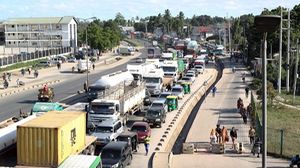
You join the flow on Kilwa Road, hoping traffic might ease. Yet what begins as a short journey soon becomes a test of patience.
By the time you reach Uhasibu (Tanzania Institute of Accountancy–TIA) in Temeke District, heading towards Mtoni Kwa Aziz Ali, vehicles stretch endlessly along the road, barely moving.
Resident Aziz Ally describes it as “no real movement, only gradual inching forward.”
Engines roar, air conditioners struggle against the coastal heat, passengers check their watches repeatedly, and drivers sigh in exasperation.
Meanwhile, motorcycle taxi operators, bodaboda, weave cautiously through the dense traffic. What starts as a minor inconvenience quickly turns into an ordeal.
Descending towards Mtoni Mtongani, the railway bridge offers momentary relief. The car nudges forward, a sea breeze flows through the windows, and for a brief moment, it feels as if a small victory has been won. But the respite is fleeting.
Approaching the Misheni area, traffic slows again, advancing at a frustrating crawl that allows only shallow breaths.
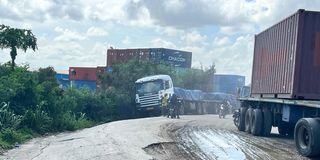
By Mbagala Kipati, the journey is far from over. Congestion intensifies, vehicles jostle for space, and large lorries dominate the lanes as if oblivious to urgency.
Public transport minibuses, or daladala, halt and restart every few metres. By the time commuters reach Mbagala Zakhem, spending 35 minutes, or even an hour, to cover a short stretch has become routine.
At Mbagala Rangi Tatu, mental fatigue sets in. This is not a morning jam or an occasional evening problem; congestion is relentless, casting a shadow across the city’s roads.
It persists throughout the day, from morning to night. Although traffic may ease intermittently, it rarely disappears entirely.
Perhaps most striking amid the chaos is the proliferation of dry port, or Inland Container Depot (ICD), signage.
Locations once slightly removed from main roads now lie close to heavily trafficked areas.
Container lorries constantly enter and exit these facilities, increasing pressure on already overburdened streets.
Ordinary commuters, including office workers, homemakers, students, and daladala drivers, remain at the mercy of daily gridlock shaped by city planning decisions, road capacity, and the rising presence of ICDs.
Under such circumstances, a trip from central Dar es Salaam to Mbagala becomes more than a question of kilometres.
It is a test of patience, endurance, and precise calculation of time, minutes, or even hours.
For residents, this scenario exemplifies the daily challenges of navigating the city, exacerbated by the growth of dry ports.
ICD expansion sparks public outcry
The rapid development of ICDs in Dar es Salaam has prompted complaints from residents along major roads and adjacent residential areas.
Many argue that these investments have been implemented without adequate urban planning, environmental assessment, or meaningful citizen engagement.
Dry ports serve as transit hubs for receiving and transporting cargo containers away from the main seaport.
Their official purpose is to ease congestion at the primary port and facilitate the movement of goods within Tanzania and to neighbouring countries.
However, some residents contend that the proliferation of ICDs near residential areas has become a nuisance rather than a solution.
Despite government encouragement to expand transport infrastructure to boost commerce, the immediate effects on daily life have been severe.
On Thursday, February 19, 2026, during a joint meeting with ICD operators, Tanzania Revenue Authority (TRA) Commissioner General Yusuph Mwenda urged operators to provide 24-hour services to match customs clearance schedules.
He acknowledged the role of ICDs in facilitating trade and generating tax revenue.
Residents’ complaints
While Mr Mwenda highlighted the benefits, residents expressed deep concern over the constant passage of heavy lorries near schools.
A resident of Sandali, Temeke District, Ms Manka Mushi, said the rapid transformation of the neighbourhood had created multiple lorry bottlenecks, threatening the safety of children commuting to and from school.
“In a very short time, changes occurred that we did not anticipate. There are two schools here, a primary and a secondary. Parents are worried, and children must be escorted to and from school for safety,” said Ms Mushi.
Similarly, a resident of Chang’ombe, Mr Riziki Sharif, reported that traffic congestion from lorries entering and exiting a nearby dry port forced her family to sell their home and relocate.
“We had a house near the Taifa (national stadiums), but the lorry problem was unbearable. Vehicles were constantly passing through, so we had no choice but to move for the safety and peace of our family,” he said.
Perspective of ICD operators
On February 27, 2026, the Tanzania Association of Truck Owners (Tamstoa) chairperson, Mr Chuki Shaban, criticised municipal authorities for issuing licences to establish ICDs in residential areas.
He blamed such decisions for congestion, infrastructure damage, and conflicts with residents.
Mr Shaban argued that heavy container operations are unsuitable in areas lacking adequate infrastructure.
He called for a review of all licences and proposed relocating ICDs to areas with proper transport networks.
“We are not against development. We only need suitable locations where we can operate without adversely affecting residents,” he said.
Citizen engagement
Sandali Ward chairperson, Mr Habibu Ndege, expressed surprise at the sudden demolition of walls to accommodate containers and lorry parking, which blocked access roads without prior public notification or consultation.
“The ward office was not involved in any land-use changes, which puts local leadership in a difficult position when asked about the legality of this project,” said Mr Ndege.
Urban planning laws require public announcement and citizen consultation before land-use changes. Residents claim this procedure was not followed.
The uncoordinated changes have caused road damage, dust, and lorry congestion, affecting commuters heading towards Mchicha and Viwandani.
A week prior, authorities held a meeting to register complaints, promising residents full responses by February 27, 2026.
Government response
Chief Government Spokesperson (CGS), Mr Gerson Msigwa, explained that the increase in dry ports is driven by rising demand for cargo storage.
He said the Dar es Salaam Regional Commissioner (RC), Mr Albert Chalamila, would visit all areas hosting dry ports to assess the situation.
“Dry ports are registered in accordance with the law. Any port operating illegally will face legal action. Today, February 26, 2026, I have spoken with RC Chalamila, who has outlined steps to address severe congestion partly caused by dry ports and lorries,” said Mr Msigwa.
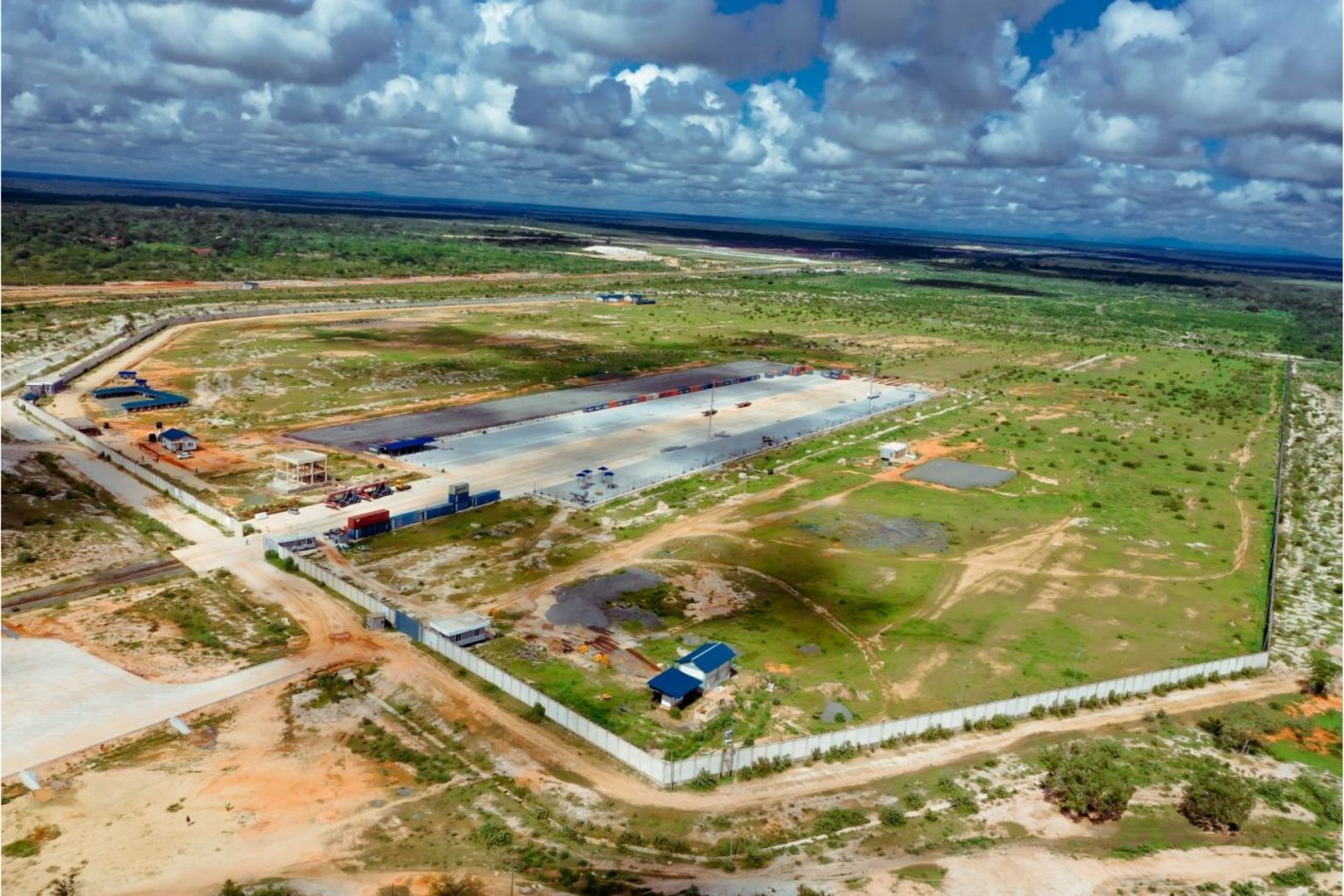
He also referenced the Kurasini Logistic Park project, designed to expand dry port facilities and reduce scattered sites across the city.
The CGS said the project plans to increase storage capacity to 210,000 square metres, accommodate 700,000 containers, and improve operational efficiency.
Regarding the Kwala Port project, Mr Msigwa emphasised that services continue, but stakeholders are encouraged to use the port to reduce city congestion.
On July 31 2025, President Samia Suluhu Hassan inaugurated the strategic Kwala Port, aimed at lowering transportation costs, reducing lorry congestion, and improving efficiency at Dar es Salaam Port.
She described it as a long-term solution to the rising demand for off-city cargo handling.
President Hassan highlighted that Dar es Salaam Port’s cargo throughput had grown by 25 to 30 percent annually, with shipments rising from 23.69 million tonnes in 2023 to 27.76 million tonnes in 2024.
The number of vessels increased from 1,860 to 1,990, creating significant congestion as most goods are transported by road.
She said relocating some port activities to Kwala would expand service coverage and improve unloading and cargo handling speed.
Urban planning considerations
An official from Dar es Salaam’s Urban Planning Unit, speaking on condition of anonymity, stressed that citizen participation is legally required in any land-use change.
Authorities must ensure planning decisions comply with the law and involve residents or users of affected areas.
Legislation, including the Urban Planning Act No. 355 of 2007, the Land Act No. 4 of 1999, and the Village Land Act No. 5, grants residents the right to consultation.
Land must be zoned according to intended use, considering housing, social services, schools, hospitals, cemeteries, roads, electricity, and industrial areas.
Incompatible uses, such as placing schools near heavy industrial facilities, are legally and practically inappropriate.
ICD management perspective
One ICD manager, Mr James Masanja, explained that operations occur in largely vacant areas or previously agricultural or residential plots, noting that licences are issued after proper assessments.
“We follow all procedures and do not occupy people’s land forcibly. Lorries come to load and offload cargo, which is beyond our control,” said Mr Masanja.
The Tanzania Dry Ports Owners Association (CIDAT) chairperson, Mr Meleck Shange, confirmed that all dry ports follow legal procedures and obtain licences, insisting that approved sites now range from 20,000–60,000 m².
Mr Shange explained that the surge in ICDs results from the high volume of incoming cargo, creating storage shortages and prompting new ports. Tanzania now has 90 ICDs, with two more expected within a week.
“They are categorised into container cargo depots, empty container depots, and lorry cargo depots,” he said.
He apologised for the inconvenience to residents, noting that the proliferation of dry ports followed DP World’s entry and government approval of certain locations, including Kurasini.
Legal framework
ICD registration and operation in Tanzania is governed by the Tanzania Shipping Agency Act No. 415 and the 2023 regulations on cargo protection and operational safety.
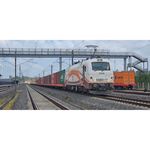
The Tanzania Ports Authority coordinates these facilities, linked to rail, road, and main ports.
Under the Land Act No. 4 of 1999 and the Land Acquisition Act of 1967, land for dry ports must be legally acquired, with compensation provided where appropriate.
Dar es Salaam’s growing dry port network underscores the tension between urban expansion, commerce, and citizen welfare.
While ICDs are essential for trade efficiency and revenue generation, their rapid proliferation without adequate planning, citizen consultation, and infrastructure readiness has contributed to daily traffic chaos, community concerns, and calls for comprehensive, long-term solutions.
Register to begin your journey to our premium contentSubscribe for full access to premium content