It is politics that shapes where you live, where you study, how you access health care, who is silenced, and who is protected.
The novel suggests that choosing not to engage does not place you outside the system. It only means you experience its consequences differently.
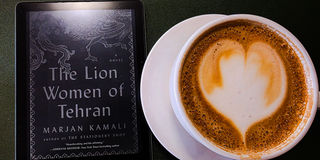
Reading books from around the world is one of my goals for 2026. I want to explore different cultures and histories without leaving my own country. That is how I found myself reading The Lion Women of Tehran, a novel that introduced me to Iran beyond headlines.
Set in the 1950s, the novel follows the friendship between Ellie and Homa. Ellie is an only child living with her overbearing and grieving mother after her father’s death. Forced to leave their large family home, they move into a smaller house in a poor downtown neighbourhood after her mother refuses to marry her late husband’s brother, Massoud, a customary practice meant to secure a widow’s future.
“But mother said it was beneath her to marry her husband’s brother just for the sake of security. I will not let that man so much as put a finger on me. I am not a property to be passed on. Mother never forgave my father’s fate.”
Her refusal costs them the privileges afforded to married women, including security and social respect. She loses friends, and her grief deepens until even leaving the house feels burdensome. She suffocates Ellie with distrust, convinced their misfortunes are the result of the evil eye cast by those who envied their former life.
It is in this neighbourhood, through the intervention of Ellie’s uncle, who insists she attend school, that she meets Homa. Though they come from different social backgrounds, they are drawn to each other almost immediately, forming a friendship that proves stronger than maternal fear and, eventually, political tension.
Homa is a joyful child raised by politically aware parents who want the best for their children and their country. She grew up encouraged to think independently and question what she is told. She dreams of becoming a lion woman of Tehran, studying law and fighting for human rights.
Her ambition slowly helps Ellie imagine a future shaped by choice rather than fear. But Ellie’s dreams never quite match Homa’s. When she is ten, her mother moves them back into the world of privilege, determined that her daughter will not become like her friend. From that safety, it becomes easier to look away from injustice that does not touch you directly.
“The difference between Homa and me was that once she recognised a law needed to be changed, she fixated on it and studied every angle and became determined to get to a place where she could bring reform. Whereas once I knew a law needed to change, well, I hoped someone would one day get to it. Someone like Homa.”
Homa’s belief in reform places her in confrontation with a regime that tolerates no dissent. While at university, she becomes politically active. After the 1953 coup strengthened the Shah’s rule, repression intensified. Surveillance tightens, and dissent becomes dangerous.
But Homa does not retreat. “We can’t just pretend it is all wonderful, Ellie. Or at least when it isn’t wonderful for so many. I know it for you. The Shah's policies benefit you. Your family.” Her resistance leads her into the hands of the regime’s spy police and into prison, where her dream of becoming a judge begins to fracture.
In prison, she refuses to name those involved in the protests. As punishment, she is raped and later released six months pregnant. A cost she pays for her loyalty.
Kamali does not reduce Homa to victimhood. She shows the psychological cost of repression. Homa sinks into depression and barely recognises herself, yet refuses to let the abuse define her future. “He destroyed my soul. But the voices tell me reclaim myself; no one else will do it for me.”
Her resistance, even in brokenness, embodies what it means to be a lion woman of Tehran.
While Homa confronts the regime, Ellie retreats into the life she has always wanted. She marries Mehrdad and finds tenderness and partnership. When miscarriages leave her grieving, he grieves with her and never makes her feel less than. In a story that exposes repression, Kamali also makes room for a marriage built on care. It is a reminder that cruelty is not inevitable, even within a patriarchal system.
Ellie later admits, “In my daily life, I tried to stay as apolitical as humanly possible, but of course, it was impossible to live a life devoid of politics.”
It is politics that shapes where you live, where you study, how you access health care, who is silenced, and who is protected. The novel suggests that choosing not to engage does not place you outside the system. It only means you experience its consequences differently.
Jane Shussa is a digital communication specialist with a love for books, coffee, nature, and travel. She can be reached at [email protected].